
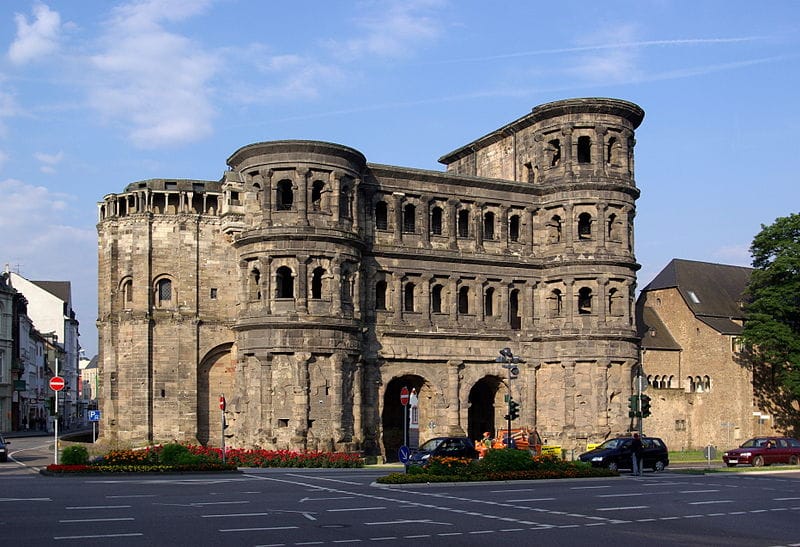
Trier itinerary: 1 to 2 days
Plans for one and two days in Trier, day by day: the Porta Nigra, Trier Cathedral, the Liebfrauenkirche, the Basilica of Constantine, the Imperial Baths and the Karl Marx House first, then the Electoral Palace, the Amphitheater, the Rheinisches Landesmuseum and the Roman Bridge as you add a day. Every stop has a typical visit length.
How long do you have?
Map: 2 days
Trier in 1 day
Day 1
Porta Nigra Must see
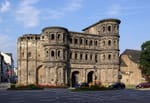
Large Roman city gate of the late 2nd century, the best-preserved north of the Alps, with views from its upper floors.
Saint Gangolf's Church Must see
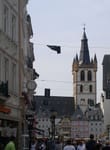
Gothic market church just off the Hauptmarkt, long the church of the town's burghers, with a tall tower over the square.

Trier Cathedral
Germany's oldest cathedral, begun in Roman times, with Romanesque and Baroque parts and a treasury holding the Holy Robe relic.
Liebfrauenkirche, Trier Must see
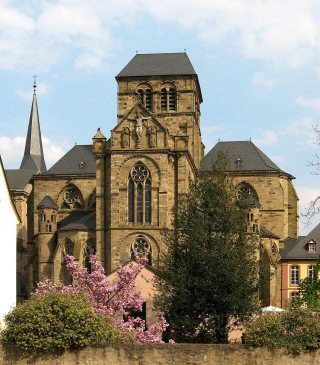
One of Germany's earliest Gothic churches, built on a cross-shaped plan next to the cathedral and part of Trier's World Heritage site.

Basilica of Constantine (Aula Palatina)
Vast brick throne hall of Emperor Constantine from the early 4th century, the largest surviving single-room Roman building, now a church.

Trier Imperial Baths
Ruins of a huge 4th-century imperial bath complex, with tall brick walls and underground service tunnels to walk through.
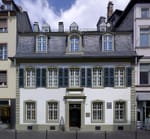
Karl Marx House Must see
The house where Karl Marx was born in 1818, now a museum on his life, his work and its influence.
Trier in 2 days
Day 1
Porta Nigra Must see
Large Roman city gate of the late 2nd century, the best-preserved north of the Alps, with views from its upper floors.
Saint Gangolf's Church Must see
Gothic market church just off the Hauptmarkt, long the church of the town's burghers, with a tall tower over the square.
Trier Cathedral
Germany's oldest cathedral, begun in Roman times, with Romanesque and Baroque parts and a treasury holding the Holy Robe relic.
Liebfrauenkirche, Trier Must see
One of Germany's earliest Gothic churches, built on a cross-shaped plan next to the cathedral and part of Trier's World Heritage site.
Basilica of Constantine (Aula Palatina)
Vast brick throne hall of Emperor Constantine from the early 4th century, the largest surviving single-room Roman building, now a church.

Electoral Palace, Trier
Pink Rococo palace of the prince-electors built onto the Basilica of Constantine, now government offices, with formal gardens open to all.
Day 2

Trier Amphitheater
Roman arena for around 20,000 spectators built into a hillside, with the cellars beneath the arena floor open to visitors.
Trier Imperial Baths
Ruins of a huge 4th-century imperial bath complex, with tall brick walls and underground service tunnels to walk through.

Rheinisches Landesmuseum Trier
One of Germany's main archaeology museums, with Roman mosaics, sculpture, a large gold coin hoard and a model of Roman Trier.
Karl Marx House Must see
The house where Karl Marx was born in 1818, now a museum on his life, his work and its influence.

Roman Bridge (Trier)
Bridge over the Moselle resting on Roman stone piers of the 2nd century, the oldest bridge still in use in Germany.
Watch: Trier
A one-minute look at the plan: every stop, day by day, with the map.
When to go to Trier
May to October is the best time, with warm days for the Roman sites and the Moselle vineyards. Winters are cold and grey, brightened by the Christmas market on the Hauptmarkt from late November. Wine festivals are held in the Moselle villages from late summer into autumn.
Plan the rest of your trip
- Where to stay: hotels in Trier on Booking.com or Trip.com
- Skip-the-line tickets: museums and sights in Trier on Tiqets
- Tours and day trips: things to do in Trier on GetYourGuide
- From the airport: a private transfer in Trier with Kiwitaxi
- Data on arrival: an eSIM for Germany from Airalo
- Last day: leave your bags in Trier with Radical Storage and keep sightseeing
Some of these are affiliate links: we may earn a small commission at no extra cost to you.
Tips for Trier
- The Antikencard gives entry to several of Trier's Roman sites, such as the Porta Nigra, the Imperial Baths and the Amphitheatre; it pays off if you plan to see three or more.
- The Roman monuments, the cathedral, the Liebfrauenkirche and the Hauptmarkt are all in the compact old town and are easy to walk between.
- The Rheinisches Landesmuseum is closed on Mondays; check museum opening days before planning a visit.
- The Basilica of Constantine is a working Protestant church, so visits can be limited during services and concerts.
- Moselle wines can be tasted in wine bars in the old town and in the wine villages just along the river.
Make it your own
Open the guide in Andiamo Places to see every stop on a map with walking directions, move places between days, check opening hours for your dates, and add your own finds. After the trip, your photos become a journal and, if you like, a printed photo book.



Guides are made with the help of AI and public sources such as Wikipedia, and may contain errors. Opening hours and prices change, so check before you go. Spotted a wrong photo, a pin in the wrong place, a missing stop or a better one? Write to andiamotravelapp@gmail.com: the e-mail opens with this guide filled in.
Photo credits
- Basilica of Constantine (Aula Palatina): Pudelek (Marcin Szala), CC BY-SA 3.0
- Electoral Palace, Trier: Wolkenkratzer, CC BY-SA 4.0
- Karl Marx House: Berthold Werner, CC BY-SA 3.0
- Liebfrauenkirche, Trier: LoKiLeCh, CC BY-SA 3.0
- Porta Nigra: Berthold Werner, Public domain
- Rheinisches Landesmuseum Trier: Original: Stefan Kühn at de.wikipedia Modifications: Cornischong at Luxembourgish Wikipedia, CC BY-SA 3.0
- Roman Bridge (Trier): Bjalek Michal, CC BY-SA 3.0
- Saint Gangolf's Church: Alaexis, CC BY-SA 2.5
- Trier Amphitheater: Berthold Werner, CC BY-SA 3.0
- Trier Cathedral: Berthold Werner, Public domain
- Trier Imperial Baths: Berthold Werner, Public domain
Opening hours change; check before you go. Map data © OpenStreetMap contributors.
