
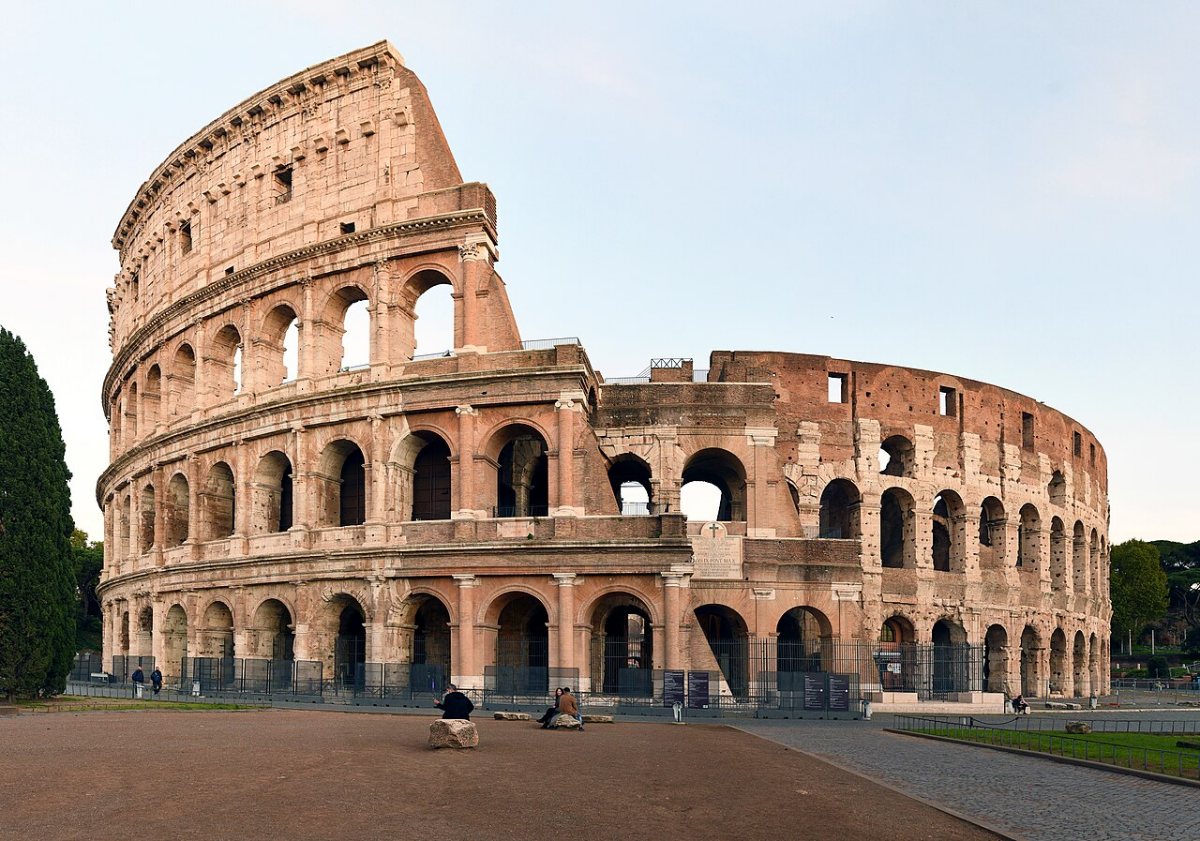
Rome itinerary: 1 to 7 days
Plans for one to seven days in Rome, day by day: the Colosseum, Forum and Palatine first, then the Pantheon, Piazza Navona and the Trevi Fountain, the Vatican, and quieter corners of the ancient city as you add days. Every stop has a typical visit length.
How long do you have?
Map: 3 days
Rome in 1 day
Day 1
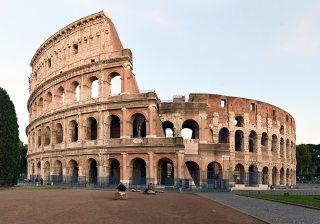
Colosseum Must see
The great amphitheatre of ancient Rome, where gladiators fought for 50,000 spectators.
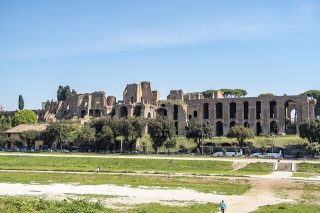
Palatine Hill Must see
The hill where Rome began and emperors built their palaces, high above the Forum.
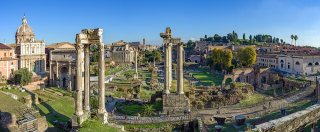
Roman Forum Must see
The heart of ancient Rome: temples, arches and the remains of its law courts and senate house.
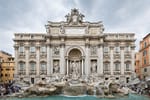
Trevi Fountain Must see
Rome's most famous fountain; toss a coin over your shoulder to make sure you return.
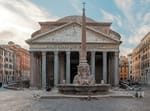
Pantheon, Rome Must see
A 2,000-year-old temple with the world's largest unreinforced concrete dome and its open oculus.
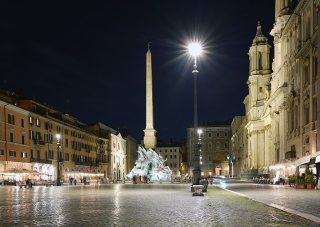
Piazza Navona Must see
A long Baroque square on the site of an ancient stadium, with three fountains and street artists.
Rome in 2 days
Day 1
Colosseum Must see
The great amphitheatre of ancient Rome, where gladiators fought for 50,000 spectators.
Palatine Hill Must see
The hill where Rome began and emperors built their palaces, high above the Forum.
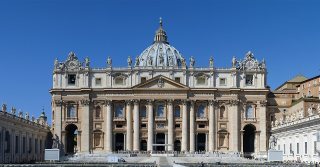
St. Peter's Basilica Must see
The largest church in the world, with Michelangelo's Pietà and dome; free to enter.
Day 2
Pantheon, Rome Must see
A 2,000-year-old temple with the world's largest unreinforced concrete dome and its open oculus.
Piazza Navona Must see
A long Baroque square on the site of an ancient stadium, with three fountains and street artists.
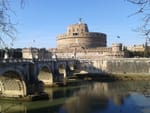
Castel Sant'Angelo Must see
Hadrian's mausoleum turned papal fortress, with a rooftop terrace above the Tiber.
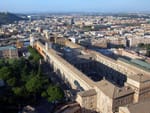
Vatican Museums Must see
The popes' vast art collection: classical sculpture, the Raphael Rooms and the Sistine Chapel.
Rome in 3 days
Day 1
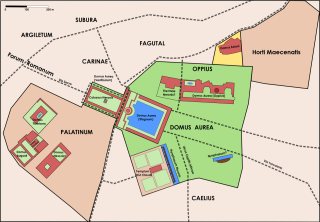
Domus Aurea Must see
Nero's Golden House, a buried imperial palace shown on guided visits (book ahead).
Colosseum Must see
The great amphitheatre of ancient Rome, where gladiators fought for 50,000 spectators.
Palatine Hill Must see
The hill where Rome began and emperors built their palaces, high above the Forum.

San Pietro in Vincoli
A basilica famous for Michelangelo's Moses, the horned marble figure made for the tomb of Pope Julius II, and for the chains said to have bound St Peter.

Monti district
A village-like neighbourhood just behind the Forum, with steep lanes, small wine bars, vintage shops and a relaxed local life around Piazza della Madonna dei Monti.
Day 2
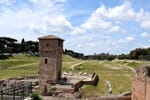
Circus Maximus Must see
The grassy valley where Rome's chariot races once drew a quarter of a million spectators.
Roman Forum Must see
The heart of ancient Rome: temples, arches and the remains of its law courts and senate house.
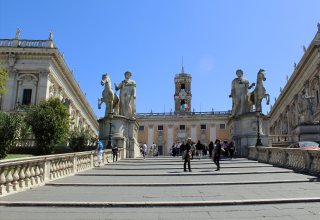
Capitoline Hill Must see
Michelangelo's elegant piazza on the smallest of Rome's seven hills, with views over the Forum.
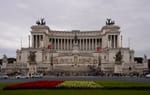
Altare della Patria Must see
The huge white marble monument to Victor Emmanuel II; its terrace has one of the best views over the Forum.
Day 3
Piazza Navona Must see
A long Baroque square on the site of an ancient stadium, with three fountains and street artists.
Pantheon, Rome Must see
A 2,000-year-old temple with the world's largest unreinforced concrete dome and its open oculus.
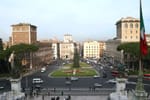
Piazza Venezia
Rome's busiest square, at the foot of the Altare della Patria.
Trevi Fountain Must see
Rome's most famous fountain; toss a coin over your shoulder to make sure you return.
Rome in 4 days
Day 1
Roman Forum Must see
The heart of ancient Rome: temples, arches and the remains of its law courts and senate house.
Colosseum Must see
The great amphitheatre of ancient Rome, where gladiators fought for 50,000 spectators.
Palatine Hill Must see
The hill where Rome began and emperors built their palaces, high above the Forum.
Day 2
Circus Maximus Must see
The grassy valley where Rome's chariot races once drew a quarter of a million spectators.
Domus Aurea Must see
Nero's Golden House, a buried imperial palace shown on guided visits (book ahead).
Capitoline Hill Must see
Michelangelo's elegant piazza on the smallest of Rome's seven hills, with views over the Forum.
Altare della Patria Must see
The huge white marble monument to Victor Emmanuel II; its terrace has one of the best views over the Forum.
Day 3
Vatican Museums Must see
The popes' vast art collection: classical sculpture, the Raphael Rooms and the Sistine Chapel.
Pantheon, Rome Must see
A 2,000-year-old temple with the world's largest unreinforced concrete dome and its open oculus.
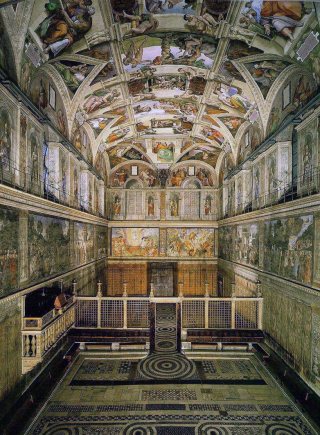
Sistine Chapel Must see
Michelangelo's ceiling and Last Judgement, seen at the end of the Vatican Museums.
Trevi Fountain Must see
Rome's most famous fountain; toss a coin over your shoulder to make sure you return.
Day 4
St. Peter's Basilica Must see
The largest church in the world, with Michelangelo's Pietà and dome; free to enter.
Piazza Venezia
Rome's busiest square, at the foot of the Altare della Patria.
Piazza Navona Must see
A long Baroque square on the site of an ancient stadium, with three fountains and street artists.
Rome in 5 days
Day 1
Domus Aurea Must see
Nero's Golden House, a buried imperial palace shown on guided visits (book ahead).
Colosseum Must see
The great amphitheatre of ancient Rome, where gladiators fought for 50,000 spectators.
Palatine Hill Must see
The hill where Rome began and emperors built their palaces, high above the Forum.
San Pietro in Vincoli
A basilica famous for Michelangelo's Moses, the horned marble figure made for the tomb of Pope Julius II, and for the chains said to have bound St Peter.
Monti district
A village-like neighbourhood just behind the Forum, with steep lanes, small wine bars, vintage shops and a relaxed local life around Piazza della Madonna dei Monti.
Day 2

Campo de' Fiori
A square with a daily morning produce market and a statue of Giordano Bruno, turning into a lively place for drinks and dinner in the evening.
Piazza Navona Must see
A long Baroque square on the site of an ancient stadium, with three fountains and street artists.
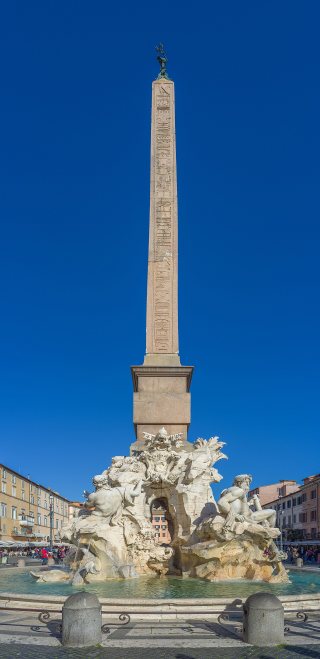
Fontana dei Quattro Fiumi Must see
Bernini's Fountain of the Four Rivers, the centrepiece of Piazza Navona.
Pantheon, Rome Must see
A 2,000-year-old temple with the world's largest unreinforced concrete dome and its open oculus.
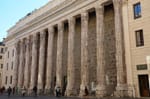
Temple of Hadrian Must see
Eleven Corinthian columns of a 2nd-century temple, built into a later building on Piazza di Pietra.
Trevi Fountain Must see
Rome's most famous fountain; toss a coin over your shoulder to make sure you return.
Day 3

St. Peter's Square
Bernini's vast elliptical piazza in front of St Peter's Basilica, framed by curving colonnades topped with statues of saints, with an Egyptian obelisk at its centre.
St. Peter's Basilica Must see
The largest church in the world, with Michelangelo's Pietà and dome; free to enter.
Vatican Museums Must see
The popes' vast art collection: classical sculpture, the Raphael Rooms and the Sistine Chapel.
Sistine Chapel Must see
Michelangelo's ceiling and Last Judgement, seen at the end of the Vatican Museums.

Santa Maria in Trastevere
One of Rome's oldest churches, with glittering 12th-century apse mosaics, standing on a fountain square that fills with diners and musicians in the evening.
Day 4
Roman Forum Must see
The heart of ancient Rome: temples, arches and the remains of its law courts and senate house.
Capitoline Hill Must see
Michelangelo's elegant piazza on the smallest of Rome's seven hills, with views over the Forum.

Trajan's Market
A multi-level complex of brick shops and offices from the early 2nd century, now the Museum of the Imperial Fora, showing everyday commercial life in ancient Rome.
Day 5
Circus Maximus Must see
The grassy valley where Rome's chariot races once drew a quarter of a million spectators.

Giardino degli Aranci (Orange Garden)
A walled garden of orange trees on the Aventine with a terrace overlooking the Tiber and Rome's rooftops, with the dome of St Peter's on the horizon.
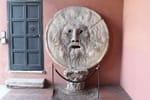
Bocca della Verità Must see
The Mouth of Truth, an ancient marble mask; legend says it bites the hand of a liar.
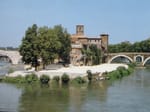
Tiber Island Must see
A small boat-shaped island in the Tiber, with a hospital and a church; lovely at sunset.

Portico of Octavia and the Jewish Ghetto
Ancient colonnaded ruins at the entrance to Rome's old Jewish quarter, where kosher bakeries and trattorias serve carciofi alla giudia, the fried Jewish-style artichoke.
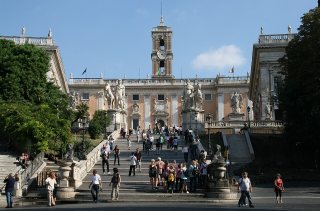
Capitoline Museums Must see
The world's oldest public museum: the bronze she-wolf, Marcus Aurelius and classical sculpture.
Altare della Patria Must see
The huge white marble monument to Victor Emmanuel II; its terrace has one of the best views over the Forum.
Rome in 6 days
Day 1
Domus Aurea Must see
Nero's Golden House, a buried imperial palace shown on guided visits (book ahead).
Colosseum Must see
The great amphitheatre of ancient Rome, where gladiators fought for 50,000 spectators.
Palatine Hill Must see
The hill where Rome began and emperors built their palaces, high above the Forum.
San Pietro in Vincoli
A basilica famous for Michelangelo's Moses, the horned marble figure made for the tomb of Pope Julius II, and for the chains said to have bound St Peter.
Monti district
A village-like neighbourhood just behind the Forum, with steep lanes, small wine bars, vintage shops and a relaxed local life around Piazza della Madonna dei Monti.
Day 2
Campo de' Fiori
A square with a daily morning produce market and a statue of Giordano Bruno, turning into a lively place for drinks and dinner in the evening.
Piazza Navona Must see
A long Baroque square on the site of an ancient stadium, with three fountains and street artists.
Fontana dei Quattro Fiumi Must see
Bernini's Fountain of the Four Rivers, the centrepiece of Piazza Navona.
Pantheon, Rome Must see
A 2,000-year-old temple with the world's largest unreinforced concrete dome and its open oculus.
Temple of Hadrian Must see
Eleven Corinthian columns of a 2nd-century temple, built into a later building on Piazza di Pietra.
Trevi Fountain Must see
Rome's most famous fountain; toss a coin over your shoulder to make sure you return.
Day 3
St. Peter's Basilica Must see
The largest church in the world, with Michelangelo's Pietà and dome; free to enter.
Castel Sant'Angelo Must see
Hadrian's mausoleum turned papal fortress, with a rooftop terrace above the Tiber.
Day 4
Roman Forum Must see
The heart of ancient Rome: temples, arches and the remains of its law courts and senate house.
Capitoline Hill Must see
Michelangelo's elegant piazza on the smallest of Rome's seven hills, with views over the Forum.
Trajan's Market
A multi-level complex of brick shops and offices from the early 2nd century, now the Museum of the Imperial Fora, showing everyday commercial life in ancient Rome.
Day 5
Circus Maximus Must see
The grassy valley where Rome's chariot races once drew a quarter of a million spectators.
Giardino degli Aranci (Orange Garden)
A walled garden of orange trees on the Aventine with a terrace overlooking the Tiber and Rome's rooftops, with the dome of St Peter's on the horizon.
Bocca della Verità Must see
The Mouth of Truth, an ancient marble mask; legend says it bites the hand of a liar.
Tiber Island Must see
A small boat-shaped island in the Tiber, with a hospital and a church; lovely at sunset.
Portico of Octavia and the Jewish Ghetto
Ancient colonnaded ruins at the entrance to Rome's old Jewish quarter, where kosher bakeries and trattorias serve carciofi alla giudia, the fried Jewish-style artichoke.
Capitoline Museums Must see
The world's oldest public museum: the bronze she-wolf, Marcus Aurelius and classical sculpture.
Altare della Patria Must see
The huge white marble monument to Victor Emmanuel II; its terrace has one of the best views over the Forum.
Day 6
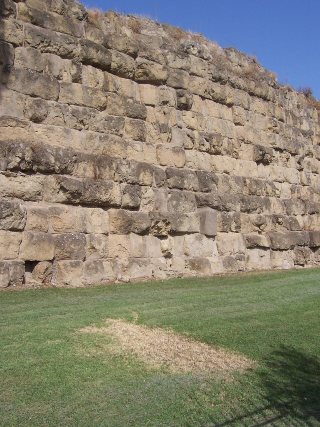
Servian Wall
Remnants of Rome's earliest city wall, from the 4th century BC; a section stands outside Termini station.
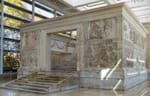
Ara Pacis
Augustus's Altar of Peace, a finely carved marble altar from 9 BC in a modern glass pavilion by the Tiber.
Vatican Museums Must see
The popes' vast art collection: classical sculpture, the Raphael Rooms and the Sistine Chapel.
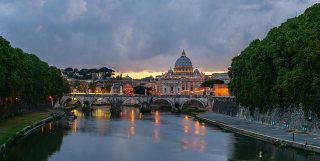
Ponte Sant'Angelo
The bridge to Castel Sant'Angelo, lined with Bernini's ten angels.
Sistine Chapel Must see
Michelangelo's ceiling and Last Judgement, seen at the end of the Vatican Museums.
Rome in 7 days
Day 1
Domus Aurea Must see
Nero's Golden House, a buried imperial palace shown on guided visits (book ahead).
Colosseum Must see
The great amphitheatre of ancient Rome, where gladiators fought for 50,000 spectators.
Palatine Hill Must see
The hill where Rome began and emperors built their palaces, high above the Forum.
San Pietro in Vincoli
A basilica famous for Michelangelo's Moses, the horned marble figure made for the tomb of Pope Julius II, and for the chains said to have bound St Peter.
Monti district
A village-like neighbourhood just behind the Forum, with steep lanes, small wine bars, vintage shops and a relaxed local life around Piazza della Madonna dei Monti.
Day 2
Campo de' Fiori
A square with a daily morning produce market and a statue of Giordano Bruno, turning into a lively place for drinks and dinner in the evening.
Piazza Navona Must see
A long Baroque square on the site of an ancient stadium, with three fountains and street artists.
Fontana dei Quattro Fiumi Must see
Bernini's Fountain of the Four Rivers, the centrepiece of Piazza Navona.
Pantheon, Rome Must see
A 2,000-year-old temple with the world's largest unreinforced concrete dome and its open oculus.
Temple of Hadrian Must see
Eleven Corinthian columns of a 2nd-century temple, built into a later building on Piazza di Pietra.
Trevi Fountain Must see
Rome's most famous fountain; toss a coin over your shoulder to make sure you return.
Day 3
St. Peter's Square
Bernini's vast elliptical piazza in front of St Peter's Basilica, framed by curving colonnades topped with statues of saints, with an Egyptian obelisk at its centre.
St. Peter's Basilica Must see
The largest church in the world, with Michelangelo's Pietà and dome; free to enter.
Vatican Museums Must see
The popes' vast art collection: classical sculpture, the Raphael Rooms and the Sistine Chapel.
Sistine Chapel Must see
Michelangelo's ceiling and Last Judgement, seen at the end of the Vatican Museums.
Santa Maria in Trastevere
One of Rome's oldest churches, with glittering 12th-century apse mosaics, standing on a fountain square that fills with diners and musicians in the evening.
Day 4
Roman Forum Must see
The heart of ancient Rome: temples, arches and the remains of its law courts and senate house.
Capitoline Hill Must see
Michelangelo's elegant piazza on the smallest of Rome's seven hills, with views over the Forum.
Trajan's Market
A multi-level complex of brick shops and offices from the early 2nd century, now the Museum of the Imperial Fora, showing everyday commercial life in ancient Rome.
Day 5
Circus Maximus Must see
The grassy valley where Rome's chariot races once drew a quarter of a million spectators.
Giardino degli Aranci (Orange Garden)
A walled garden of orange trees on the Aventine with a terrace overlooking the Tiber and Rome's rooftops, with the dome of St Peter's on the horizon.
Bocca della Verità Must see
The Mouth of Truth, an ancient marble mask; legend says it bites the hand of a liar.
Tiber Island Must see
A small boat-shaped island in the Tiber, with a hospital and a church; lovely at sunset.
Portico of Octavia and the Jewish Ghetto
Ancient colonnaded ruins at the entrance to Rome's old Jewish quarter, where kosher bakeries and trattorias serve carciofi alla giudia, the fried Jewish-style artichoke.
Capitoline Museums Must see
The world's oldest public museum: the bronze she-wolf, Marcus Aurelius and classical sculpture.
Altare della Patria Must see
The huge white marble monument to Victor Emmanuel II; its terrace has one of the best views over the Forum.
Day 6
Servian Wall
Remnants of Rome's earliest city wall, from the 4th century BC; a section stands outside Termini station.
Ara Pacis
Augustus's Altar of Peace, a finely carved marble altar from 9 BC in a modern glass pavilion by the Tiber.

Mausoleum of Augustus
The huge circular tomb of Rome's first emperor, rising from a piazza near the Ara Pacis, recently restored and reopened to visitors.
Castel Sant'Angelo Must see
Hadrian's mausoleum turned papal fortress, with a rooftop terrace above the Tiber.
Ponte Sant'Angelo
The bridge to Castel Sant'Angelo, lined with Bernini's ten angels.
Day 7

Baths of Caracalla
The vast ruins of an imperial bathing complex from the early 3rd century, with soaring brick walls and mosaic floors that show the scale of Roman public life.
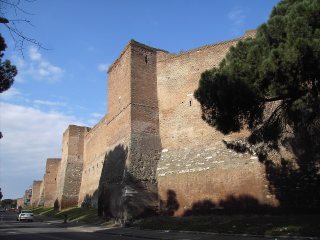
Aurelian Walls
Rome's 3rd-century city walls, still standing for miles; walk a stretch near Porta San Sebastiano.
Spanish Steps
The 135 steps from Piazza di Spagna up to the Trinità dei Monti church.
Piazza di Spagna
The square at the foot of the Spanish Steps, with Bernini's boat-shaped fountain.
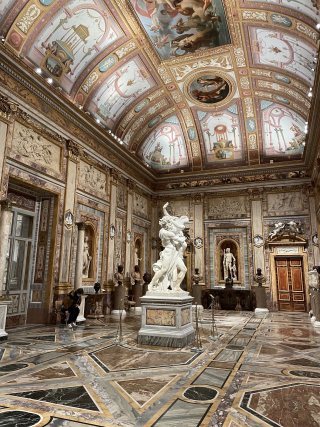
Galleria Borghese
A villa museum in Villa Borghese park, with Bernini's Apollo and Daphne and Rape of Proserpina, Caravaggio paintings and Canova's Pauline Bonaparte.
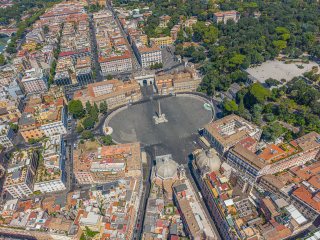
Piazza del Popolo
A grand oval square with an Egyptian obelisk; climb to the Pincio terrace above it for the view.

Pincio Terrace
A terrace on the Pincian Hill overlooking Piazza del Popolo, with a wide view across the rooftops to St Peter's, especially good at sunset.
Watch: Rome in 3 days
A one-minute look at the plan: every stop, day by day, with the map.
Where to stay in Rome
When to go to Rome
April to June and September to October are the best months in Rome, with warm weather for walking between sites. July and August are very hot and crowded, and some local businesses close around Ferragosto in mid-August. Winter is mild and quieter with lower prices, while Easter week and major papal events bring very large crowds to the Vatican.
Plan the rest of your trip
- Where to stay: hotels in Rome on Booking.com or Trip.com
- Skip-the-line tickets: museums and sights in Rome on Tiqets
- Tours and day trips: things to do in Rome on GetYourGuide or on Viator
- From the airport: a private transfer in Rome with Kiwitaxi
- Sightseeing pass: save on Rome's top attractions with Go City
- Data on arrival: an eSIM for Italy from Airalo
- Last day: leave your bags in Rome with Radical Storage and keep sightseeing
Some of these are affiliate links: we may earn a small commission at no extra cost to you.
Tips for Rome
- Book the Colosseum (it includes the Forum and Palatine) and the Vatican Museums ahead; timed tickets sell out.
- The Vatican Museums are closed on most Sundays, and St. Peter's has a dress code: shoulders and knees covered.
- Most of the centre is walkable; the metro is handy for the Vatican and the Colosseum.
- Start early: the Trevi Fountain and Spanish Steps are far calmer before 9 a.m.
- Fill a bottle at the free public fountains (nasoni) all over the city.
Make it your own
Open the guide in Andiamo Places to see every stop on a map with walking directions, move places between days, check opening hours for your dates, and add your own finds. After the trip, your photos become a journal and, if you like, a printed photo book.



Guides are made with the help of AI and public sources such as Wikipedia, and may contain errors. Opening hours and prices change, so check before you go. Spotted a wrong photo, a pin in the wrong place, a missing stop or a better one? Write to andiamotravelapp@gmail.com: the e-mail opens with this guide filled in.
Photo credits
- Altare della Patria: ThePhotografer, CC BY-SA 4.0
- Ara Pacis: Rabax63, CC BY-SA 4.0
- Aurelian Walls: user:Lalupa, Public domain
- Baths of Caracalla: Ethan Doyle White, CC BY-SA 4.0
- Bocca della Verità: Fallaner, CC BY-SA 4.0
- Campo de' Fiori: Myrabella, CC BY-SA 3.0
- Capitoline Hill: Karelj, Public domain
- Capitoline Museums: Jean-Pol GRANDMONT, CC BY-SA 3.0
- Castel Sant'Angelo: 0x010C, CC BY-SA 3.0
- Circus Maximus: Rabax63, CC BY-SA 4.0
- Colosseum: FeaturedPics, CC BY-SA 4.0
- Domus Aurea: Cristiano64, CC BY-SA 3.0
- Fontana dei Quattro Fiumi: This Photo was taken by Wolfgang Moroder . Feel free to use my photos, but please mention me as the author and send me a message . This image is not in the publ, CC BY-SA 3.0
- Giardino degli Aranci (Orange Garden): user:Lalupa, Public domain
- Mausoleum of Augustus: MumblerJamie, CC BY-SA 2.0
- Monti district: Alessio Damato, CC BY-SA 3.0
- Palatine Hill: Lil Herodotus, CC BY-SA 4.0
- Pantheon, Rome: Rabax63, CC BY-SA 4.0
- Piazza Navona: NikonZ7II, CC BY-SA 4.0
- Piazza Venezia: unknown author, GPL
- Piazza del Popolo: Apaleutos25, CC BY-SA 4.0
- Piazza di Spagna: Sergey Smirnov, CC BY-SA 3.0
- Pincio Terrace: Sonse, CC BY 2.0
- Ponte Sant'Angelo: Jebulon, CC0
- Portico of Octavia and the Jewish Ghetto: Portico_Octavia_Rome.jpg: Jensens derivative work: Ptyx (talk), Public domain
- Roman Forum: This Photo was taken by Wolfgang Moroder . Feel free to use my photos, but please mention me as the author and send me a message . This image is not in the publ, CC BY-SA 3.0
- San Pietro in Vincoli: Rione I Monti, CC BY 4.0
- Santa Maria in Trastevere: NateBergin, CC BY 4.0
- Servian Wall: unknown author, CC SA 1.0
- Sistine Chapel: The original uploader was Snowdog at Italian Wikipedia ., CC BY-SA 3.0
- Spanish Steps: Arnaud 25, CC BY-SA 3.0
- St. Peter's Basilica: Alvesgaspar, CC BY-SA 4.0
- St. Peter's Square: Diliff, CC BY-SA 3.0
- Temple of Hadrian: FollowingHadrian, CC BY-SA 4.0
- Tiber Island: unknown author, CC BY-SA 3.0
- Trajan's Market: NikonZ7II, CC BY-SA 4.0
- Trevi Fountain: Diliff, CC BY 3.0
- Vatican Museums: No machine-readable author provided. Fb78 assumed (based on copyright claims)., CC BY 2.5
Opening hours change; check before you go. Map data © OpenStreetMap contributors.
