
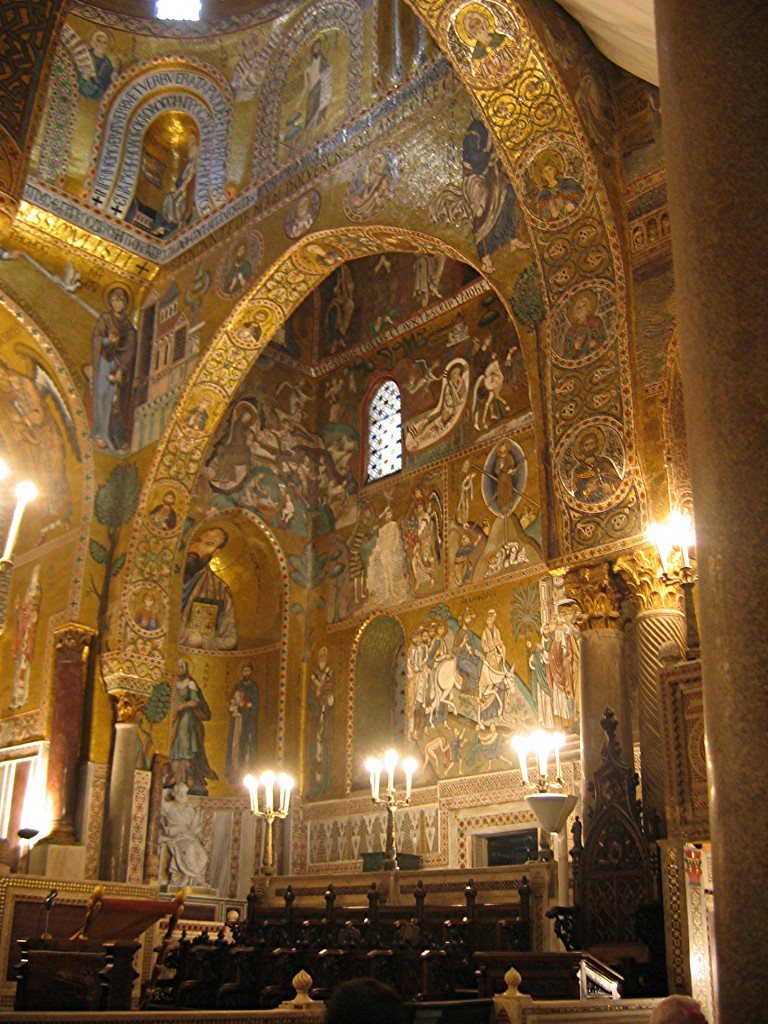
Palermo itinerary: 1 to 5 days
Plans for one to five days in Palermo, day by day: the Cappella Palatina, the Norman Palace, the cathedral and Palazzo Abatellis first, then the Quattro Canti, San Cataldo, San Giovanni degli Eremiti and the Capuchin Catacombs, and the Teatro Massimo, the botanical garden and Villa Giulia as you add days. Every stop has a typical visit length.
How long do you have?
Map: 3 days
Palermo in 1 day
Day 1

Cappella Palatina
Royal chapel of the Norman kings, completed in 1140, covered in Byzantine gold mosaics under an Arab-carved ceiling.

Ballarò market
Palermo's oldest street market, loud with vendors' calls, selling fish, produce, spices and fried street food such as panelle, sfincione and arancine.
Palermo Cathedral
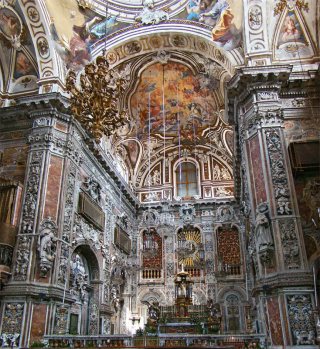
Cathedral blending Norman, Gothic and Baroque styles, with royal tombs, a treasury and a rooftop walk.
Quattro Canti
Baroque crossroads of 1620 at the centre of the old city, with four curved facades of fountains and statues.

Fontana Pretoria
A Renaissance fountain crowded with marble nudes and monsters, nicknamed the Fountain of Shame, in Piazza Pretoria.

La Martorana
A 12th-century church with glittering Byzantine mosaics, beside San Cataldo on Piazza Bellini.
Palazzo Abatellis
Gothic-Catalan palace housing the regional gallery, with the Triumph of Death fresco and Antonello's Annunciata.
Palermo in 2 days
Day 1
Cappella Palatina
Royal chapel of the Norman kings, completed in 1140, covered in Byzantine gold mosaics under an Arab-carved ceiling.
Ballarò market
Palermo's oldest street market, loud with vendors' calls, selling fish, produce, spices and fried street food such as panelle, sfincione and arancine.

Church of the Gesù
Also called Casa Professa, a Jesuit church whose interior is covered in coloured marble inlay, stucco and frescoes, among Palermo's richest Baroque spaces.
Palermo Cathedral
Cathedral blending Norman, Gothic and Baroque styles, with royal tombs, a treasury and a rooftop walk.
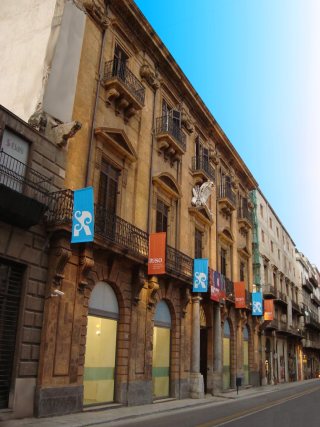
Palazzo Riso
Baroque palace on Corso Vittorio Emanuele housing the museum of contemporary art of Sicily.
Day 2
Quattro Canti
Baroque crossroads of 1620 at the centre of the old city, with four curved facades of fountains and statues.
Fontana Pretoria
A Renaissance fountain crowded with marble nudes and monsters, nicknamed the Fountain of Shame, in Piazza Pretoria.
San Giuseppe dei Teatini
Lavish Baroque church beside the Quattro Canti, with marble, stucco and frescoed vaults.
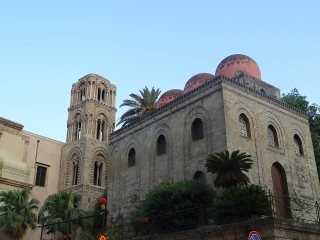
San Cataldo, Palermo
Small Norman church from 1154 with three red domes, part of the Arab-Norman UNESCO site.
La Martorana
A 12th-century church with glittering Byzantine mosaics, beside San Cataldo on Piazza Bellini.
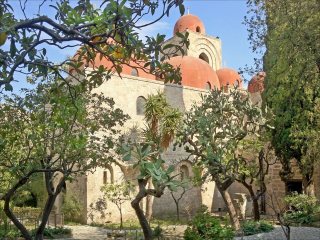
San Giovanni degli Eremiti
Norman monastery church with red domes and a garden cloister near the Royal Palace.
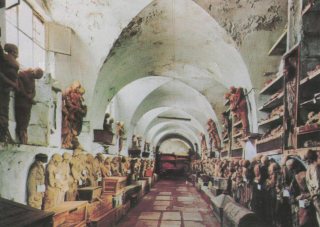
Catacombe dei Cappuccini
Capuchin catacombs holding about 8,000 mummified bodies, dressed and displayed along corridors.
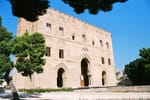
Zisa, Palermo
Twelfth-century Arab-Norman summer palace, now a museum of Islamic art, in the west of the city.
Palermo in 3 days
Day 1
Cappella Palatina
Royal chapel of the Norman kings, completed in 1140, covered in Byzantine gold mosaics under an Arab-carved ceiling.
Ballarò market
Palermo's oldest street market, loud with vendors' calls, selling fish, produce, spices and fried street food such as panelle, sfincione and arancine.
Church of the Gesù
Also called Casa Professa, a Jesuit church whose interior is covered in coloured marble inlay, stucco and frescoes, among Palermo's richest Baroque spaces.
Palermo Cathedral
Cathedral blending Norman, Gothic and Baroque styles, with royal tombs, a treasury and a rooftop walk.
Palazzo Riso
Baroque palace on Corso Vittorio Emanuele housing the museum of contemporary art of Sicily.
Day 2
Quattro Canti
Baroque crossroads of 1620 at the centre of the old city, with four curved facades of fountains and statues.
Fontana Pretoria
A Renaissance fountain crowded with marble nudes and monsters, nicknamed the Fountain of Shame, in Piazza Pretoria.
San Giuseppe dei Teatini
Lavish Baroque church beside the Quattro Canti, with marble, stucco and frescoed vaults.
San Cataldo, Palermo
Small Norman church from 1154 with three red domes, part of the Arab-Norman UNESCO site.
La Martorana
A 12th-century church with glittering Byzantine mosaics, beside San Cataldo on Piazza Bellini.
San Giovanni degli Eremiti
Norman monastery church with red domes and a garden cloister near the Royal Palace.
Catacombe dei Cappuccini
Capuchin catacombs holding about 8,000 mummified bodies, dressed and displayed along corridors.
Zisa, Palermo
Twelfth-century Arab-Norman summer palace, now a museum of Islamic art, in the west of the city.
Day 3
Palazzo Abatellis
Gothic-Catalan palace housing the regional gallery, with the Triumph of Death fresco and Antonello's Annunciata.
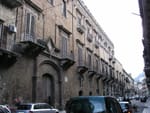
Palazzo Ajutamicristo
Late Gothic and Renaissance palace in the Kalsa quarter, with a courtyard on Via Garibaldi.

Capo market
A covered-street market of produce, fish and meat stalls running from Porta Carini towards Teatro Massimo, with a strong Arab-influenced feel and street food.
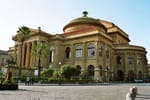
Teatro Massimo
Largest opera house in Italy, opened in 1897, with daily guided tours of the auditorium and royal box.
Palermo in 4 days
Day 1
Cappella Palatina
Royal chapel of the Norman kings, completed in 1140, covered in Byzantine gold mosaics under an Arab-carved ceiling.
Ballarò market
Palermo's oldest street market, loud with vendors' calls, selling fish, produce, spices and fried street food such as panelle, sfincione and arancine.
Church of the Gesù
Also called Casa Professa, a Jesuit church whose interior is covered in coloured marble inlay, stucco and frescoes, among Palermo's richest Baroque spaces.
Palermo Cathedral
Cathedral blending Norman, Gothic and Baroque styles, with royal tombs, a treasury and a rooftop walk.
Palazzo Riso
Baroque palace on Corso Vittorio Emanuele housing the museum of contemporary art of Sicily.
Day 2
Quattro Canti
Baroque crossroads of 1620 at the centre of the old city, with four curved facades of fountains and statues.
Fontana Pretoria
A Renaissance fountain crowded with marble nudes and monsters, nicknamed the Fountain of Shame, in Piazza Pretoria.
San Giuseppe dei Teatini
Lavish Baroque church beside the Quattro Canti, with marble, stucco and frescoed vaults.
San Cataldo, Palermo
Small Norman church from 1154 with three red domes, part of the Arab-Norman UNESCO site.
La Martorana
A 12th-century church with glittering Byzantine mosaics, beside San Cataldo on Piazza Bellini.
San Giovanni degli Eremiti
Norman monastery church with red domes and a garden cloister near the Royal Palace.
Catacombe dei Cappuccini
Capuchin catacombs holding about 8,000 mummified bodies, dressed and displayed along corridors.
Zisa, Palermo
Twelfth-century Arab-Norman summer palace, now a museum of Islamic art, in the west of the city.
Day 3
Palazzo Abatellis
Gothic-Catalan palace housing the regional gallery, with the Triumph of Death fresco and Antonello's Annunciata.
Palazzo Ajutamicristo
Late Gothic and Renaissance palace in the Kalsa quarter, with a courtyard on Via Garibaldi.
Capo market
A covered-street market of produce, fish and meat stalls running from Porta Carini towards Teatro Massimo, with a strong Arab-influenced feel and street food.
Teatro Massimo
Largest opera house in Italy, opened in 1897, with daily guided tours of the auditorium and royal box.
Day 4
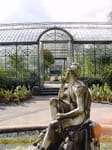
Orto botanico di Palermo
University botanical garden founded in 1795, with huge ficus trees and tropical plants.
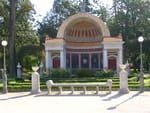
Villa Giulia
Eighteenth-century public garden next to the botanical garden, with fountains and a sundial fountain.

Foro Italico
A seafront promenade and lawn along the Gulf of Palermo, with Monte Pellegrino in view, where locals stroll, cycle and picnic in the evening.

Piazza Marina
A large square near the harbour with Palazzo Steri and a garden, the Giardino Garibaldi, whose giant Ficus magnolioides fig trees have enormous aerial roots.
Palermo in 5 days
Day 1
Cappella Palatina
Royal chapel of the Norman kings, completed in 1140, covered in Byzantine gold mosaics under an Arab-carved ceiling.
Ballarò market
Palermo's oldest street market, loud with vendors' calls, selling fish, produce, spices and fried street food such as panelle, sfincione and arancine.
Church of the Gesù
Also called Casa Professa, a Jesuit church whose interior is covered in coloured marble inlay, stucco and frescoes, among Palermo's richest Baroque spaces.
Palermo Cathedral
Cathedral blending Norman, Gothic and Baroque styles, with royal tombs, a treasury and a rooftop walk.
Palazzo Riso
Baroque palace on Corso Vittorio Emanuele housing the museum of contemporary art of Sicily.
Day 2
Quattro Canti
Baroque crossroads of 1620 at the centre of the old city, with four curved facades of fountains and statues.
Fontana Pretoria
A Renaissance fountain crowded with marble nudes and monsters, nicknamed the Fountain of Shame, in Piazza Pretoria.
San Giuseppe dei Teatini
Lavish Baroque church beside the Quattro Canti, with marble, stucco and frescoed vaults.
San Cataldo, Palermo
Small Norman church from 1154 with three red domes, part of the Arab-Norman UNESCO site.
La Martorana
A 12th-century church with glittering Byzantine mosaics, beside San Cataldo on Piazza Bellini.
San Giovanni degli Eremiti
Norman monastery church with red domes and a garden cloister near the Royal Palace.
Catacombe dei Cappuccini
Capuchin catacombs holding about 8,000 mummified bodies, dressed and displayed along corridors.
Zisa, Palermo
Twelfth-century Arab-Norman summer palace, now a museum of Islamic art, in the west of the city.
Day 3
Palazzo Abatellis
Gothic-Catalan palace housing the regional gallery, with the Triumph of Death fresco and Antonello's Annunciata.
Palazzo Ajutamicristo
Late Gothic and Renaissance palace in the Kalsa quarter, with a courtyard on Via Garibaldi.
Capo market
A covered-street market of produce, fish and meat stalls running from Porta Carini towards Teatro Massimo, with a strong Arab-influenced feel and street food.
Teatro Massimo
Largest opera house in Italy, opened in 1897, with daily guided tours of the auditorium and royal box.
Day 4
Orto botanico di Palermo
University botanical garden founded in 1795, with huge ficus trees and tropical plants.
Villa Giulia
Eighteenth-century public garden next to the botanical garden, with fountains and a sundial fountain.
Foro Italico
A seafront promenade and lawn along the Gulf of Palermo, with Monte Pellegrino in view, where locals stroll, cycle and picnic in the evening.
Piazza Marina
A large square near the harbour with Palazzo Steri and a garden, the Giardino Garibaldi, whose giant Ficus magnolioides fig trees have enormous aerial roots.
Day 5

Monreale Cathedral
A Norman cathedral begun in 1174 in the hills above Palermo, famous for its vast golden mosaics and a peaceful cloister.
Watch: Palermo in 3 days
A one-minute look at the plan: every stop, day by day, with the map.
When to go to Palermo
April to June and September to October are the best months in Palermo, with warm, sunny weather and sea warm enough to swim by late May. July and August are very hot, and some locals leave the city in mid-August. Winters are mild and fairly wet, and the Festino of Santa Rosalia brings processions and fireworks in mid-July.
Plan the rest of your trip
- Where to stay: hotels in Palermo on Booking.com or Trip.com
- Skip-the-line tickets: museums and sights in Palermo on Tiqets
- Tours and day trips: things to do in Palermo on GetYourGuide or on Viator
- From the airport: a private transfer in Palermo with Kiwitaxi
- Data on arrival: an eSIM for Italy from Airalo
- Last day: leave your bags in Palermo with Radical Storage and keep sightseeing
Some of these are affiliate links: we may earn a small commission at no extra cost to you.
Tips for Palermo
- One ticket covers the Royal Palace and the Cappella Palatina; book online, and note the chapel can close on Sunday mornings for Mass.
- Dress modestly for churches and the Cappella Palatina (covered shoulders and knees).
- Palazzo Abatellis and Palazzo Riso close on Mondays; many churches close for a long lunch break.
- Visit the Ballarò and Capo street markets in the morning, when stalls are busiest.
- Summer afternoons are very hot; start early, and use the AMAT buses or a taxi for the Zisa and the Capuchin Catacombs.
Make it your own
Open the guide in Andiamo Places to see every stop on a map with walking directions, move places between days, check opening hours for your dates, and add your own finds. After the trip, your photos become a journal and, if you like, a printed photo book.



Guides are made with the help of AI and public sources such as Wikipedia, and may contain errors. Opening hours and prices change, so check before you go. Spotted a wrong photo, a pin in the wrong place, a missing stop or a better one? Write to andiamotravelapp@gmail.com: the e-mail opens with this guide filled in.
Photo credits
- Ballarò market: Stephen Woolverton, CC BY-SA 3.0
- Capo market: Manuelarosi, CC BY-SA 4.0
- Cappella Palatina: No machine-readable author provided. Urban~commonswiki assumed (based on copyright claims)., CC BY-SA 3.0
- Catacombe dei Cappuccini: Sibeaster, Public domain
- Church of the Gesù: Julian Lupyan, CC0
- Fontana Pretoria: Salvatore Ciambra, CC BY-SA 4.0
- Foro Italico: Dedda71, CC BY 3.0
- La Martorana: Bjs, CC0
- Monreale Cathedral: Holger Uwe Schmitt, CC BY-SA 4.0
- Orto botanico di Palermo: tato grasso, CC BY-SA 2.5
- Palazzo Abatellis: Paolo Monti, CC BY-SA 4.0
- Palazzo Ajutamicristo: CarlesVA, CC BY-SA 3.0
- Palazzo Riso: PacoSoares at Italian Wikipedia, Public domain
- Palermo Cathedral: Tango7174, CC BY-SA 4.0
- Piazza Marina: José Luiz, CC BY-SA 4.0
- Quattro Canti: Bjs, CC0
- San Cataldo, Palermo: Σπάρτακος, CC BY-SA 3.0
- San Giovanni degli Eremiti: dalbera from Paris, France, CC BY 2.0
- San Giuseppe dei Teatini: Bjs, CC0
- Teatro Massimo: Bjs, CC0
- Villa Giulia: Giuseppe ME, CC BY-SA 3.0
- Zisa, Palermo: Bjs, CC0
Opening hours change; check before you go. Map data © OpenStreetMap contributors.
