

Naoshima day trip from Okayama and Kurashiki or Takamatsu
A day trip to Naoshima from Okayama or Takamatsu: Yayoi Kusama's Red Pumpkin at Miyanoura port, the old houses of the Art House Project in Honmura, the Chichu Art Museum with its Monet water lilies, the Lee Ufan Museum, the Benesse House Museum and the Yellow Pumpkin on its pier, then Shinro Ohtake's I Love Yu bathhouse by the port before the ferry. Every stop has a typical visit length.
How long do you have?
Map: 1 days
Naoshima in 1 day
Day 1
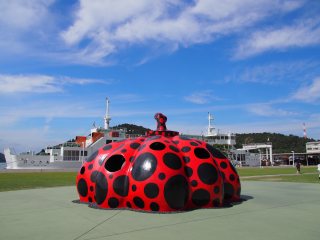
Yayoi Kusama's Red Pumpkin (Miyanoura port)
Big red dotted pumpkin by Yayoi Kusama on the quay at Miyanoura, open inside, the first thing visitors see from the ferry.
Art House Project (Honmura)
Old houses and a shrine in Honmura village turned into artworks, including James Turrell's Minamidera, which has timed entry.

Chichu Art Museum
Tadao Ando's museum built mostly underground, lit by daylight, holding works by Claude Monet, James Turrell and Walter De Maria.

Lee Ufan Museum
Half-buried museum by Tadao Ando for the stone, steel and painted works of the Korean artist Lee Ufan, in a quiet valley.

Benesse House Museum
Museum and hotel by Tadao Ando on the hill above the sea, with contemporary art inside and outdoor works along the shore.
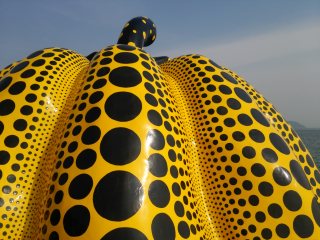
Yayoi Kusama's Yellow Pumpkin
Yellow pumpkin with black dots by Yayoi Kusama at the end of a small pier near Benesse House, the best-known artwork on the island.
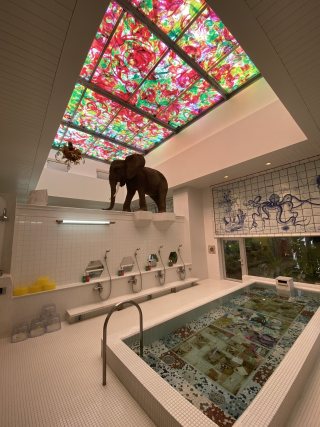
Naoshima Bath I Love Yu
Working public bathhouse near Miyanoura designed by the artist Shinro Ohtake, covered in collage inside and out; bring a towel.
Getting there
From Okayama, JR trains run to Uno in about an hour, then a ferry crosses to Miyanoura in about 20 minutes. From Takamatsu, ferries take about 50 minutes and faster boats less. On the island, town buses, the Benesse shuttle and rental bicycles (many electric) link the port with the museums.
Staying in Okayama and Kurashiki or Takamatsu? This day fits into those city plans, and in the Trip Builder it is one click under each of them.
When to go to Naoshima
Spring and autumn are the best times, mild and good for cycling between the museums. The rainy season runs from June to mid-July and summers are hot and humid, so cycle early. Winter is quiet, with fewer ferries and shorter days, and the Setouchi Triennale years are the busiest.
Plan the rest of your trip
- Where to stay: hotels in Naoshima on Booking.com or Trip.com
- Skip-the-line tickets: museums and sights in Naoshima on Tiqets
- Tours and day trips: things to do in Naoshima on GetYourGuide
- Data on arrival: an eSIM for Japan from Airalo
Some of these are affiliate links: we may earn a small commission at no extra cost to you.
Tips for Naoshima
- Book the Chichu Art Museum's timed tickets online ahead: they often sell out, and you cannot rely on buying at the door.
- Most museums and the Art House Project close on Mondays (open on a Monday holiday, closing the next day): plan for another day.
- Rent a bicycle at Miyanoura port, or use the island buses; the south coast road is hilly, so an electric bike helps.
- Check the last ferry back before you go, especially in winter, and allow time to return to Miyanoura.
- The Setouchi Triennale art festival is held every three years in spring, summer and autumn sessions; the islands are much busier then.
Make it your own
Open the guide in Andiamo Places to see every stop on a map with walking directions, move places between days, check opening hours for your dates, and add your own finds. After the trip, your photos become a journal and, if you like, a printed photo book.



Guides are made with the help of AI and public sources such as Wikipedia, and may contain errors. Opening hours and prices change, so check before you go. Spotted a wrong photo, a pin in the wrong place, a missing stop or a better one? Write to andiamotravelapp@gmail.com: the e-mail opens with this guide filled in.
Photo credits
- Benesse House Museum: Bea Phi, CC BY-SA 4.0
- Chichu Art Museum: 663highland, CC BY 2.5
- Lee Ufan Museum: Bea Phi, CC BY-SA 4.0
Opening hours change; check before you go. Map data © OpenStreetMap contributors.
