

Luxor itinerary: 1 to 3 days
Plans for one to three days in Luxor, day by day: the Valley of the Kings, the temple of Hatshepsut and the Luxor Temple first, then Karnak, the Avenue of Sphinxes and the Luxor Museum, and Medinet Habu, Deir el-Medina, the Valley of the Queens, the Tombs of the Nobles, the Ramesseum and a felucca on the Nile at sunset as you add days. Every stop has a typical visit length.
How long do you have?
Map: 3 days
Luxor in 1 day
Day 1

Valley of the Kings
Desert valley where New Kingdom pharaohs were buried in over 60 rock-cut tombs, their corridors painted with gods and texts of the afterlife.

Mortuary Temple of Hatshepsut (Deir el-Bahari)
Terraced temple of the female pharaoh Hatshepsut set against the cliffs of Deir el-Bahari, with reliefs of the expedition to Punt.

Colossi of Memnon
Two huge seated statues of Amenhotep III, all that stands of his mortuary temple; a short roadside stop on the West Bank.

Karnak Temple
Vast temple complex of Amun built over two thousand years, with the Great Hypostyle Hall's forest of 134 columns and the sacred lake.

Luxor Temple
Temple of Amenhotep III and Ramesses II in the town centre, with an obelisk at its gate whose twin stands in Paris; lit after dark.
Luxor in 2 days
Day 1
Karnak Temple
Vast temple complex of Amun built over two thousand years, with the Great Hypostyle Hall's forest of 134 columns and the sacred lake.

Avenue of Sphinxes
Processional way of about 2.7 km between Karnak and the Luxor Temple, lined with sphinxes, excavated and reopened in 2021.

Luxor Museum
Small, well-lit museum on the Corniche with fine statues from Theban temples, including those found in the Luxor Temple cachette.
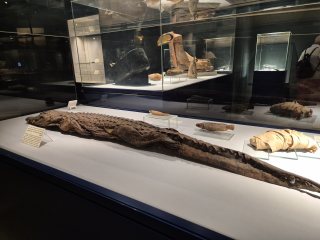
Mummification Museum
Small museum on the Corniche explaining how Egyptians mummified people and animals, with tools, coffins and a human mummy.
Luxor Temple
Temple of Amenhotep III and Ramesses II in the town centre, with an obelisk at its gate whose twin stands in Paris; lit after dark.
Day 2
Valley of the Kings
Desert valley where New Kingdom pharaohs were buried in over 60 rock-cut tombs, their corridors painted with gods and texts of the afterlife.
Mortuary Temple of Hatshepsut (Deir el-Bahari)
Terraced temple of the female pharaoh Hatshepsut set against the cliffs of Deir el-Bahari, with reliefs of the expedition to Punt.

Valley of the Queens
Burial valley of royal wives and children, with Nefertari's richly painted tomb and the colourful tombs of Ramesses III's sons.

Deir el-Medina
Village of the craftsmen who cut the royal tombs, with house foundations, a small Ptolemaic temple and their own vividly painted tombs.

Medinet Habu
Mortuary temple of Ramesses III, one of the best preserved on the West Bank, with deep-cut reliefs that still keep their colour.
Colossi of Memnon
Two huge seated statues of Amenhotep III, all that stands of his mortuary temple; a short roadside stop on the West Bank.
Luxor in 3 days
Day 1
Valley of the Kings
Desert valley where New Kingdom pharaohs were buried in over 60 rock-cut tombs, their corridors painted with gods and texts of the afterlife.
Mortuary Temple of Hatshepsut (Deir el-Bahari)
Terraced temple of the female pharaoh Hatshepsut set against the cliffs of Deir el-Bahari, with reliefs of the expedition to Punt.

Tombs of the Nobles (Sheikh Abd el-Qurna)
Painted tombs of officials on the hillside with lively scenes of farming, banquets and daily life, and fewer visitors than the royal valleys.
Colossi of Memnon
Two huge seated statues of Amenhotep III, all that stands of his mortuary temple; a short roadside stop on the West Bank.

Nile Corniche and felucca at sunset
Riverside promenade in the town centre; a sail on a traditional felucca at sunset looks across to the West Bank hills.
Day 2
Karnak Temple
Vast temple complex of Amun built over two thousand years, with the Great Hypostyle Hall's forest of 134 columns and the sacred lake.
Avenue of Sphinxes
Processional way of about 2.7 km between Karnak and the Luxor Temple, lined with sphinxes, excavated and reopened in 2021.
Luxor Museum
Small, well-lit museum on the Corniche with fine statues from Theban temples, including those found in the Luxor Temple cachette.
Luxor Temple
Temple of Amenhotep III and Ramesses II in the town centre, with an obelisk at its gate whose twin stands in Paris; lit after dark.
Day 3
Valley of the Queens
Burial valley of royal wives and children, with Nefertari's richly painted tomb and the colourful tombs of Ramesses III's sons.
Deir el-Medina
Village of the craftsmen who cut the royal tombs, with house foundations, a small Ptolemaic temple and their own vividly painted tombs.
Medinet Habu
Mortuary temple of Ramesses III, one of the best preserved on the West Bank, with deep-cut reliefs that still keep their colour.

Ramesseum
Memorial temple of Ramesses II with the toppled granite colossus that inspired Shelley's poem Ozymandias.
Watch: Luxor
A one-minute look at the plan: every stop, day by day, with the map.
When to go to Luxor
October to April is the best time, with warm days and cool nights; December to February is the busiest season. From May to September daytime heat often passes 40°C, so sightseeing is limited to early morning and evening. Ramadan, whose dates move each year, brings shorter opening hours at some sites and quieter days.
Plan the rest of your trip
- Where to stay: hotels in Luxor on Booking.com or Trip.com
- Skip-the-line tickets: museums and sights in Luxor on Tiqets
- Tours and day trips: things to do in Luxor on GetYourGuide
- Data on arrival: an eSIM for Egypt from Airalo
Some of these are affiliate links: we may earn a small commission at no extra cost to you.
Tips for Luxor
- Start the West Bank at opening time: the valleys and Hatshepsut's terraces have little shade and are very hot by midday for much of the year.
- The standard Valley of the Kings ticket covers three tombs; Tutankhamun, Seti I and Ramses VI need extra tickets, and Nefertari's tomb in the Valley of the Queens has its own.
- Cross the Nile by the local ferry or a motorboat from the Corniche, and hire a taxi on the West Bank for the day; agree the fare and the route before setting off.
- Carry water, a hat and sunscreen, and dress modestly: shoulders and knees covered are expected outside the hotels and for mosques.
- A hot-air balloon flight over the West Bank at dawn is a popular extra; book with an established company and expect a very early start.
Make it your own
Open the guide in Andiamo Places to see every stop on a map with walking directions, move places between days, check opening hours for your dates, and add your own finds. After the trip, your photos become a journal and, if you like, a printed photo book.



Guides are made with the help of AI and public sources such as Wikipedia, and may contain errors. Opening hours and prices change, so check before you go. Spotted a wrong photo, a pin in the wrong place, a missing stop or a better one? Write to andiamotravelapp@gmail.com: the e-mail opens with this guide filled in.
Photo credits
- Avenue of Sphinxes: Holger Uwe Schmitt, CC BY-SA 4.0
- Colossi of Memnon: MusikAnimal, CC BY-SA 4.0
- Deir el-Medina: Diego Delso, CC BY-SA 4.0
- Karnak Temple: René Hourdry, CC BY-SA 4.0
- Luxor Museum: Charlesdrakew at English Wikipedia, Public domain
- Luxor Temple: Holger Uwe Schmitt, CC BY-SA 4.0
- Medinet Habu: Diego Delso, CC BY-SA 4.0
- Mortuary Temple of Hatshepsut (Deir el-Bahari): Diego Delso, CC BY-SA 4.0
- Nile Corniche and felucca at sunset: F4.animesh, CC BY-SA 4.0
- Ramesseum: Steve F-E-Cameron, CC BY 3.0
- Tombs of the Nobles (Sheikh Abd el-Qurna): Raimond Spekking, CC BY-SA 4.0
- Valley of the Kings: Fotograf/Photographer: Peter J. Bubenik (1995), CC BY-SA 2.0
- Valley of the Queens: Zureks, CC BY-SA 3.0
Opening hours change; check before you go. Map data © OpenStreetMap contributors.
