

Hoi An itinerary: 1 to 2 days
Plans for one and two days in Hoi An, day by day: the Japanese Covered Bridge, the Chinese assembly halls, Tan Ky Old House and the lanes of the Ancient Town first, with banh mi, the central market, an afternoon at An Bang Beach and the lantern-lit night market, then the Cham temples of My Son and Tra Que vegetable village with a second day. Every stop has a typical visit length.
How long do you have?
Map: 2 days
Hoi An in 1 day
Day 1

Japanese Covered Bridge
Roofed wooden bridge of the 17th century with a small temple inside, the town's symbol, restored in 2024.

Cantonese Assembly Hall
Assembly hall built by Cantonese traders, with a courtyard fountain of a dragon wrapped in coloured mosaic.

Tan Ky Old House
Merchant's house of the 18th century, still lived in by the same family, mixing Vietnamese, Chinese and Japanese styles.

Hoi An Ancient Town
A walk through the UNESCO-listed trading port of ochre houses, lanterns, tailors and cafes, largely closed to cars.

Museum of Trade Ceramics
Old timber house with ceramics from Hoi An's centuries as a trading port, from China, Japan, Thailand and the Middle East.

Phuc Kien (Fujian) Assembly Hall
The largest of the town's Chinese assembly halls, built by Fujian merchants and dedicated to Thien Hau, goddess of the sea.

Quan Cong Temple
Chinese temple of the 17th century dedicated to the general Quan Cong, with red lacquer, gilded carvings and a carp pond.
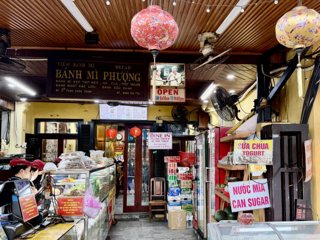
Bánh Mì Phượng
Small, busy bakery famous for its banh mi, the Vietnamese baguette stuffed with meats, pâté, herbs and chilli.

Hoi An Central Market
Riverside market of fish, fruit, herbs and food stalls, busiest in the morning, where locals eat cao lau and noodle soups.

An Bang Beach
Sandy beach a few kilometres from town, with seafood restaurants, beach bars and sunbeds under the palms.
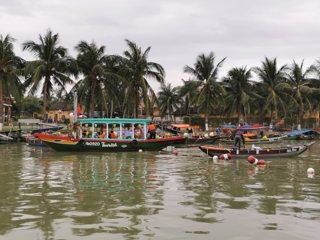
Bach Dang Street
Riverside street along the Thu Bon, lined with cafes and boats, good for watching the lanterns come on at dusk.

Hoi An Night Market and lantern boats
Market of lanterns, snacks and souvenirs on An Hoi islet, with small boats floating paper candles on the river after dark.
Hoi An in 2 days
Day 1

My Son Sanctuary
Jungle valley of Hindu brick temples built by the Champa kings from the 4th to the 13th century, a UNESCO World Heritage Site.
Cantonese Assembly Hall
Assembly hall built by Cantonese traders, with a courtyard fountain of a dragon wrapped in coloured mosaic.
Japanese Covered Bridge
Roofed wooden bridge of the 17th century with a small temple inside, the town's symbol, restored in 2024.
Tan Ky Old House
Merchant's house of the 18th century, still lived in by the same family, mixing Vietnamese, Chinese and Japanese styles.
Hoi An Ancient Town
A walk through the UNESCO-listed trading port of ochre houses, lanterns, tailors and cafes, largely closed to cars.
Museum of Trade Ceramics
Old timber house with ceramics from Hoi An's centuries as a trading port, from China, Japan, Thailand and the Middle East.
Bach Dang Street
Riverside street along the Thu Bon, lined with cafes and boats, good for watching the lanterns come on at dusk.
Hoi An Night Market and lantern boats
Market of lanterns, snacks and souvenirs on An Hoi islet, with small boats floating paper candles on the river after dark.
Day 2
Quan Cong Temple
Chinese temple of the 17th century dedicated to the general Quan Cong, with red lacquer, gilded carvings and a carp pond.
Phuc Kien (Fujian) Assembly Hall
The largest of the town's Chinese assembly halls, built by Fujian merchants and dedicated to Thien Hau, goddess of the sea.
Hoi An Central Market
Riverside market of fish, fruit, herbs and food stalls, busiest in the morning, where locals eat cao lau and noodle soups.
Bánh Mì Phượng
Small, busy bakery famous for its banh mi, the Vietnamese baguette stuffed with meats, pâté, herbs and chilli.

Tra Que Vegetable Village
Farming village between town and the sea known for its herbs, where visitors can try gardening and cooking classes.
An Bang Beach
Sandy beach a few kilometres from town, with seafood restaurants, beach bars and sunbeds under the palms.
When to go to Hoi An
February to April is the best time, dry and warm without the full heat. May to August is hot and sunny, good for the beach but tiring at midday. September to December is the rainy season, with storms and floods in the old town most often in October and November.
Plan the rest of your trip
- Where to stay: hotels in Hoi An on Booking.com or Trip.com
- Skip-the-line tickets: museums and sights in Hoi An on Tiqets
- Tours and day trips: things to do in Hoi An on GetYourGuide
- Data on arrival: an eSIM for Vietnam from Airalo
Some of these are affiliate links: we may earn a small commission at no extra cost to you.
Tips for Hoi An
- An Ancient Town ticket covers entry to a choice of old houses, assembly halls and museums; keep it with you, as it is checked at each one.
- Go to My Son early in the morning, before the heat and the tour groups; the drive from Hoi An takes about an hour.
- The old town is at its best after dusk, when the lanterns are lit and candles float on the Thu Bon river; on full-moon nights the lantern festival makes it even livelier.
- Cover shoulders and knees in the temples and assembly halls, and take a hat and water for the midday heat.
- Bicycles are the easy way to reach Tra Que and An Bang Beach along the flat lanes through the rice fields.
Make it your own
Open the guide in Andiamo Places to see every stop on a map with walking directions, move places between days, check opening hours for your dates, and add your own finds. After the trip, your photos become a journal and, if you like, a printed photo book.



Guides are made with the help of AI and public sources such as Wikipedia, and may contain errors. Opening hours and prices change, so check before you go. Spotted a wrong photo, a pin in the wrong place, a missing stop or a better one? Write to andiamotravelapp@gmail.com: the e-mail opens with this guide filled in.
Photo credits
- An Bang Beach: Tomasz Lewicki from Komorów, Poland, CC BY-SA 2.0
- Cantonese Assembly Hall: Chainwit., CC BY 4.0
- Hoi An Ancient Town: xiquinhosilva, CC BY 2.0
- Hoi An Central Market: Gary Todd from Xinzheng, China, CC0
- Hoi An Night Market and lantern boats: Christophe95, CC BY-SA 4.0
- Japanese Covered Bridge: Chainwit., CC BY 4.0
- Museum of Trade Ceramics: Steffen Schmitz (more photos), CC BY-SA 4.0
- My Son Sanctuary: Nguyenthuanduc, CC0
- Phuc Kien (Fujian) Assembly Hall: Chainwit., CC BY 4.0
- Quan Cong Temple: P. Hughes, CC BY 4.0
- Tan Ky Old House: P. Hughes, CC BY 4.0
- Tra Que Vegetable Village: Trần Đức Bắc, CC BY-SA 4.0
Opening hours change; check before you go. Map data © OpenStreetMap contributors.
