

Catania itinerary: 1 to 2 days
Plans for one and two days in Catania, day by day: Ursino Castle, the Pescheria fish market, the cathedral and the Elephant Fountain, the Roman Theatre, the Benedictine Monastery and Via Crociferi first, then the dome terrace of the Badia di Sant'Agata, the Roman Amphitheatre, Via Etnea, the Bellini Garden, granita at Pasticceria Savia and the sea stacks of Aci Trezza as you add a day. Every stop has a typical visit length.
How long do you have?
Map: 2 days
Catania in 1 day
Day 1

Ursino Castle
13th-century castle of Frederick II, once on the sea until lava surrounded it in 1669, now the civic museum.
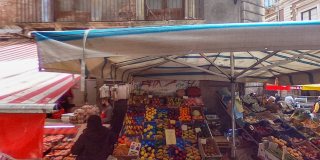
La Pescheria fish market
Catania's loud, lively morning fish market behind the cathedral, with swordfish, tuna and sea urchins and seafood stalls to eat at.

Catania Cathedral
Baroque cathedral of Saint Agatha, the city's patron, rebuilt after the 1693 earthquake, with the tomb of composer Vincenzo Bellini.

Piazza del Duomo and the Elephant Fountain
Catania's main square, with the lava-stone elephant carrying an Egyptian obelisk, the city's symbol, in the middle.

Roman Theatre
Ruins of a Roman theatre of lava stone, partly surrounded by later houses, with the smaller Odeon beside it.

Benedictine Monastery of San Nicolò l'Arena
One of Europe's largest Benedictine monasteries, now part of the university, with cloisters, gardens and Roman remains below.

Via Crociferi
Elegant 18th-century street lined with Baroque churches and convents, crossed by the arch of San Benedetto.
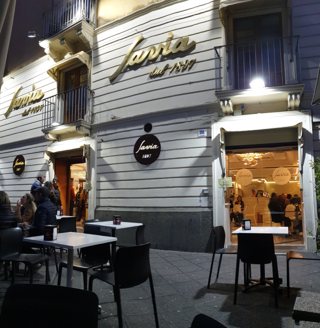
Pasticceria Savia
Historic pastry shop on Via Etnea, a favourite for arancini, cannoli and granita with brioche.
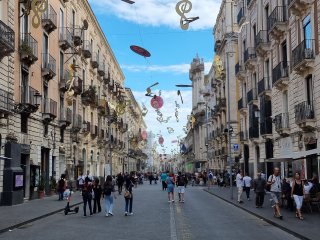
Via Etnea
Catania's main street, running straight up toward Mount Etna, lined with shops, cafés and Baroque palaces; busy for the evening stroll.

Roman Amphitheatre
Part of a huge Roman amphitheatre visible below street level in Piazza Stesicoro, once among the largest in Italy.
Catania in 2 days
Day 1

Bellini Garden (Villa Bellini)
Catania's oldest park, with terraces, palms, a floral clock and views towards Etna on clear days.
Roman Amphitheatre
Part of a huge Roman amphitheatre visible below street level in Piazza Stesicoro, once among the largest in Italy.
Via Etnea
Catania's main street, running straight up toward Mount Etna, lined with shops, cafés and Baroque palaces; busy for the evening stroll.
Via Crociferi
Elegant 18th-century street lined with Baroque churches and convents, crossed by the arch of San Benedetto.
Benedictine Monastery of San Nicolò l'Arena
One of Europe's largest Benedictine monasteries, now part of the university, with cloisters, gardens and Roman remains below.
Roman Theatre
Ruins of a Roman theatre of lava stone, partly surrounded by later houses, with the smaller Odeon beside it.
Ursino Castle
13th-century castle of Frederick II, once on the sea until lava surrounded it in 1669, now the civic museum.
Piazza del Duomo and the Elephant Fountain
Catania's main square, with the lava-stone elephant carrying an Egyptian obelisk, the city's symbol, in the middle.
Catania Cathedral
Baroque cathedral of Saint Agatha, the city's patron, rebuilt after the 1693 earthquake, with the tomb of composer Vincenzo Bellini.
Day 2
Pasticceria Savia
Historic pastry shop on Via Etnea, a favourite for arancini, cannoli and granita with brioche.
La Pescheria fish market
Catania's loud, lively morning fish market behind the cathedral, with swordfish, tuna and sea urchins and seafood stalls to eat at.

Badia di Sant'Agata (dome terrace)
Baroque church beside the cathedral whose dome terrace gives close views over Piazza del Duomo, the city and Etna.

Teatro Massimo Bellini
Grand 19th-century opera house named after Catania-born Vincenzo Bellini, shown on guided tours in the morning.
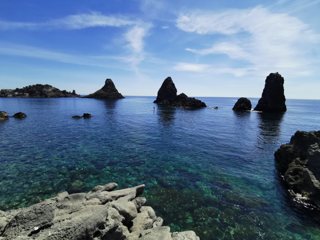
Faraglioni di Aci Trezza
Basalt sea stacks off the fishing village of Aci Trezza north of Catania, linked by legend to the Cyclops of the Odyssey.
Watch: Catania
A one-minute look at the plan: every stop, day by day, with the map.
When to go to Catania
April to June and September to October are the best months, warm and sunny without the summer heat; August is very hot and busy. Winters are mild. The Festa di Sant'Agata on 3-5 February is one of Italy's biggest religious festivals and fills the city.
Plan the rest of your trip
- Where to stay: hotels in Catania on Booking.com or Trip.com
- Skip-the-line tickets: museums and sights in Catania on Tiqets
- Tours and day trips: things to do in Catania on GetYourGuide
- Data on arrival: an eSIM for Italy from Airalo
Some of these are affiliate links: we may earn a small commission at no extra cost to you.
Tips for Catania
- Go to La Pescheria in the morning: the fish market is busiest early and winds down by early afternoon, and it does not run on Sundays.
- Try a granita with brioche for breakfast and arancini from a pastry shop; Pasticceria Savia on Via Etnea is famous for both.
- The Benedictine Monastery of San Nicolò l'Arena is a university building, seen on guided tours that run through the day.
- Mount Etna is close: tours and the bus to the Rifugio Sapienza leave from Catania, but plan a separate day for it.
- The old town is built of black lava stone that gets slippery in rain; comfortable shoes help on the sloping streets.
Make it your own
Open the guide in Andiamo Places to see every stop on a map with walking directions, move places between days, check opening hours for your dates, and add your own finds. After the trip, your photos become a journal and, if you like, a printed photo book.



Guides are made with the help of AI and public sources such as Wikipedia, and may contain errors. Opening hours and prices change, so check before you go. Spotted a wrong photo, a pin in the wrong place, a missing stop or a better one? Write to andiamotravelapp@gmail.com: the e-mail opens with this guide filled in.
Photo credits
- Badia di Sant'Agata (dome terrace): Kamares, CC BY-SA 3.0
- Bellini Garden (Villa Bellini): Unukorno, CC BY 3.0
- Benedictine Monastery of San Nicolò l'Arena: Nicolò Arena, CC BY-SA 4.0
- Catania Cathedral: User:Matthias Süßen, CC BY-SA 4.0
- Piazza del Duomo and the Elephant Fountain: Luca Aless, CC BY-SA 4.0
- Roman Amphitheatre: User:Matthias Süßen, CC BY-SA 4.0
- Roman Theatre: User:Matthias Süßen, CC BY-SA 4.0
- Teatro Massimo Bellini: Berthold Werner, CC BY-SA 3.0
- Ursino Castle: Luca Aless, CC BY-SA 4.0
- Via Crociferi: The original uploader was Triquetra at Italian Wikipedia., CC BY-SA 2.5
Opening hours change; check before you go. Map data © OpenStreetMap contributors.
