
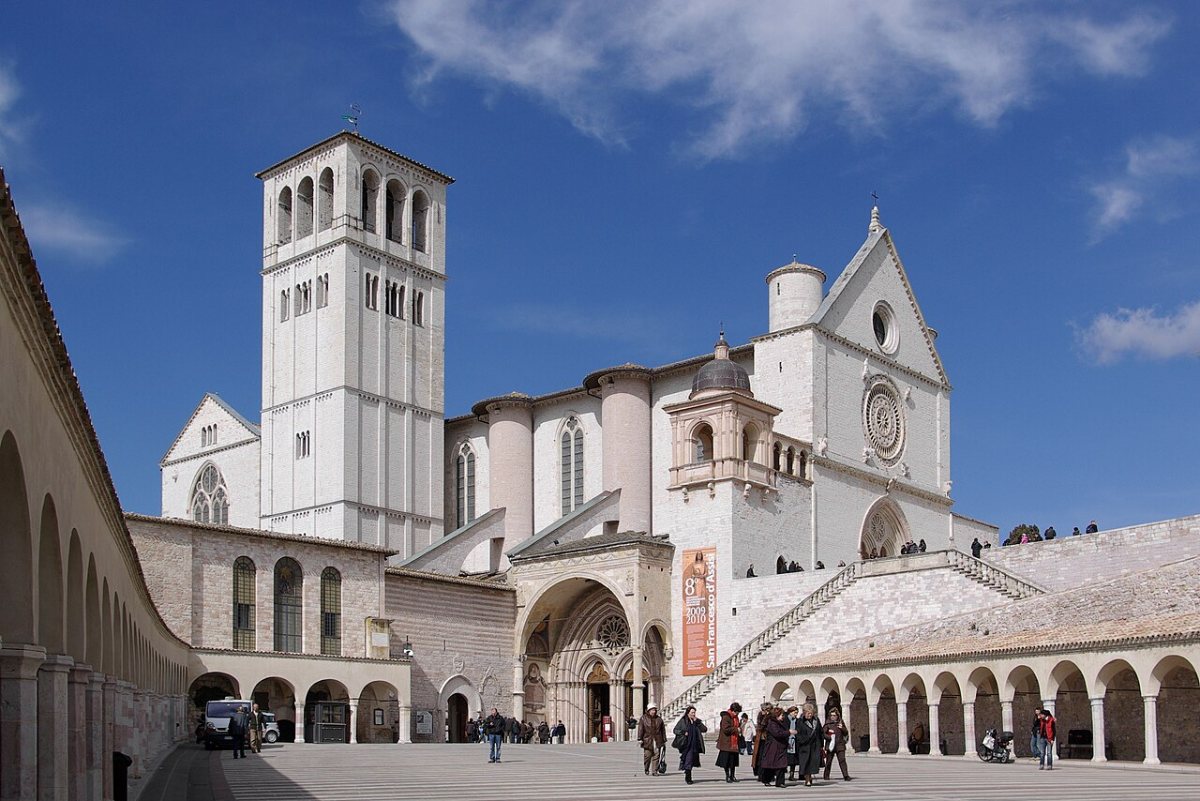
Assisi itinerary: 1 to 3 days
Plans for one to three days in Assisi and nearby Perugia, day by day: the Basilica of Saint Francis, the Temple of Minerva, Santa Chiara and the Rocca Maggiore first, then Perugia's Etruscan Hypogeum of the Volumni, Palazzo dei Priori and Fontana Maggiore, and the Eremo delle Carceri and San Damiano as you add days. Every stop has a typical visit length.
How long do you have?
Map: 3 days
Assisi in 1 day
Day 1
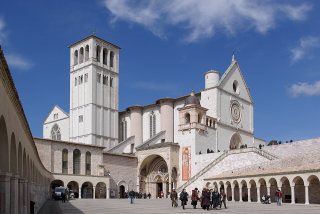
Basilica of Saint Francis of Assisi
Two-level basilica with the tomb of Saint Francis and frescoes by Giotto, Cimabue and Simone Martini; UNESCO World Heritage Site.

Temple of Minerva
An ancient Roman temple on Assisi's main square, with its columned portico intact; a church has occupied it since 1539.

Assisi Cathedral
The Romanesque cathedral of San Rufino, with a carved facade and the font where Saints Francis and Clare were baptised.
Basilica di Santa Chiara
Striped pink and white basilica with the tomb of Saint Clare and the San Damiano Crucifix.
Rocca Maggiore
Castle above Assisi, rebuilt by Cardinal Albornoz in 1367, with views over the town and the Umbrian plain.

Basilica of Santa Maria degli Angeli
The huge basilica on the plain below Assisi, built around the tiny Porziuncola chapel where St Francis founded his order and died.
Assisi in 2 days
Day 1

Hypogeum of the Volumni
Etruscan family tomb of the 2nd century BC near Ponte San Giovanni, with carved stone urns in rock-cut chambers.
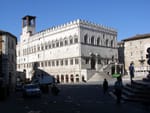
Palazzo dei Priori
Gothic town hall on Perugia's Corso Vannucci, housing the Sala dei Notari, the Collegio del Cambio and the National Gallery of Umbria.
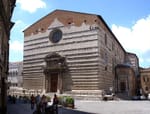
Perugia Cathedral
Gothic cathedral of San Lorenzo on Piazza IV Novembre, with an unfinished facade facing the Fontana Maggiore.
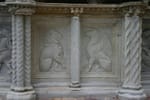
Fontana Maggiore
Medieval fountain of 1278 by Nicola and Giovanni Pisano in Perugia's main square, with carved panels of the months and arts.

Rocca Paolina
A Renaissance fortress built over Perugia's medieval streets; its underground passages and escalators now lead up to the city centre.
Day 2
Rocca Maggiore
Castle above Assisi, rebuilt by Cardinal Albornoz in 1367, with views over the town and the Umbrian plain.
Basilica of Saint Francis of Assisi
Two-level basilica with the tomb of Saint Francis and frescoes by Giotto, Cimabue and Simone Martini; UNESCO World Heritage Site.
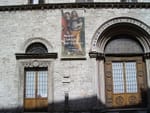
Collegio del Cambio
Money-changers' guild hall inside Perugia's Palazzo dei Priori, frescoed by Perugino around 1500.
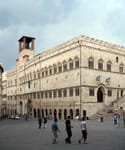
Galleria Nazionale dell'Umbria
Umbrian art from the 13th to the 19th century in Palazzo dei Priori, with Perugino, Pinturicchio and Piero della Francesca.
Assisi in 3 days
Day 1
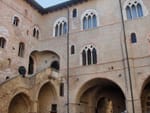
Palazzo Trinci
Early 15th-century palace of the Trinci lords in Foligno, with frescoed halls and the town's museums.
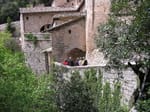
Eremo delle Carceri
Hermitage in the woods of Monte Subasio above Assisi, where Saint Francis and his followers withdrew to pray.
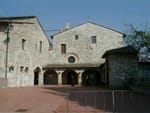
San Damiano, Assisi
Church and small convent below Assisi where Francis heard the crucifix speak and Saint Clare founded her order.
Basilica di Santa Chiara
Striped pink and white basilica with the tomb of Saint Clare and the San Damiano Crucifix.
Day 2
Rocca Maggiore
Castle above Assisi, rebuilt by Cardinal Albornoz in 1367, with views over the town and the Umbrian plain.
Basilica of Saint Francis of Assisi
Two-level basilica with the tomb of Saint Francis and frescoes by Giotto, Cimabue and Simone Martini; UNESCO World Heritage Site.
Temple of Minerva
An ancient Roman temple on Assisi's main square, with its columned portico intact; a church has occupied it since 1539.
Assisi Cathedral
The Romanesque cathedral of San Rufino, with a carved facade and the font where Saints Francis and Clare were baptised.
Basilica of Santa Maria degli Angeli
The huge basilica on the plain below Assisi, built around the tiny Porziuncola chapel where St Francis founded his order and died.
Day 3
Perugia Cathedral
Gothic cathedral of San Lorenzo on Piazza IV Novembre, with an unfinished facade facing the Fontana Maggiore.
Palazzo dei Priori
Gothic town hall on Perugia's Corso Vannucci, housing the Sala dei Notari, the Collegio del Cambio and the National Gallery of Umbria.
Collegio del Cambio
Money-changers' guild hall inside Perugia's Palazzo dei Priori, frescoed by Perugino around 1500.
Fontana Maggiore
Medieval fountain of 1278 by Nicola and Giovanni Pisano in Perugia's main square, with carved panels of the months and arts.
Galleria Nazionale dell'Umbria
Umbrian art from the 13th to the 19th century in Palazzo dei Priori, with Perugino, Pinturicchio and Piero della Francesca.
Rocca Paolina
A Renaissance fortress built over Perugia's medieval streets; its underground passages and escalators now lead up to the city centre.
Hypogeum of the Volumni
Etruscan family tomb of the 2nd century BC near Ponte San Giovanni, with carved stone urns in rock-cut chambers.
Watch: Assisi
A one-minute look at the plan: every stop, day by day, with the map.
When to go to Assisi
April to June and September to October offer warm, clear days in the Umbrian hills without the heat of July and August. The town is busiest around Easter and on 4 October, the feast of Saint Francis, when pilgrims arrive in large numbers. Winters are cold and quiet, with some shops and restaurants keeping shorter hours.
Plan the rest of your trip
- Where to stay: hotels in Assisi on Booking.com or Trip.com
- Skip-the-line tickets: museums and sights in Assisi on Tiqets
- Tours and day trips: things to do in Assisi on GetYourGuide
- From the airport: a private transfer in Assisi with Kiwitaxi
- Data on arrival: an eSIM for Italy from Airalo
- Last day: leave your bags in Assisi with Radical Storage and keep sightseeing
Some of these are affiliate links: we may earn a small commission at no extra cost to you.
Tips for Assisi
- The Basilica of Saint Francis has a dress code (covered shoulders and knees) and asks for silence; photography is not allowed inside.
- Trains stop at Assisi station in Santa Maria degli Angeli, below the town; a bus climbs to the centre. Perugia is about 20-25 minutes away by train.
- Many churches close at lunchtime, for example Santa Chiara (12:00-14:00) and Perugia Cathedral (12:30-15:30).
- The Eremo delle Carceri is about 4 km uphill from Porta Cappuccini: roughly an hour's walk, or a taxi.
- Assisi's historic centre is closed to visitors' cars; park below the walls, for example at Mojano or Porta Nuova.
Make it your own
Open the guide in Andiamo Places to see every stop on a map with walking directions, move places between days, check opening hours for your dates, and add your own finds. After the trip, your photos become a journal and, if you like, a printed photo book.



Guides are made with the help of AI and public sources such as Wikipedia, and may contain errors. Opening hours and prices change, so check before you go. Spotted a wrong photo, a pin in the wrong place, a missing stop or a better one? Write to andiamotravelapp@gmail.com: the e-mail opens with this guide filled in.
Photo credits
- Assisi Cathedral: Marco Ober, CC BY-SA 4.0
- Basilica di Santa Chiara: Ricardo André Frantz ( User:Tetraktys ), CC BY-SA 2.5
- Basilica of Saint Francis of Assisi: Berthold Werner, Public domain
- Basilica of Santa Maria degli Angeli: unknown author, CC BY-SA 3.0
- Collegio del Cambio: Adri08, CC BY-SA 4.0
- Eremo delle Carceri: Gunnar Bach Pedersen, Public domain
- Fontana Maggiore: unknown author, Attribution
- Galleria Nazionale dell'Umbria: frabuleuse on Flickr.com, CC BY-SA 2.0
- Hypogeum of the Volumni: CyArk, CC BY-SA 3.0
- Palazzo Trinci: Georges Jansoone ( JoJan ), CC BY-SA 4.0
- Palazzo dei Priori: Geobia, CC BY-SA 3.0
- Perugia Cathedral: Tetraktys, CC BY 3.0
- Rocca Maggiore: Paolo Monti, CC BY-SA 4.0
- Rocca Paolina: Superchilum, CC BY-SA 4.0
- San Damiano, Assisi: Gunnar Bach Pedersen, Public domain
- Temple of Minerva: Georges Jansoone, CC BY 2.5
Opening hours change; check before you go. Map data © OpenStreetMap contributors.
