
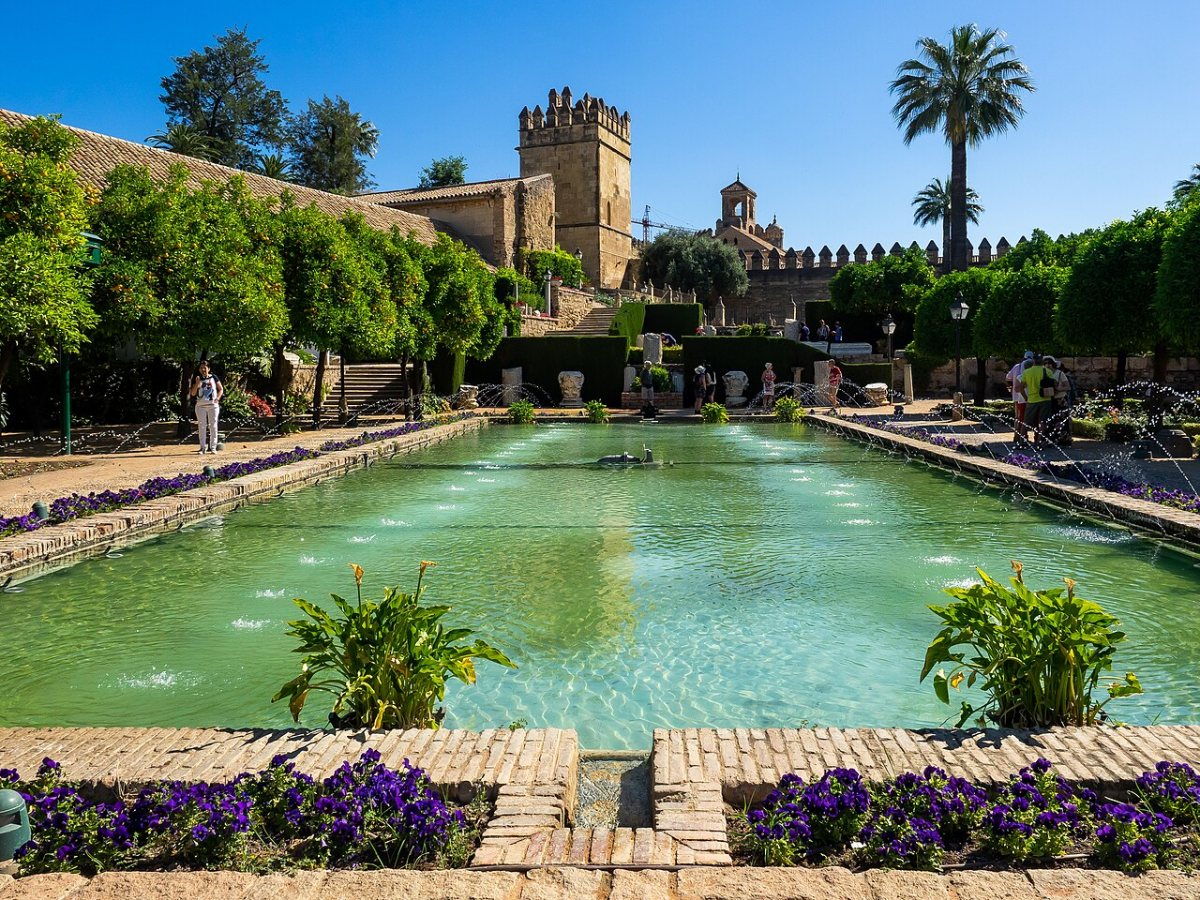
Cordoba itinerary: 1 to 2 days
Plans for one and two days in Córdoba, day by day: the Mosque-Cathedral, the Alcázar de los Reyes Cristianos, the Roman bridge, the Synagogue, the Roman temple and Plaza del Potro first, then the Calahorra Tower, San Nicolás de la Villa, the Palacio de la Merced and the Torre de la Malmuerta as you add a day. Every stop has a typical visit length.
How long do you have?
Map: 2 days
Cordoba in 1 day
Day 1
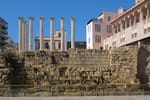
Roman temple of Córdoba
Remains of a first-century Roman temple, with rebuilt columns, found in the 1950s and seen from the street.
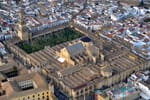
Mosque–Cathedral of Córdoba
Great mosque begun in 785, with a forest of red-and-white arches and a Renaissance cathedral built inside it.

Córdoba Synagogue
Small 14th-century synagogue in the Jewish quarter with fine Mudéjar plasterwork and Hebrew inscriptions, one of Spain's few surviving medieval synagogues.
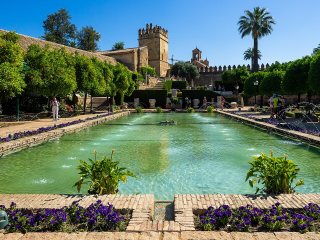
Alcázar de los Reyes Cristianos
Fortress-palace of the Christian kings by the Guadalquivir, with Roman mosaics, towers and terraced gardens with pools and fountains.

Roman bridge of Córdoba
Long stone bridge over the Guadalquivir, Roman in origin and much rebuilt, linking the Mosque-Cathedral with the Calahorra Tower.
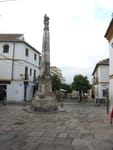
Plaza del Potro
Historic square named after its colt fountain, with the inn mentioned in Don Quixote and the Julio Romero de Torres museum.
Cordoba in 2 days
Day 1
Alcázar de los Reyes Cristianos
Fortress-palace of the Christian kings by the Guadalquivir, with Roman mosaics, towers and terraced gardens with pools and fountains.
Córdoba Synagogue
Small 14th-century synagogue in the Jewish quarter with fine Mudéjar plasterwork and Hebrew inscriptions, one of Spain's few surviving medieval synagogues.
Roman temple of Córdoba
Remains of a first-century Roman temple, with rebuilt columns, found in the 1950s and seen from the street.
Plaza del Potro
Historic square named after its colt fountain, with the inn mentioned in Don Quixote and the Julio Romero de Torres museum.
Roman bridge of Córdoba
Long stone bridge over the Guadalquivir, Roman in origin and much rebuilt, linking the Mosque-Cathedral with the Calahorra Tower.
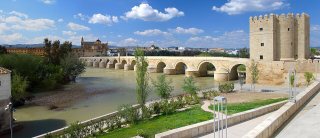
Calahorra Tower
Fortified gate tower at the south end of the Roman bridge, with a museum of the city's Muslim, Christian and Jewish cultures.
Day 2
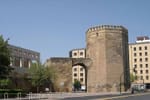
Torre de la Malmuerta
Octagonal 15th-century tower of the old city wall, joined to the wall by an arch, seen from outside.
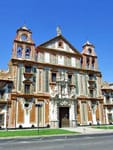
Palacio de la Merced
Former Mercedarian convent with a Baroque facade and cloister, now the seat of the provincial government.
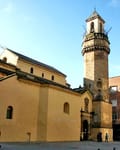
San Nicolás de la Villa
Gothic-Mudéjar parish church with a striking octagonal bell tower built on a square base.
Mosque–Cathedral of Córdoba
Great mosque begun in 785, with a forest of red-and-white arches and a Renaissance cathedral built inside it.
Watch: Cordoba
A one-minute look at the plan: every stop, day by day, with the map.
When to go to Cordoba
Spring, from March to May, and autumn, from late September to November, are the best times, with warm days for walking. July and August are among the hottest in Spain, often above 40°C, and many people go out only in the evening. May is the festival month, with the Crosses of May, the Patios festival and the Córdoba Fair, and hotels fill up.
Plan the rest of your trip
- Where to stay: hotels in Cordoba on Booking.com or Trip.com
- Skip-the-line tickets: museums and sights in Cordoba on Tiqets
- Tours and day trips: things to do in Cordoba on GetYourGuide
- From the airport: a private transfer in Cordoba with Kiwitaxi
- Data on arrival: an eSIM for Spain from Airalo
- Last day: leave your bags in Cordoba with Radical Storage and keep sightseeing
Some of these are affiliate links: we may earn a small commission at no extra cost to you.
Tips for Cordoba
- Book Mosque-Cathedral tickets ahead in busy months; tourist visits are limited during Sunday morning Mass.
- The Alcázar gardens are at their best early in the day; in summer go in the morning to avoid the heat.
- In the first half of May the Patios festival opens private courtyards to visitors; the patios are busy and queues are long.
- Several museums and monuments close on Mondays or keep short afternoon hours; check opening days before planning.
- The old town is compact and best walked; wear good shoes for the cobbles and carry water in summer.
Make it your own
Open the guide in Andiamo Places to see every stop on a map with walking directions, move places between days, check opening hours for your dates, and add your own finds. After the trip, your photos become a journal and, if you like, a printed photo book.



Guides are made with the help of AI and public sources such as Wikipedia, and may contain errors. Opening hours and prices change, so check before you go. Spotted a wrong photo, a pin in the wrong place, a missing stop or a better one? Write to andiamotravelapp@gmail.com: the e-mail opens with this guide filled in.
Photo credits
- Alcázar de los Reyes Cristianos: Ajay Suresh from New York, NY, USA, CC BY 2.0
- Calahorra Tower: Wolfgang Manousek from Dormagen, Germany, CC BY 2.0
- Córdoba Synagogue: Américo Toledano, CC BY-SA 3.0
- Mosque–Cathedral of Córdoba: Toni Castillo Quero, CC BY-SA 2.0
- Palacio de la Merced: Justojosem, CC BY-SA 3.0
- Plaza del Potro: Antonio Montilla Lucena, CC BY-SA 4.0
- Roman bridge of Córdoba: Rafesmar, CC BY-SA 4.0
- Roman temple of Córdoba: kallerna, CC BY-SA 4.0
- San Nicolás de la Villa: Justojosemm, CC BY-SA 4.0
- Torre de la Malmuerta: unknown author, CC BY-SA 3.0
Opening hours change; check before you go. Map data © OpenStreetMap contributors.
