
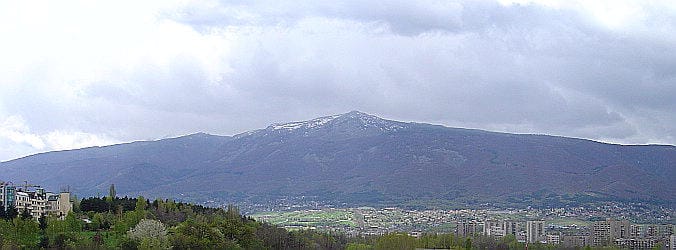
Sofia itinerary: 1 to 5 days
Plans for one to five days in Sofia, day by day: Vitosha mountain, Boyana Church and the National Palace of Culture first, then Vitosha Boulevard, Alexander Nevsky Cathedral, the Central Military Club and the Russian Monument, and the National Archaeological Museum, Banya Bashi Mosque, the Central Mineral Baths and the Zoo as you add days. Every stop has a typical visit length.
How long do you have?
Map: 3 days
Sofia in 1 day
Day 1
Vitosha
Mountain on Sofia's southern edge and Bulgaria's oldest nature park, with hiking trails, ski slopes and Cherni Vrah at 2,290 metres.
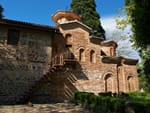
Boyana Church
Small medieval church at the foot of Vitosha with frescoes from 1259, a UNESCO site, seen on short timed visits.
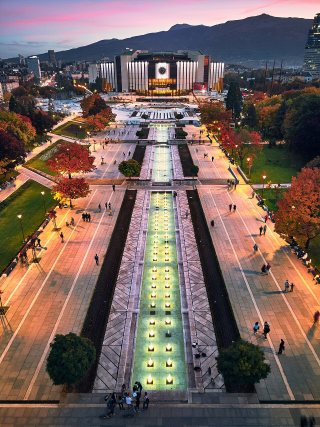
National Palace of Culture
Southeast Europe's largest congress and exhibition centre, built in 1981, at the end of Vitosha Boulevard with a park and fountains.
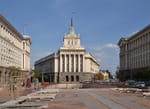
Largo, Sofia
Socialist-era architectural ensemble of three monumental buildings in the centre, built over the excavated ruins of Roman Serdica.

Church of Saint George, Sofia
Red brick rotunda built as Roman baths in the 4th century, the oldest building in Sofia, with medieval frescoes, in a courtyard of ruins.
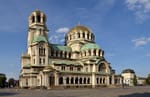
Alexander Nevsky Cathedral, Sofia
Neo-Byzantine cathedral with gilded domes, one of the largest Orthodox churches in the Balkans, with an icon museum in the crypt.

Saint Sophia Church, Sofia
Early Christian brick basilica of the 6th century that gave the city its name, with old tombs and mosaics in a museum below.
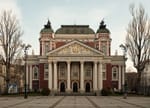
Ivan Vazov National Theatre
Bulgaria's national theatre, a neoclassical building by Fellner and Helmer facing the City Garden, staging drama in Bulgarian.
Sofia in 2 days
Day 1
Vitosha
Mountain on Sofia's southern edge and Bulgaria's oldest nature park, with hiking trails, ski slopes and Cherni Vrah at 2,290 metres.
Boyana Church
Small medieval church at the foot of Vitosha with frescoes from 1259, a UNESCO site, seen on short timed visits.
National Palace of Culture
Southeast Europe's largest congress and exhibition centre, built in 1981, at the end of Vitosha Boulevard with a park and fountains.
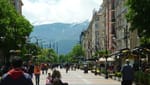
Vitosha Boulevard
Sofia's main pedestrian shopping street, with cafes and restaurants and views of Vitosha mountain at its southern end.
Day 2
Alexander Nevsky Cathedral, Sofia
Neo-Byzantine cathedral with gilded domes, one of the largest Orthodox churches in the Balkans, with an icon museum in the crypt.
Saint Sophia Church, Sofia
Early Christian brick basilica of the 6th century that gave the city its name, with old tombs and mosaics in a museum below.

Russian Church, Sofia
Small Russian Orthodox church of St Nicholas on Tsar Osvoboditel Boulevard, with gilded onion domes and green tiles.

National Art Gallery, Bulgaria
Bulgaria's national gallery in the former royal palace, with Bulgarian paintings and sculpture from the 19th and 20th centuries.
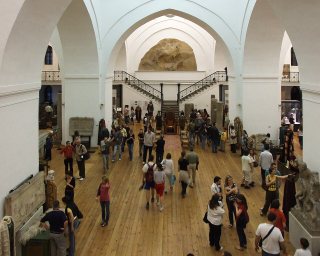
National Archaeological Museum
Museum in a 15th-century Ottoman mosque, with Thracian gold, Roman sculpture and medieval finds.
Church of Saint George, Sofia
Red brick rotunda built as Roman baths in the 4th century, the oldest building in Sofia, with medieval frescoes, in a courtyard of ruins.

Serdica
Remains of the Roman city of Serdica uncovered under central Sofia, with streets, baths and buildings shown in open-air excavations and underpasses.

Saint Nedelya Cathedral, Sofia
Eastern Orthodox cathedral on a central square, rebuilt after the 1925 bombing, with a richly painted interior.
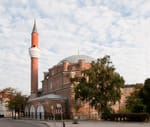
Banya Bashi Mosque
Ottoman mosque of 1576 by the architect Mimar Sinan, the only working mosque in Sofia, near the mineral baths.
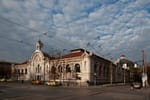
Central Sofia Market Hall
Covered market hall of 1911 in neo-Renaissance style, with food stalls, cafes and small shops.
Ivan Vazov National Theatre
Bulgaria's national theatre, a neoclassical building by Fellner and Helmer facing the City Garden, staging drama in Bulgarian.
Sofia in 3 days
Day 1
Vitosha
Mountain on Sofia's southern edge and Bulgaria's oldest nature park, with hiking trails, ski slopes and Cherni Vrah at 2,290 metres.
Boyana Church
Small medieval church at the foot of Vitosha with frescoes from 1259, a UNESCO site, seen on short timed visits.
National Palace of Culture
Southeast Europe's largest congress and exhibition centre, built in 1981, at the end of Vitosha Boulevard with a park and fountains.
Vitosha Boulevard
Sofia's main pedestrian shopping street, with cafes and restaurants and views of Vitosha mountain at its southern end.
Day 2
Alexander Nevsky Cathedral, Sofia
Neo-Byzantine cathedral with gilded domes, one of the largest Orthodox churches in the Balkans, with an icon museum in the crypt.
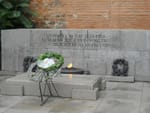
Monument to the Unknown Soldier, Sofia
Memorial with an eternal flame beside the old St. Sofia Church, honouring Bulgarian soldiers who died in war.
Saint Sophia Church, Sofia
Early Christian brick basilica of the 6th century that gave the city its name, with old tombs and mosaics in a museum below.
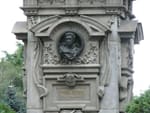
Monument to Vasil Levski, Sofia
Granite column of 1895 marking where the revolutionary Vasil Levski was hanged by the Ottoman authorities in 1873.
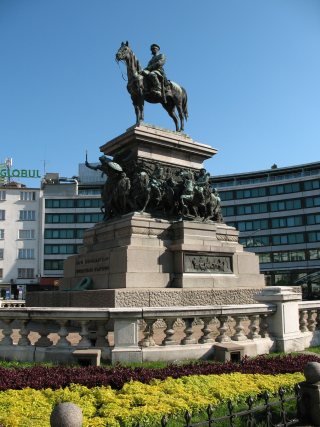
Monument to the Tsar Liberator
Equestrian statue of Russian Tsar Alexander II opposite the National Assembly, honouring his role in Bulgaria's liberation.
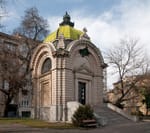
Battenberg Mausoleum
Neo-baroque tomb of Prince Alexander of Battenberg, the first ruling prince of modern Bulgaria, in a small garden.
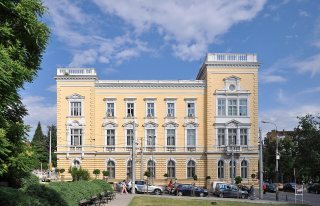
Central Military Club
Neo-Renaissance officers' club of 1907 on Tsar Osvoboditel Boulevard, with ornate halls used for exhibitions and events.
Russian Church, Sofia
Small Russian Orthodox church of St Nicholas on Tsar Osvoboditel Boulevard, with gilded onion domes and green tiles.
National Art Gallery, Bulgaria
Bulgaria's national gallery in the former royal palace, with Bulgarian paintings and sculpture from the 19th and 20th centuries.
Ivan Vazov National Theatre
Bulgaria's national theatre, a neoclassical building by Fellner and Helmer facing the City Garden, staging drama in Bulgarian.
Day 3
National Archaeological Museum
Museum in a 15th-century Ottoman mosque, with Thracian gold, Roman sculpture and medieval finds.
Largo, Sofia
Socialist-era architectural ensemble of three monumental buildings in the centre, built over the excavated ruins of Roman Serdica.
Serdica
Remains of the Roman city of Serdica uncovered under central Sofia, with streets, baths and buildings shown in open-air excavations and underpasses.
Church of Saint George, Sofia
Red brick rotunda built as Roman baths in the 4th century, the oldest building in Sofia, with medieval frescoes, in a courtyard of ruins.
Saint Nedelya Cathedral, Sofia
Eastern Orthodox cathedral on a central square, rebuilt after the 1925 bombing, with a richly painted interior.
Banya Bashi Mosque
Ottoman mosque of 1576 by the architect Mimar Sinan, the only working mosque in Sofia, near the mineral baths.
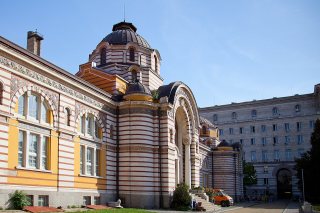
Sofia Central Mineral Baths
Former public bathhouse of 1913 in Vienna Secession style, now the Sofia Regional History Museum, with mineral water taps outside.
Central Sofia Market Hall
Covered market hall of 1911 in neo-Renaissance style, with food stalls, cafes and small shops.
Sofia in 4 days
Day 1
Vitosha
Mountain on Sofia's southern edge and Bulgaria's oldest nature park, with hiking trails, ski slopes and Cherni Vrah at 2,290 metres.
Boyana Church
Small medieval church at the foot of Vitosha with frescoes from 1259, a UNESCO site, seen on short timed visits.
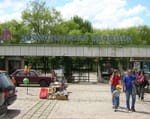
Sofia Zoo
The oldest zoo in Southeast Europe, founded in 1888, in the south of the city near Vitosha.
Day 2
Alexander Nevsky Cathedral, Sofia
Neo-Byzantine cathedral with gilded domes, one of the largest Orthodox churches in the Balkans, with an icon museum in the crypt.
Monument to the Unknown Soldier, Sofia
Memorial with an eternal flame beside the old St. Sofia Church, honouring Bulgarian soldiers who died in war.
Saint Sophia Church, Sofia
Early Christian brick basilica of the 6th century that gave the city its name, with old tombs and mosaics in a museum below.
Monument to Vasil Levski, Sofia
Granite column of 1895 marking where the revolutionary Vasil Levski was hanged by the Ottoman authorities in 1873.
Monument to the Tsar Liberator
Equestrian statue of Russian Tsar Alexander II opposite the National Assembly, honouring his role in Bulgaria's liberation.
Battenberg Mausoleum
Neo-baroque tomb of Prince Alexander of Battenberg, the first ruling prince of modern Bulgaria, in a small garden.
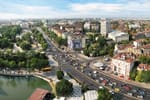
Eagles' Bridge, Sofia
Bridge of 1891 over the Perlovska River with four bronze eagle statues, at the gateway to Borisova Gradina park.
Central Military Club
Neo-Renaissance officers' club of 1907 on Tsar Osvoboditel Boulevard, with ornate halls used for exhibitions and events.
Russian Church, Sofia
Small Russian Orthodox church of St Nicholas on Tsar Osvoboditel Boulevard, with gilded onion domes and green tiles.
Largo, Sofia
Socialist-era architectural ensemble of three monumental buildings in the centre, built over the excavated ruins of Roman Serdica.
Day 3
Vitosha Boulevard
Sofia's main pedestrian shopping street, with cafes and restaurants and views of Vitosha mountain at its southern end.
Serdica
Remains of the Roman city of Serdica uncovered under central Sofia, with streets, baths and buildings shown in open-air excavations and underpasses.
Church of Saint George, Sofia
Red brick rotunda built as Roman baths in the 4th century, the oldest building in Sofia, with medieval frescoes, in a courtyard of ruins.
Saint Nedelya Cathedral, Sofia
Eastern Orthodox cathedral on a central square, rebuilt after the 1925 bombing, with a richly painted interior.
Sofia Central Mineral Baths
Former public bathhouse of 1913 in Vienna Secession style, now the Sofia Regional History Museum, with mineral water taps outside.
Central Sofia Market Hall
Covered market hall of 1911 in neo-Renaissance style, with food stalls, cafes and small shops.
National Art Gallery, Bulgaria
Bulgaria's national gallery in the former royal palace, with Bulgarian paintings and sculpture from the 19th and 20th centuries.
Ivan Vazov National Theatre
Bulgaria's national theatre, a neoclassical building by Fellner and Helmer facing the City Garden, staging drama in Bulgarian.
Day 4
National Palace of Culture
Southeast Europe's largest congress and exhibition centre, built in 1981, at the end of Vitosha Boulevard with a park and fountains.
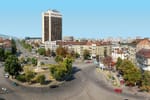
Russian Monument, Sofia
Obelisk of 1882 commemorating the Russian soldiers who fell in the Russo-Turkish War of 1877-78.
National Archaeological Museum
Museum in a 15th-century Ottoman mosque, with Thracian gold, Roman sculpture and medieval finds.
Sofia in 5 days
Day 1
Vitosha
Mountain on Sofia's southern edge and Bulgaria's oldest nature park, with hiking trails, ski slopes and Cherni Vrah at 2,290 metres.
Boyana Church
Small medieval church at the foot of Vitosha with frescoes from 1259, a UNESCO site, seen on short timed visits.
Vitosha Boulevard
Sofia's main pedestrian shopping street, with cafes and restaurants and views of Vitosha mountain at its southern end.
Day 2
Alexander Nevsky Cathedral, Sofia
Neo-Byzantine cathedral with gilded domes, one of the largest Orthodox churches in the Balkans, with an icon museum in the crypt.
Monument to the Unknown Soldier, Sofia
Memorial with an eternal flame beside the old St. Sofia Church, honouring Bulgarian soldiers who died in war.
Saint Sophia Church, Sofia
Early Christian brick basilica of the 6th century that gave the city its name, with old tombs and mosaics in a museum below.
Monument to Vasil Levski, Sofia
Granite column of 1895 marking where the revolutionary Vasil Levski was hanged by the Ottoman authorities in 1873.
Monument to the Tsar Liberator
Equestrian statue of Russian Tsar Alexander II opposite the National Assembly, honouring his role in Bulgaria's liberation.
Battenberg Mausoleum
Neo-baroque tomb of Prince Alexander of Battenberg, the first ruling prince of modern Bulgaria, in a small garden.
Eagles' Bridge, Sofia
Bridge of 1891 over the Perlovska River with four bronze eagle statues, at the gateway to Borisova Gradina park.
Central Military Club
Neo-Renaissance officers' club of 1907 on Tsar Osvoboditel Boulevard, with ornate halls used for exhibitions and events.
Russian Church, Sofia
Small Russian Orthodox church of St Nicholas on Tsar Osvoboditel Boulevard, with gilded onion domes and green tiles.
Day 3
National Archaeological Museum
Museum in a 15th-century Ottoman mosque, with Thracian gold, Roman sculpture and medieval finds.
Largo, Sofia
Socialist-era architectural ensemble of three monumental buildings in the centre, built over the excavated ruins of Roman Serdica.
Serdica
Remains of the Roman city of Serdica uncovered under central Sofia, with streets, baths and buildings shown in open-air excavations and underpasses.
Church of Saint George, Sofia
Red brick rotunda built as Roman baths in the 4th century, the oldest building in Sofia, with medieval frescoes, in a courtyard of ruins.
Saint Nedelya Cathedral, Sofia
Eastern Orthodox cathedral on a central square, rebuilt after the 1925 bombing, with a richly painted interior.
National Art Gallery, Bulgaria
Bulgaria's national gallery in the former royal palace, with Bulgarian paintings and sculpture from the 19th and 20th centuries.
Ivan Vazov National Theatre
Bulgaria's national theatre, a neoclassical building by Fellner and Helmer facing the City Garden, staging drama in Bulgarian.
Day 4
Sofia Zoo
The oldest zoo in Southeast Europe, founded in 1888, in the south of the city near Vitosha.
National Palace of Culture
Southeast Europe's largest congress and exhibition centre, built in 1981, at the end of Vitosha Boulevard with a park and fountains.
Russian Monument, Sofia
Obelisk of 1882 commemorating the Russian soldiers who fell in the Russo-Turkish War of 1877-78.
Day 5
Central Sofia Market Hall
Covered market hall of 1911 in neo-Renaissance style, with food stalls, cafes and small shops.
Banya Bashi Mosque
Ottoman mosque of 1576 by the architect Mimar Sinan, the only working mosque in Sofia, near the mineral baths.
Sofia Central Mineral Baths
Former public bathhouse of 1913 in Vienna Secession style, now the Sofia Regional History Museum, with mineral water taps outside.
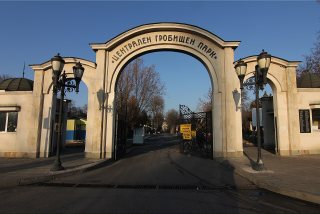
Central Sofia Cemetery
City cemetery north of the centre with the graves of Bulgarian writers, artists and statesmen, and separate religious sections.
Watch: Sofia in 3 days
A one-minute look at the plan: every stop, day by day, with the map.
When to go to Sofia
May to June and September to October are the best months in Sofia, with mild weather for the city and trips to Vitosha and Rila Monastery. July and August are warm and sometimes hot. Winter is cold and snowy, and nearby Vitosha and the resorts of Borovets and Bansko draw skiers from December to March.
Plan the rest of your trip
- Where to stay: hotels in Sofia on Booking.com or Trip.com
- Skip-the-line tickets: museums and sights in Sofia on Tiqets
- Tours and day trips: things to do in Sofia on GetYourGuide
- From the airport: a private transfer in Sofia with Kiwitaxi
- Data on arrival: an eSIM for Bulgaria from Airalo
- Last day: leave your bags in Sofia with Radical Storage and keep sightseeing
Some of these are affiliate links: we may earn a small commission at no extra cost to you.
Tips for Sofia
- Visits inside Boyana Church are limited to small groups for about ten minutes to protect the frescoes; expect a short wait at busy times.
- Bus 66 and the Simeonovo gondola (when running) reach the Aleko area of Vitosha; on clear days Cherni Vrah is a few hours' hike from there.
- The Sofia Metro links the airport and the central station with the city centre; Serdika station has Roman ruins on display.
- Free public mineral water taps outside the Central Mineral Baths are used by locals to fill bottles; the water is warm.
- Alexander Nevsky Cathedral is free to enter; its crypt holds a museum of Orthodox icons with separate tickets.
Make it your own
Open the guide in Andiamo Places to see every stop on a map with walking directions, move places between days, check opening hours for your dates, and add your own finds. After the trip, your photos become a journal and, if you like, a printed photo book.



Guides are made with the help of AI and public sources such as Wikipedia, and may contain errors. Opening hours and prices change, so check before you go. Spotted a wrong photo, a pin in the wrong place, a missing stop or a better one? Write to andiamotravelapp@gmail.com: the e-mail opens with this guide filled in.
Photo credits
- Alexander Nevsky Cathedral, Sofia: Pudelek (Marcin Szala), CC BY-SA 3.0
- Banya Bashi Mosque: MrPanyGoff, CC BY-SA 3.0
- Battenberg Mausoleum: Plamen Agov ( user:MrPanyGoff ), CC BY-SA 3.0
- Boyana Church: Todor Bozhinov / Тодор Божинов, CC BY-SA 3.0
- Central Military Club: MrPanyGoff, CC BY-SA 3.0
- Central Sofia Cemetery: Edal Anton Lefterov, CC BY-SA 3.0
- Central Sofia Market Hall: MrPanyGoff, CC BY-SA 3.0
- Church of Saint George, Sofia: No machine-readable author provided. Preslav~commonswiki assumed (based on copyright claims)., Public domain
- Eagles' Bridge, Sofia: Boby Dimitrov from Sofia, Bulgaria, CC BY-SA 2.0
- Ivan Vazov National Theatre: Plamen Agov ( user:MrPanyGoff ), CC BY-SA 3.0
- Largo, Sofia: Pudelek (Marcin Szala), CC BY-SA 3.0
- Monument to Vasil Levski, Sofia: Elena Chochkova, CC BY-SA 3.0
- Monument to the Tsar Liberator: kuchin ster, CC BY 3.0
- Monument to the Unknown Soldier, Sofia: David Holt, CC BY-SA 2.0
- National Archaeological Museum: MrPanyGoff, CC BY-SA 3.0
- National Art Gallery, Bulgaria: MrPanyGoff, CC BY-SA 3.0
- National Palace of Culture: Deensel, CC BY 2.0
- Russian Church, Sofia: SiefkinDR, Public domain
- Russian Monument, Sofia: Boby Dimitrov from Sofia, Bulgaria, CC BY-SA 2.0
- Saint Nedelya Cathedral, Sofia: Stolichanin, CC BY-SA 4.0
- Saint Sophia Church, Sofia: Klearchos Kapoutsis from Paleo Faliro, Greece, CC BY 2.0
- Serdica: Elena Chochkova, CC BY-SA 3.0
- Sofia Central Mineral Baths: Bin im Garten, CC BY-SA 3.0
- Sofia Zoo: No machine-readable author provided. Preslav~commonswiki assumed (based on copyright claims)., Public domain
- Vitosha: Vladi Belperchinov-Shabanski ( talk ) ( Uploads ), CC BY-SA 3.0
- Vitosha Boulevard: Stolichanin, CC BY-SA 4.0
Opening hours change; check before you go. Map data © OpenStreetMap contributors.
