
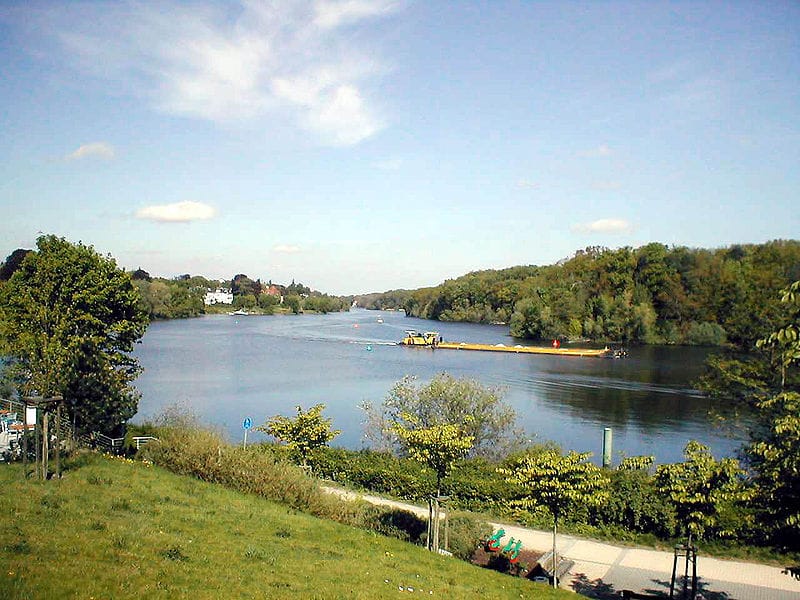
Potsdam itinerary: 1 to 5 days
Plans for one to five days in Potsdam, day by day: Sanssouci Palace and Sanssouci Park first, then Babelsberg, the Dutch Quarter, St. Nicholas' Church and the Church of Peace, and the New Garden, the Marmorpalais, Babelsberg Palace and the Einstein Tower as you add days. Every stop has a typical visit length.
How long do you have?
Map: 3 days
Potsdam in 1 day
Day 1

New Palace, Potsdam
A vast Baroque palace at the western end of Sanssouci Park, built by Frederick the Great after the Seven Years' War.
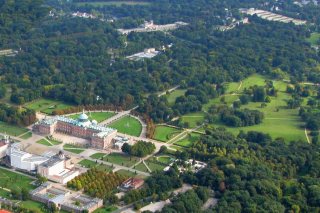
Sanssouci Park
Large royal park with palaces, temples, fountains and the Chinese House, centred on the long main avenue to the New Palace.
Sanssouci
Frederick the Great's single-storey rococo summer palace above terraced vineyards, with the king's rooms shown on timed visits.
Potsdam in 2 days
Day 1
New Palace, Potsdam
A vast Baroque palace at the western end of Sanssouci Park, built by Frederick the Great after the Seven Years' War.
Sanssouci
Frederick the Great's single-storey rococo summer palace above terraced vineyards, with the king's rooms shown on timed visits.
Neptune Grotto
Rococo grotto built for Frederick the Great near the Obelisk entrance of Sanssouci Park, restored with its shell decoration and statue of Neptune.

Brandenburg Gate (Potsdam)
A triumphal arch on Luisenplatz built in 1770 for Frederick the Great, at the start of Potsdam's main shopping street.

Museum Barberini
An art museum in the reconstructed Barberini Palace on the Old Market, known for its Impressionist collection.
Day 2
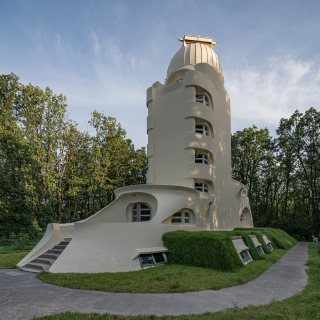
Einstein Tower
Expressionist solar observatory by Erich Mendelsohn, completed in 1921 to test the theory of relativity, on the Telegrafenberg science park.
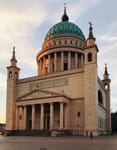
St. Nicholas' Church, Potsdam
Neoclassical church by Schinkel with a large dome over the Old Market; the colonnade around the dome offers views of the city.
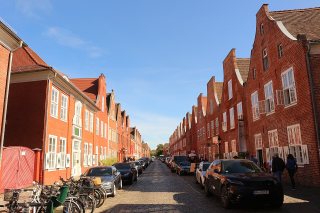
Dutch Quarter
Grid of 134 red-brick gabled houses built in the 1730s for Dutch craftsmen, now with cafes, galleries and small shops.
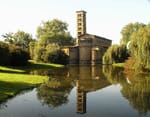
Church of Peace
Romanesque-style church modelled on a Roman basilica, with a Byzantine apse mosaic and the tombs of Frederick William IV and Frederick III.
Sanssouci Park
Large royal park with palaces, temples, fountains and the Chinese House, centred on the long main avenue to the New Palace.
Potsdam in 3 days
Day 1
New Palace, Potsdam
A vast Baroque palace at the western end of Sanssouci Park, built by Frederick the Great after the Seven Years' War.
Sanssouci
Frederick the Great's single-storey rococo summer palace above terraced vineyards, with the king's rooms shown on timed visits.
Neptune Grotto
Rococo grotto built for Frederick the Great near the Obelisk entrance of Sanssouci Park, restored with its shell decoration and statue of Neptune.
Brandenburg Gate (Potsdam)
A triumphal arch on Luisenplatz built in 1770 for Frederick the Great, at the start of Potsdam's main shopping street.
Museum Barberini
An art museum in the reconstructed Barberini Palace on the Old Market, known for its Impressionist collection.
Day 2
Einstein Tower
Expressionist solar observatory by Erich Mendelsohn, completed in 1921 to test the theory of relativity, on the Telegrafenberg science park.
St. Nicholas' Church, Potsdam
Neoclassical church by Schinkel with a large dome over the Old Market; the colonnade around the dome offers views of the city.
Dutch Quarter
Grid of 134 red-brick gabled houses built in the 1730s for Dutch craftsmen, now with cafes, galleries and small shops.
Church of Peace
Romanesque-style church modelled on a Roman basilica, with a Byzantine apse mosaic and the tombs of Frederick William IV and Frederick III.
Sanssouci Park
Large royal park with palaces, temples, fountains and the Chinese House, centred on the long main avenue to the New Palace.
Day 3
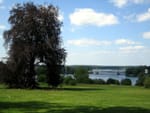
Babelsberg Park
Hillside landscape park by Lenné and Pückler above the Havel, with Babelsberg Palace, the Flatow Tower and lake views.
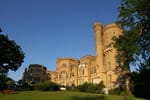
Babelsberg Palace
Neo-Gothic palace by Schinkel for the future Emperor William I, overlooking the Havel; the interiors have been under long restoration.

Glienicke Bridge
A bridge over the Havel between Berlin and Potsdam, known as the 'Bridge of Spies' for Cold War prisoner exchanges.

Cecilienhof
A palace in the style of an English Tudor manor house, where the Potsdam Conference was held in 1945.
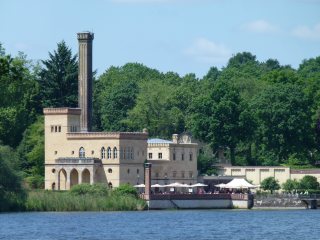
New Garden, Potsdam
Landscape garden on the Heiliger See with the Marmorpalais and Cecilienhof Palace, where the 1945 Potsdam Conference was held.
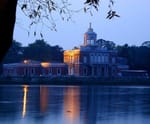
Marmorpalais
Early neoclassical palace of Frederick William II on the shore of the Heiliger See, with restored interiors; limited opening in winter.
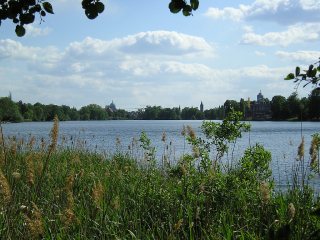
Heiliger See
Small lake at the New Garden with swimming spots and a path past the Marmorpalais and lakeside villas.
Potsdam in 4 days
Day 1
New Palace, Potsdam
A vast Baroque palace at the western end of Sanssouci Park, built by Frederick the Great after the Seven Years' War.
Sanssouci
Frederick the Great's single-storey rococo summer palace above terraced vineyards, with the king's rooms shown on timed visits.
Neptune Grotto
Rococo grotto built for Frederick the Great near the Obelisk entrance of Sanssouci Park, restored with its shell decoration and statue of Neptune.
Brandenburg Gate (Potsdam)
A triumphal arch on Luisenplatz built in 1770 for Frederick the Great, at the start of Potsdam's main shopping street.
Museum Barberini
An art museum in the reconstructed Barberini Palace on the Old Market, known for its Impressionist collection.
Day 2
St. Nicholas' Church, Potsdam
Neoclassical church by Schinkel with a large dome over the Old Market; the colonnade around the dome offers views of the city.
Dutch Quarter
Grid of 134 red-brick gabled houses built in the 1730s for Dutch craftsmen, now with cafes, galleries and small shops.
Church of Peace
Romanesque-style church modelled on a Roman basilica, with a Byzantine apse mosaic and the tombs of Frederick William IV and Frederick III.
Sanssouci Park
Large royal park with palaces, temples, fountains and the Chinese House, centred on the long main avenue to the New Palace.
Day 3
Babelsberg Park
Hillside landscape park by Lenné and Pückler above the Havel, with Babelsberg Palace, the Flatow Tower and lake views.
Babelsberg Palace
Neo-Gothic palace by Schinkel for the future Emperor William I, overlooking the Havel; the interiors have been under long restoration.
Glienicke Bridge
A bridge over the Havel between Berlin and Potsdam, known as the 'Bridge of Spies' for Cold War prisoner exchanges.
Church of the Redeemer, Sacrow
Italianate church with a separate bell tower standing on the Havel shore at Sacrow, once inside the Berlin Wall border strip.
Marmorpalais
Early neoclassical palace of Frederick William II on the shore of the Heiliger See, with restored interiors; limited opening in winter.
Heiliger See
Small lake at the New Garden with swimming spots and a path past the Marmorpalais and lakeside villas.
Day 4
New Garden, Potsdam
Landscape garden on the Heiliger See with the Marmorpalais and Cecilienhof Palace, where the 1945 Potsdam Conference was held.
Cecilienhof
A palace in the style of an English Tudor manor house, where the Potsdam Conference was held in 1945.
Bornstedt Crown Estate
Former royal farm in Italian style near Sanssouci, now with a brewery, restaurant and craft shops.
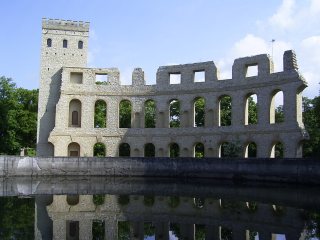
Ruinenberg
Hill north of Sanssouci with artificial Roman-style ruins built around a reservoir that fed the park fountains; views over the park.
Botanical Garden, Potsdam
University botanical garden beside Sanssouci Park, with greenhouses of tropical plants and themed outdoor beds.
Potsdam in 5 days
Day 1
New Palace, Potsdam
A vast Baroque palace at the western end of Sanssouci Park, built by Frederick the Great after the Seven Years' War.
Sanssouci
Frederick the Great's single-storey rococo summer palace above terraced vineyards, with the king's rooms shown on timed visits.
Neptune Grotto
Rococo grotto built for Frederick the Great near the Obelisk entrance of Sanssouci Park, restored with its shell decoration and statue of Neptune.
Brandenburg Gate (Potsdam)
A triumphal arch on Luisenplatz built in 1770 for Frederick the Great, at the start of Potsdam's main shopping street.
Museum Barberini
An art museum in the reconstructed Barberini Palace on the Old Market, known for its Impressionist collection.
Day 2
St. Nicholas' Church, Potsdam
Neoclassical church by Schinkel with a large dome over the Old Market; the colonnade around the dome offers views of the city.
Dutch Quarter
Grid of 134 red-brick gabled houses built in the 1730s for Dutch craftsmen, now with cafes, galleries and small shops.
Church of Peace
Romanesque-style church modelled on a Roman basilica, with a Byzantine apse mosaic and the tombs of Frederick William IV and Frederick III.
Sanssouci Park
Large royal park with palaces, temples, fountains and the Chinese House, centred on the long main avenue to the New Palace.
Day 3
New Garden, Potsdam
Landscape garden on the Heiliger See with the Marmorpalais and Cecilienhof Palace, where the 1945 Potsdam Conference was held.
Cecilienhof
A palace in the style of an English Tudor manor house, where the Potsdam Conference was held in 1945.
Marmorpalais
Early neoclassical palace of Frederick William II on the shore of the Heiliger See, with restored interiors; limited opening in winter.
Heiliger See
Small lake at the New Garden with swimming spots and a path past the Marmorpalais and lakeside villas.
Glienicke Bridge
A bridge over the Havel between Berlin and Potsdam, known as the 'Bridge of Spies' for Cold War prisoner exchanges.
Church of the Redeemer, Sacrow
Italianate church with a separate bell tower standing on the Havel shore at Sacrow, once inside the Berlin Wall border strip.
Day 4
Einstein Tower
Expressionist solar observatory by Erich Mendelsohn, completed in 1921 to test the theory of relativity, on the Telegrafenberg science park.
Botanical Garden, Potsdam
University botanical garden beside Sanssouci Park, with greenhouses of tropical plants and themed outdoor beds.
Ruinenberg
Hill north of Sanssouci with artificial Roman-style ruins built around a reservoir that fed the park fountains; views over the park.
Bornstedt Crown Estate
Former royal farm in Italian style near Sanssouci, now with a brewery, restaurant and craft shops.
Day 5
Babelsberg Park
Hillside landscape park by Lenné and Pückler above the Havel, with Babelsberg Palace, the Flatow Tower and lake views.
Babelsberg Palace
Neo-Gothic palace by Schinkel for the future Emperor William I, overlooking the Havel; the interiors have been under long restoration.
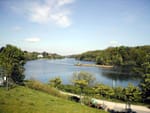
Griebnitzsee
Lake on the border between Potsdam and Berlin, lined with villas where the Potsdam Conference delegations stayed in 1945; a shore path follows it.
Watch: Potsdam in 3 days
A one-minute look at the plan: every stop, day by day, with the map.
When to go to Potsdam
May to September is the best time to visit Potsdam, when the palace gardens are green and fountains run at Sanssouci. Weekends in summer bring crowds from Berlin, so weekdays are calmer. Winter is cold and grey, and some palaces close or open only on guided tours from November to March, though the Christmas markets are busy in December.
Plan the rest of your trip
- Where to stay: hotels in Potsdam on Booking.com or Trip.com
- Skip-the-line tickets: museums and sights in Potsdam on Tiqets
- Tours and day trips: things to do in Potsdam on GetYourGuide
- From the airport: a private transfer in Potsdam with Kiwitaxi
- Data on arrival: an eSIM for Germany from Airalo
- Last day: leave your bags in Potsdam with Radical Storage and keep sightseeing
Some of these are affiliate links: we may earn a small commission at no extra cost to you.
Tips for Potsdam
- Sanssouci Palace is closed on Mondays and entry is by timed ticket; book online, as slots sell out on summer weekends.
- The sanssouci+ day ticket covers Sanssouci and the other open palaces of the Prussian Palaces and Gardens Foundation for one day.
- Several smaller palaces, including the Marmorpalais, open only at weekends or close completely from November to March; check before you go.
- Potsdam is about 25 minutes from central Berlin by S-Bahn S7 or regional train, inside the Berlin ABC fare zone.
- The Einstein Tower is a working observatory; the inside can only be seen on occasional guided tours booked in advance.
Make it your own
Open the guide in Andiamo Places to see every stop on a map with walking directions, move places between days, check opening hours for your dates, and add your own finds. After the trip, your photos become a journal and, if you like, a printed photo book.



Guides are made with the help of AI and public sources such as Wikipedia, and may contain errors. Opening hours and prices change, so check before you go. Spotted a wrong photo, a pin in the wrong place, a missing stop or a better one? Write to andiamotravelapp@gmail.com: the e-mail opens with this guide filled in.
Photo credits
- Babelsberg Palace: Avantique, CC BY-SA 3.0
- Babelsberg Park: Manfred Brueckels, CC BY-SA 3.0
- Bornstedt Crown Estate: Olebole, CC BY-SA 3.0
- Brandenburg Gate (Potsdam): Arild Vågen, CC BY-SA 3.0
- Cecilienhof: Jean-Pierre Dalbéra from Paris, France, CC BY 2.0
- Church of Peace: Olaf Oehlsen, CC BY-SA 3.0
- Dutch Quarter: Angel Miklashevsky, CC BY-SA 4.0
- Einstein Tower: A.Savin, FAL
- Glienicke Bridge: Uwca at German Wikipedia, Public domain
- Griebnitzsee: Jorges, CC BY-SA 3.0
- Heiliger See: Stephan Grund, Public domain
- Marmorpalais: Olebole at German Wikipedia, CC BY-SA 3.0
- Museum Barberini: Daniel Naber, CC BY 4.0
- Neptune Grotto: Raimond Spekking, CC BY-SA 4.0
- New Garden, Potsdam: Oursana, Public domain
- New Palace, Potsdam: A.Savin, FAL
- Ruinenberg: Karstenknuth at German Wikipedia, Attribution
- Sanssouci: Deborah Pickett, CC BY 3.0
- Sanssouci Park: Wolfgang Pehlemann Wiesbaden Germany, CC BY-SA 3.0 de
- St. Nicholas' Church, Potsdam: Konstantindegeer, CC BY-SA 4.0
Opening hours change; check before you go. Map data © OpenStreetMap contributors.
