
Delhi itinerary: 1 to 7 days
Plans for one to seven days in Delhi, day by day: Rashtrapati Bhavan, Chandni Chowk and the Red Fort in Old Delhi first, then Akshardham and India Gate, and the Qutub Minar, Lotus Temple, Jama Masjid and Nizamuddin Dargah as you add days. Every stop has a typical visit length.
How long do you have?
Map: 3 days
Delhi in 1 day
Day 1

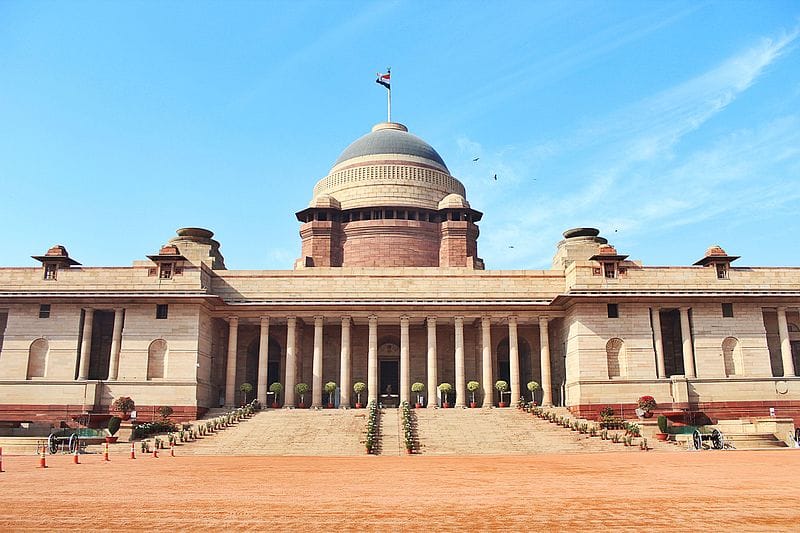
Rashtrapati Bhavan
The Indian President's residence designed by Edwin Lutyens, open for guided tours and with the Amrit Udyan gardens open in spring.
Chandni Chowk
Old Delhi's main bazaar street from the 17th century, packed with shops, street food and religious buildings.
Red Fort
Shah Jahan's red sandstone Mughal palace-fort from the 1640s, a UNESCO site where the Prime Minister speaks on Independence Day.
Delhi in 2 days
Day 1
Agrasen ki Baoli
Medieval stepwell of 108 steps hidden among Connaught Place office towers, a cool and quiet spot.
Chandni Chowk
Old Delhi's main bazaar street from the 17th century, packed with shops, street food and religious buildings.
Red Fort
Shah Jahan's red sandstone Mughal palace-fort from the 1640s, a UNESCO site where the Prime Minister speaks on Independence Day.

Raj Ghat
A quiet memorial park with a black marble platform marking the spot where Mahatma Gandhi was cremated in 1948.
Day 2
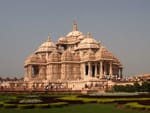
Akshardham
Vast modern Hindu temple complex of carved pink sandstone and marble with exhibitions and an evening water show.

Humayun's Tomb
A 16th-century Mughal garden tomb of red sandstone and marble, a forerunner of the Taj Mahal and a UNESCO site.
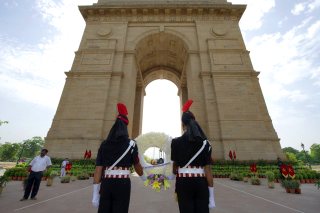
India Gate
42-metre war memorial arch on Kartavya Path honouring Indian soldiers, beside the National War Memorial; lively in the evening.
Delhi in 3 days
Day 1
Agrasen ki Baoli
Medieval stepwell of 108 steps hidden among Connaught Place office towers, a cool and quiet spot.
Chandni Chowk
Old Delhi's main bazaar street from the 17th century, packed with shops, street food and religious buildings.
Akshardham
Vast modern Hindu temple complex of carved pink sandstone and marble with exhibitions and an evening water show.
Day 2
Red Fort
Shah Jahan's red sandstone Mughal palace-fort from the 1640s, a UNESCO site where the Prime Minister speaks on Independence Day.
Raj Ghat
A quiet memorial park with a black marble platform marking the spot where Mahatma Gandhi was cremated in 1948.
India Gate
42-metre war memorial arch on Kartavya Path honouring Indian soldiers, beside the National War Memorial; lively in the evening.

Purana Qila
The old fort of Delhi, with massive gateways, a mosque and ongoing excavations, beside a boating lake.
Humayun's Tomb
A 16th-century Mughal garden tomb of red sandstone and marble, a forerunner of the Taj Mahal and a UNESCO site.
Day 3
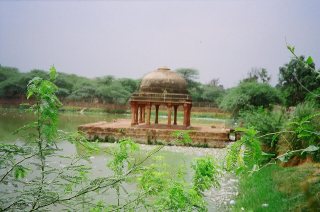
Hauz-i-Shamsi
13th-century reservoir built by Sultan Iltutmish in Mehrauli, with a small pavilion said to mark the Prophet's horse's hoofprint.
Mehrauli Archaeological Park
Park beside the Qutub Minar with over 100 monuments, including the tomb of Balban and the Jamali Kamali mosque.
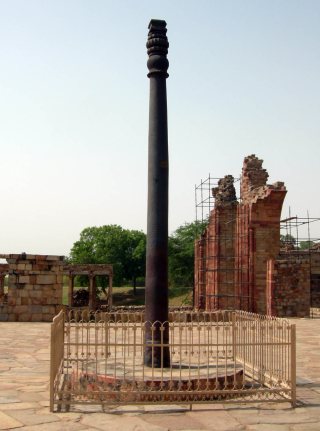
Qutb complex
UNESCO site of the earliest Delhi Sultanate monuments, with the Qutub Minar, Alai Darwaza and the iron pillar.
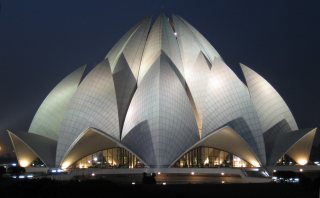
Lotus Temple
Bahá'í House of Worship shaped like a lotus flower, open to people of all faiths for silent prayer.
Delhi in 4 days
Day 1
Agrasen ki Baoli
Medieval stepwell of 108 steps hidden among Connaught Place office towers, a cool and quiet spot.
Chandni Chowk
Old Delhi's main bazaar street from the 17th century, packed with shops, street food and religious buildings.
Red Fort
Shah Jahan's red sandstone Mughal palace-fort from the 1640s, a UNESCO site where the Prime Minister speaks on Independence Day.
Raj Ghat
A quiet memorial park with a black marble platform marking the spot where Mahatma Gandhi was cremated in 1948.
Day 2
Akshardham
Vast modern Hindu temple complex of carved pink sandstone and marble with exhibitions and an evening water show.
Rashtrapati Bhavan
The Indian President's residence designed by Edwin Lutyens, open for guided tours and with the Amrit Udyan gardens open in spring.
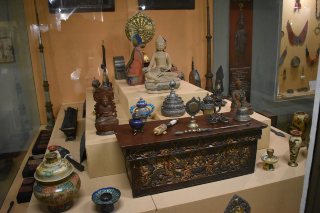
National Museum, New Delhi
India's main museum with art and archaeology from the Harappan civilisation to Mughal miniatures.
Day 3
Qutb complex
UNESCO site of the earliest Delhi Sultanate monuments, with the Qutub Minar, Alai Darwaza and the iron pillar.
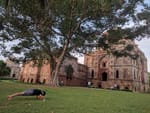
Lodi Gardens
Large park with 15th- and 16th-century tombs of the Sayyid and Lodi rulers, popular for morning walks.

Safdarjung's Tomb
An 18th-century garden tomb, one of the last great Mughal monuments, usually far quieter than Humayun's Tomb.
India Gate
42-metre war memorial arch on Kartavya Path honouring Indian soldiers, beside the National War Memorial; lively in the evening.
Purana Qila
The old fort of Delhi, with massive gateways, a mosque and ongoing excavations, beside a boating lake.
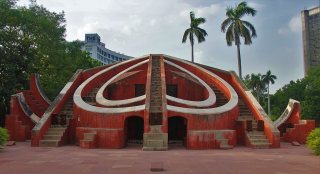
Jantar Mantar, New Delhi
Early 18th-century observatory of large masonry astronomical instruments built by Maharaja Jai Singh II.
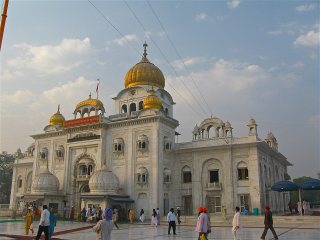
Gurudwara Bangla Sahib
Prominent Sikh temple with a golden dome and holy pool, serving free meals to everyone in its community kitchen.
Teen Murti Bhavan
Former home of Prime Minister Jawaharlal Nehru, now the Prime Ministers' Museum and Library.
Day 4

Okhla Sanctuary
Bird sanctuary at the Okhla barrage on the Yamuna, best in winter for migratory water birds.
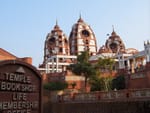
ISKCON Temple Delhi
Hare Krishna temple on a hill in East of Kailash, known for its paintings and animated shows on the Bhagavad Gita.
Lotus Temple
Bahá'í House of Worship shaped like a lotus flower, open to people of all faiths for silent prayer.
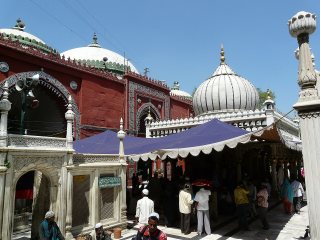
Nizamuddin Dargah
Shrine of the Sufi saint Nizamuddin Auliya, famous for qawwali music on Thursday evenings.
Humayun's Tomb
A 16th-century Mughal garden tomb of red sandstone and marble, a forerunner of the Taj Mahal and a UNESCO site.
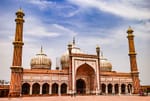
Jama Masjid, Delhi
India's largest mosque, built by Shah Jahan, with a vast courtyard and a minaret to climb for Old Delhi views.
Delhi in 5 days
Day 1
Agrasen ki Baoli
Medieval stepwell of 108 steps hidden among Connaught Place office towers, a cool and quiet spot.
Chandni Chowk
Old Delhi's main bazaar street from the 17th century, packed with shops, street food and religious buildings.
Red Fort
Shah Jahan's red sandstone Mughal palace-fort from the 1640s, a UNESCO site where the Prime Minister speaks on Independence Day.
Raj Ghat
A quiet memorial park with a black marble platform marking the spot where Mahatma Gandhi was cremated in 1948.
Day 2
Akshardham
Vast modern Hindu temple complex of carved pink sandstone and marble with exhibitions and an evening water show.
India Gate
42-metre war memorial arch on Kartavya Path honouring Indian soldiers, beside the National War Memorial; lively in the evening.
Purana Qila
The old fort of Delhi, with massive gateways, a mosque and ongoing excavations, beside a boating lake.
Day 3
ISKCON Temple Delhi
Hare Krishna temple on a hill in East of Kailash, known for its paintings and animated shows on the Bhagavad Gita.
Lotus Temple
Bahá'í House of Worship shaped like a lotus flower, open to people of all faiths for silent prayer.
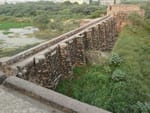
Satpula
14th-century seven-arched stone dam built by Muhammad bin Tughluq, part of the old Jahanpanah city wall.

Hauz Khas Village
South Delhi area of medieval ruins, a mosque, madrasa and tombs above a lake, surrounded by boutiques, cafes and bars.
Safdarjung's Tomb
An 18th-century garden tomb, one of the last great Mughal monuments, usually far quieter than Humayun's Tomb.
Lodi Gardens
Large park with 15th- and 16th-century tombs of the Sayyid and Lodi rulers, popular for morning walks.
Day 4
Teen Murti Bhavan
Former home of Prime Minister Jawaharlal Nehru, now the Prime Ministers' Museum and Library.
Rashtrapati Bhavan
The Indian President's residence designed by Edwin Lutyens, open for guided tours and with the Amrit Udyan gardens open in spring.
National Museum, New Delhi
India's main museum with art and archaeology from the Harappan civilisation to Mughal miniatures.
Jantar Mantar, New Delhi
Early 18th-century observatory of large masonry astronomical instruments built by Maharaja Jai Singh II.
Gurudwara Bangla Sahib
Prominent Sikh temple with a golden dome and holy pool, serving free meals to everyone in its community kitchen.
Jama Masjid, Delhi
India's largest mosque, built by Shah Jahan, with a vast courtyard and a minaret to climb for Old Delhi views.
Day 5
Qutb complex
UNESCO site of the earliest Delhi Sultanate monuments, with the Qutub Minar, Alai Darwaza and the iron pillar.
Mehrauli Archaeological Park
Park beside the Qutub Minar with over 100 monuments, including the tomb of Balban and the Jamali Kamali mosque.
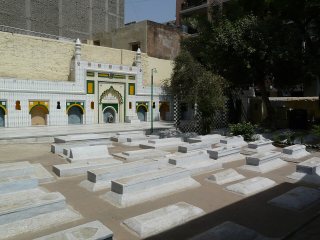
Hijron Ka Khanqah
Small Lodi-era burial site in Mehrauli maintained by Delhi's transgender community, a rare historical site.
Hauz-i-Shamsi
13th-century reservoir built by Sultan Iltutmish in Mehrauli, with a small pavilion said to mark the Prophet's horse's hoofprint.
Nizamuddin Dargah
Shrine of the Sufi saint Nizamuddin Auliya, famous for qawwali music on Thursday evenings.
Humayun's Tomb
A 16th-century Mughal garden tomb of red sandstone and marble, a forerunner of the Taj Mahal and a UNESCO site.
Delhi in 6 days
Day 1
Agrasen ki Baoli
Medieval stepwell of 108 steps hidden among Connaught Place office towers, a cool and quiet spot.
Chandni Chowk
Old Delhi's main bazaar street from the 17th century, packed with shops, street food and religious buildings.
Red Fort
Shah Jahan's red sandstone Mughal palace-fort from the 1640s, a UNESCO site where the Prime Minister speaks on Independence Day.
Raj Ghat
A quiet memorial park with a black marble platform marking the spot where Mahatma Gandhi was cremated in 1948.
Day 2
Akshardham
Vast modern Hindu temple complex of carved pink sandstone and marble with exhibitions and an evening water show.
India Gate
42-metre war memorial arch on Kartavya Path honouring Indian soldiers, beside the National War Memorial; lively in the evening.
Purana Qila
The old fort of Delhi, with massive gateways, a mosque and ongoing excavations, beside a boating lake.
Day 3
ISKCON Temple Delhi
Hare Krishna temple on a hill in East of Kailash, known for its paintings and animated shows on the Bhagavad Gita.
Lotus Temple
Bahá'í House of Worship shaped like a lotus flower, open to people of all faiths for silent prayer.
Satpula
14th-century seven-arched stone dam built by Muhammad bin Tughluq, part of the old Jahanpanah city wall.
Hauz Khas Village
South Delhi area of medieval ruins, a mosque, madrasa and tombs above a lake, surrounded by boutiques, cafes and bars.
Safdarjung's Tomb
An 18th-century garden tomb, one of the last great Mughal monuments, usually far quieter than Humayun's Tomb.
Lodi Gardens
Large park with 15th- and 16th-century tombs of the Sayyid and Lodi rulers, popular for morning walks.
Day 4
Teen Murti Bhavan
Former home of Prime Minister Jawaharlal Nehru, now the Prime Ministers' Museum and Library.
Rashtrapati Bhavan
The Indian President's residence designed by Edwin Lutyens, open for guided tours and with the Amrit Udyan gardens open in spring.
National Museum, New Delhi
India's main museum with art and archaeology from the Harappan civilisation to Mughal miniatures.
Jantar Mantar, New Delhi
Early 18th-century observatory of large masonry astronomical instruments built by Maharaja Jai Singh II.
Gurudwara Bangla Sahib
Prominent Sikh temple with a golden dome and holy pool, serving free meals to everyone in its community kitchen.
Jama Masjid, Delhi
India's largest mosque, built by Shah Jahan, with a vast courtyard and a minaret to climb for Old Delhi views.
Day 5
Qutb complex
UNESCO site of the earliest Delhi Sultanate monuments, with the Qutub Minar, Alai Darwaza and the iron pillar.
Mehrauli Archaeological Park
Park beside the Qutub Minar with over 100 monuments, including the tomb of Balban and the Jamali Kamali mosque.
Hijron Ka Khanqah
Small Lodi-era burial site in Mehrauli maintained by Delhi's transgender community, a rare historical site.
Hauz-i-Shamsi
13th-century reservoir built by Sultan Iltutmish in Mehrauli, with a small pavilion said to mark the Prophet's horse's hoofprint.
Nizamuddin Dargah
Shrine of the Sufi saint Nizamuddin Auliya, famous for qawwali music on Thursday evenings.
Humayun's Tomb
A 16th-century Mughal garden tomb of red sandstone and marble, a forerunner of the Taj Mahal and a UNESCO site.
Day 6
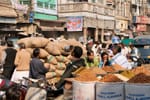
Khari Baoli
Asia's largest wholesale spice market, a crowded street of spice, nut and herb traders in Old Delhi.
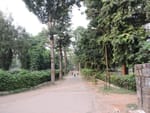
Roshanara Bagh
Mughal garden laid out by Shah Jahan's daughter Roshanara, with her pavilion tomb, in north Delhi.
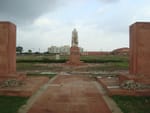
Coronation Park, Delhi
Site of the British Delhi Durbars, where statues of former viceroys and King George V now stand.
Delhi in 7 days
Day 1
Agrasen ki Baoli
Medieval stepwell of 108 steps hidden among Connaught Place office towers, a cool and quiet spot.
Chandni Chowk
Old Delhi's main bazaar street from the 17th century, packed with shops, street food and religious buildings.
Red Fort
Shah Jahan's red sandstone Mughal palace-fort from the 1640s, a UNESCO site where the Prime Minister speaks on Independence Day.
Raj Ghat
A quiet memorial park with a black marble platform marking the spot where Mahatma Gandhi was cremated in 1948.
Day 2
Akshardham
Vast modern Hindu temple complex of carved pink sandstone and marble with exhibitions and an evening water show.
India Gate
42-metre war memorial arch on Kartavya Path honouring Indian soldiers, beside the National War Memorial; lively in the evening.
Purana Qila
The old fort of Delhi, with massive gateways, a mosque and ongoing excavations, beside a boating lake.
Day 3
ISKCON Temple Delhi
Hare Krishna temple on a hill in East of Kailash, known for its paintings and animated shows on the Bhagavad Gita.
Lotus Temple
Bahá'í House of Worship shaped like a lotus flower, open to people of all faiths for silent prayer.
Satpula
14th-century seven-arched stone dam built by Muhammad bin Tughluq, part of the old Jahanpanah city wall.
Hauz Khas Village
South Delhi area of medieval ruins, a mosque, madrasa and tombs above a lake, surrounded by boutiques, cafes and bars.
Safdarjung's Tomb
An 18th-century garden tomb, one of the last great Mughal monuments, usually far quieter than Humayun's Tomb.
Lodi Gardens
Large park with 15th- and 16th-century tombs of the Sayyid and Lodi rulers, popular for morning walks.
Day 4
Teen Murti Bhavan
Former home of Prime Minister Jawaharlal Nehru, now the Prime Ministers' Museum and Library.
Rashtrapati Bhavan
The Indian President's residence designed by Edwin Lutyens, open for guided tours and with the Amrit Udyan gardens open in spring.
National Museum, New Delhi
India's main museum with art and archaeology from the Harappan civilisation to Mughal miniatures.
Jantar Mantar, New Delhi
Early 18th-century observatory of large masonry astronomical instruments built by Maharaja Jai Singh II.
Gurudwara Bangla Sahib
Prominent Sikh temple with a golden dome and holy pool, serving free meals to everyone in its community kitchen.
Jama Masjid, Delhi
India's largest mosque, built by Shah Jahan, with a vast courtyard and a minaret to climb for Old Delhi views.
Day 5
Qutb complex
UNESCO site of the earliest Delhi Sultanate monuments, with the Qutub Minar, Alai Darwaza and the iron pillar.
Mehrauli Archaeological Park
Park beside the Qutub Minar with over 100 monuments, including the tomb of Balban and the Jamali Kamali mosque.
Hijron Ka Khanqah
Small Lodi-era burial site in Mehrauli maintained by Delhi's transgender community, a rare historical site.
Hauz-i-Shamsi
13th-century reservoir built by Sultan Iltutmish in Mehrauli, with a small pavilion said to mark the Prophet's horse's hoofprint.
Nizamuddin Dargah
Shrine of the Sufi saint Nizamuddin Auliya, famous for qawwali music on Thursday evenings.
Humayun's Tomb
A 16th-century Mughal garden tomb of red sandstone and marble, a forerunner of the Taj Mahal and a UNESCO site.
Day 6
Khari Baoli
Asia's largest wholesale spice market, a crowded street of spice, nut and herb traders in Old Delhi.
Roshanara Bagh
Mughal garden laid out by Shah Jahan's daughter Roshanara, with her pavilion tomb, in north Delhi.
Coronation Park, Delhi
Site of the British Delhi Durbars, where statues of former viceroys and King George V now stand.
Day 7
Okhla Sanctuary
Bird sanctuary at the Okhla barrage on the Yamuna, best in winter for migratory water birds.
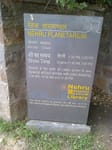
Nehru Planetarium
Planetarium in the grounds of Teen Murti Bhavan with sky shows in English and Hindi.
Watch: Delhi in 3 days
A one-minute look at the plan: every stop, day by day, with the map.
When to go to Delhi
October to March is the best time, with warm, dry days and cool nights, but air pollution is often severe from late October to January and winter mornings can be foggy. April to June is very hot, often above 40 °C, and the monsoon brings humid, rainy weather from July to September. Diwali, usually in October or November, lights up the city.
Plan the rest of your trip
- Where to stay: hotels in Delhi on Booking.com or Trip.com
- Skip-the-line tickets: museums and sights in Delhi on Tiqets
- Tours and day trips: things to do in Delhi on GetYourGuide or on Viator
- From the airport: a private transfer in Delhi with Kiwitaxi
- Data on arrival: an eSIM for India from Airalo
Some of these are affiliate links: we may earn a small commission at no extra cost to you.
Tips for Delhi
- The Red Fort, Lotus Temple, Akshardham, National Museum and Rashtrapati Bhavan close on Mondays; the Rashtrapati Bhavan tour must be booked online with photo ID.
- Akshardham does not allow phones, cameras or bags inside; leave them at the free cloakroom, which can have long queues.
- Dress modestly at Jama Masjid, Bangla Sahib and Nizamuddin Dargah; remove shoes, and cover the head at the gurdwara (scarves are provided).
- The Delhi Metro is the quickest way across the city; buy a token or a smart card and avoid rush hours.
- October to March is the best time to visit; November often has very poor air quality, and May and June are extremely hot.
Make it your own
Open the guide in Andiamo Places to see every stop on a map with walking directions, move places between days, check opening hours for your dates, and add your own finds. After the trip, your photos become a journal and, if you like, a printed photo book.



Guides are made with the help of AI and public sources such as Wikipedia, and may contain errors. Opening hours and prices change, so check before you go. Spotted a wrong photo, a pin in the wrong place, a missing stop or a better one? Write to andiamotravelapp@gmail.com: the e-mail opens with this guide filled in.
Photo credits
- Agrasen ki Baoli: Supreet Sethi http://supreetsethi.net, CC BY-SA 3.0
- Akshardham: Swaminarayan Sanstha, CC BY-SA 3.0
- Chandni Chowk: Goutam1962, CC BY-SA 4.0
- Coronation Park, Delhi: Harshanh, CC BY-SA 4.0
- Gurudwara Bangla Sahib: Ken Wieland from Philadelphia, USA, CC BY-SA 2.0
- Hauz Khas Village: Nvvchar ( talk ), CC BY-SA 3.0
- Hauz-i-Shamsi: Nvvchar, CC BY-SA 3.0
- Hijron Ka Khanqah: Varunshiv, CC BY 2.0
- Humayun's Tomb: Muhammad Mahdi Karim, GFDL 1.2
- ISKCON Temple Delhi: GourangaUK at English Wikipedia, Public domain
- India Gate: Erin A. Kirk-Cuomo, Public domain
- Jama Masjid, Delhi: Bikashrd, CC BY-SA 4.0
- Jantar Mantar, New Delhi: AKS.9955, CC BY-SA 4.0
- Khari Baoli: Christian Haugen from Trondheim, Norway, CC BY 2.0
- Lodi Gardens: DiplomatTesterMan, CC BY-SA 4.0
- Lotus Temple: Vandelizer, CC BY 2.0
- Mehrauli Archaeological Park: Hemant Arya, CC BY-SA 3.0
- National Museum, New Delhi: Ruhaani Qutlugh Begum, CC BY-SA 4.0
- Nehru Planetarium: Analizer, CC BY-SA 3.0
- Nizamuddin Dargah: https://www.flickr.com/photos/varunshiv/, CC BY 2.0
- Okhla Sanctuary: Koshy Koshy from Faridabad, Haryana, India, CC BY 2.0
- Purana Qila: Airknight at English Wikipedia, CC BY 3.0
- Qutb complex: Photograph taken by Mark A. Wilson (Department of Geology, The College of Wooster). [1], Public domain
- Raj Ghat: Humayunn Niaz Ahmed Peerzaada from Mumbai, India, CC BY-SA 2.0
- Rashtrapati Bhavan: Ronakshah1990, CC BY-SA 4.0
- Red Fort: PerSona77, CC BY-SA 3.0
- Roshanara Bagh: Harvinder Chandigarh, CC BY-SA 4.0
- Safdarjung's Tomb: Chitranshi, CC BY-SA 3.0
- Satpula: Varun Shiv Kapur, CC BY 2.0
- Teen Murti Bhavan: User:आशीष भटनागर, Public domain
Opening hours change; check before you go. Map data © OpenStreetMap contributors.
