
Budapest itinerary: 1 to 7 days
Plans for one to seven days in Budapest, day by day: Castle Hill with Matthias Church and Fisherman's Bastion, the Parliament and St. Stephen's Basilica first, then Andrássy út, Heroes' Square and the Széchenyi baths, and Gellért Hill, Roman Aquincum and more museums as you add days. Every stop has a typical visit length.
How long do you have?
Map: 3 days
Budapest in 1 day
Day 1
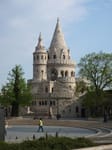
Fisherman's Bastion
A neo-Romanesque terrace of white turrets on Castle Hill, with one of the best views of the Parliament and the Danube.
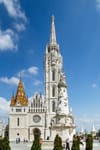
Matthias Church
The Gothic church on Castle Hill with a colourful tiled roof, where Hungarian kings were crowned.
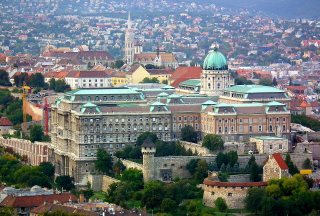
Buda Castle
The former royal palace on Castle Hill, now home to the National Gallery and the Budapest History Museum.

Széchenyi Chain Bridge
The city's first permanent bridge across the Danube, opened in 1849, with stone lions at each end.
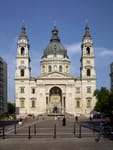
St. Stephen's Basilica
Budapest's largest church, with the relic of St. Stephen's hand and a dome you can climb for city views.
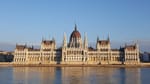
Hungarian Parliament Building
The huge Gothic Revival parliament on the Danube, home to the Holy Crown; visits are by guided tour.

Shoes on the Danube Bank
A memorial of sixty pairs of iron shoes on the river bank, recalling the Jews shot into the Danube by the Arrow Cross in 1944-45.
Budapest in 2 days
Day 1
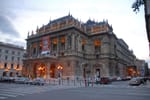
Hungarian State Opera House
A neo-Renaissance opera house on Andrássy út, with a richly decorated interior shown on guided tours.
Buda Castle
The former royal palace on Castle Hill, now home to the National Gallery and the Budapest History Museum.
Széchenyi Chain Bridge
The city's first permanent bridge across the Danube, opened in 1849, with stone lions at each end.
St. Stephen's Basilica
Budapest's largest church, with the relic of St. Stephen's hand and a dome you can climb for city views.
Hungarian Parliament Building
The huge Gothic Revival parliament on the Danube, home to the Holy Crown; visits are by guided tour.
Day 2
Matthias Church
The Gothic church on Castle Hill with a colourful tiled roof, where Hungarian kings were crowned.
Fisherman's Bastion
A neo-Romanesque terrace of white turrets on Castle Hill, with one of the best views of the Parliament and the Danube.
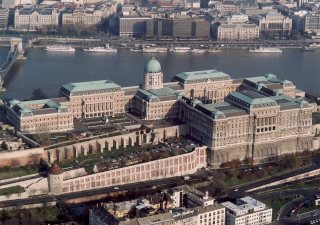
Hungarian National Gallery
Hungarian art from medieval altarpieces to the 20th century, displayed in the Buda Castle palace.
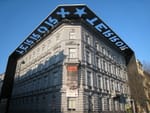
House of Terror
A museum about the fascist and communist regimes in the building that served as their secret police headquarters.
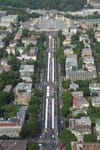
Andrássy út
A grand 19th-century boulevard lined with mansions, linking the centre with Heroes' Square and City Park; a UNESCO World Heritage Site.
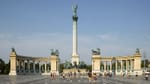
Hősök tere
Heroes' Square, with the Millennium Monument to the leaders of the Hungarian tribes, at the entrance to City Park.
Budapest in 3 days
Day 1
Matthias Church
The Gothic church on Castle Hill with a colourful tiled roof, where Hungarian kings were crowned.
Hungarian National Gallery
Hungarian art from medieval altarpieces to the 20th century, displayed in the Buda Castle palace.
Buda Castle
The former royal palace on Castle Hill, now home to the National Gallery and the Budapest History Museum.
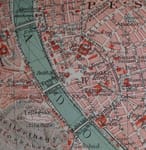
Danube Promenade
The riverside walk on the Pest bank, with views of Buda Castle and the Chain Bridge.
Széchenyi Chain Bridge
The city's first permanent bridge across the Danube, opened in 1849, with stone lions at each end.
St. Stephen's Basilica
Budapest's largest church, with the relic of St. Stephen's hand and a dome you can climb for city views.
Hősök tere
Heroes' Square, with the Millennium Monument to the leaders of the Hungarian tribes, at the entrance to City Park.
Day 2
Fisherman's Bastion
A neo-Romanesque terrace of white turrets on Castle Hill, with one of the best views of the Parliament and the Danube.
Hungarian Parliament Building
The huge Gothic Revival parliament on the Danube, home to the Holy Crown; visits are by guided tour.
Hungarian State Opera House
A neo-Renaissance opera house on Andrássy út, with a richly decorated interior shown on guided tours.
House of Terror
A museum about the fascist and communist regimes in the building that served as their secret police headquarters.
Day 3
Andrássy út
A grand 19th-century boulevard lined with mansions, linking the centre with Heroes' Square and City Park; a UNESCO World Heritage Site.
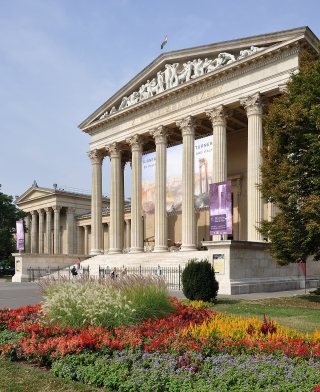
Museum of Fine Arts
Budapest's main museum of European art, from Old Masters to Egyptian and classical antiquities, on Heroes' Square.
Budapest Zoo and Botanical Garden
One of the world's oldest zoos, in City Park, known for its Art Nouveau animal houses.
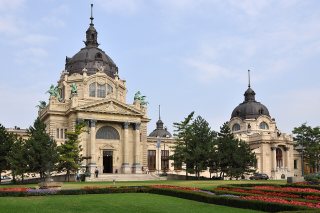
Széchenyi thermal bath
One of Europe's largest thermal baths, with yellow neo-Baroque buildings and warm outdoor pools in City Park.
Budapest in 4 days
Day 1
Matthias Church
The Gothic church on Castle Hill with a colourful tiled roof, where Hungarian kings were crowned.
Hungarian National Gallery
Hungarian art from medieval altarpieces to the 20th century, displayed in the Buda Castle palace.
Buda Castle
The former royal palace on Castle Hill, now home to the National Gallery and the Budapest History Museum.
Danube Promenade
The riverside walk on the Pest bank, with views of Buda Castle and the Chain Bridge.
Széchenyi Chain Bridge
The city's first permanent bridge across the Danube, opened in 1849, with stone lions at each end.
St. Stephen's Basilica
Budapest's largest church, with the relic of St. Stephen's hand and a dome you can climb for city views.
Hősök tere
Heroes' Square, with the Millennium Monument to the leaders of the Hungarian tribes, at the entrance to City Park.
Day 2
Fisherman's Bastion
A neo-Romanesque terrace of white turrets on Castle Hill, with one of the best views of the Parliament and the Danube.
Hungarian Parliament Building
The huge Gothic Revival parliament on the Danube, home to the Holy Crown; visits are by guided tour.
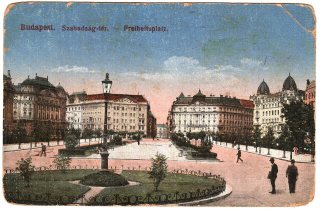
Liberty Square
A large square in the Lipótváros district, lined with grand banks and the US embassy, with a Soviet war memorial.
Hungarian State Opera House
A neo-Renaissance opera house on Andrássy út, with a richly decorated interior shown on guided tours.
Day 3
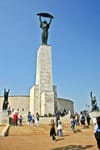
Liberty Statue
The bronze woman holding a palm leaf on top of Gellért Hill, visible from much of the city.
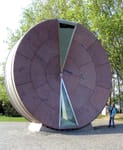
Timewheel
A giant hourglass monument made to mark Hungary's entry into the European Union, near Heroes' Square.
Museum of Fine Arts
Budapest's main museum of European art, from Old Masters to Egyptian and classical antiquities, on Heroes' Square.
Budapest Zoo and Botanical Garden
One of the world's oldest zoos, in City Park, known for its Art Nouveau animal houses.
Széchenyi thermal bath
One of Europe's largest thermal baths, with yellow neo-Baroque buildings and warm outdoor pools in City Park.
Day 4
Andrássy út
A grand 19th-century boulevard lined with mansions, linking the centre with Heroes' Square and City Park; a UNESCO World Heritage Site.
House of Terror
A museum about the fascist and communist regimes in the building that served as their secret police headquarters.
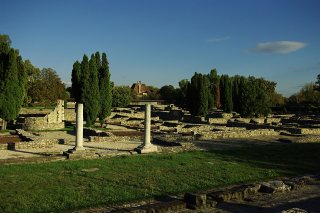
Aquincum
The ruins of the Roman town that stood here as a provincial capital, with streets, baths and an amphitheatre in Óbuda.
Budapest in 5 days
Day 1
Hungarian National Gallery
Hungarian art from medieval altarpieces to the 20th century, displayed in the Buda Castle palace.
Buda Castle
The former royal palace on Castle Hill, now home to the National Gallery and the Budapest History Museum.
Hungarian Parliament Building
The huge Gothic Revival parliament on the Danube, home to the Holy Crown; visits are by guided tour.
Shoes on the Danube Bank
A memorial of sixty pairs of iron shoes on the river bank, recalling the Jews shot into the Danube by the Arrow Cross in 1944-45.

Margaret Island
A car-free island park in the Danube with a rose garden, musical fountain, Japanese garden, running track and medieval ruins.
Day 2
Matthias Church
The Gothic church on Castle Hill with a colourful tiled roof, where Hungarian kings were crowned.
House of Terror
A museum about the fascist and communist regimes in the building that served as their secret police headquarters.
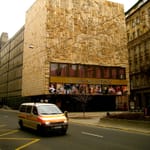
Magyar Theatre
A theatre company and stage in central Pest, founded in 1837 as one of the first Hungarian-language theatres.
Andrássy út
A grand 19th-century boulevard lined with mansions, linking the centre with Heroes' Square and City Park; a UNESCO World Heritage Site.
Museum of Fine Arts
Budapest's main museum of European art, from Old Masters to Egyptian and classical antiquities, on Heroes' Square.
Timewheel
A giant hourglass monument made to mark Hungary's entry into the European Union, near Heroes' Square.
Day 3
Danube Promenade
The riverside walk on the Pest bank, with views of Buda Castle and the Chain Bridge.

Váci Street
Budapest's main pedestrian shopping street, running through the centre of Pest with cafés, souvenir shops and restaurants.
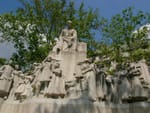
Vörösmarty tér
A square at the end of Váci utca, home to the Gerbeaud café and the city's main Christmas market.
Széchenyi Chain Bridge
The city's first permanent bridge across the Danube, opened in 1849, with stone lions at each end.
Liberty Square
A large square in the Lipótváros district, lined with grand banks and the US embassy, with a Soviet war memorial.
St. Stephen's Basilica
Budapest's largest church, with the relic of St. Stephen's hand and a dome you can climb for city views.
Hungarian State Opera House
A neo-Renaissance opera house on Andrássy út, with a richly decorated interior shown on guided tours.
Day 4
Liberty Statue
The bronze woman holding a palm leaf on top of Gellért Hill, visible from much of the city.
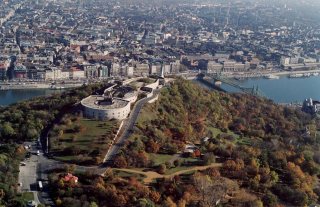
Citadella
A 19th-century Habsburg fortress on top of Gellért Hill, with wide views over the river and both halves of the city.
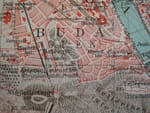
Naphegy
Sun Hill, a quiet residential hill in Buda between Gellért Hill and Castle Hill.
Fisherman's Bastion
A neo-Romanesque terrace of white turrets on Castle Hill, with one of the best views of the Parliament and the Danube.
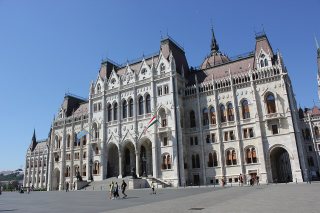
Kossuth Lajos tér
The square in front of the Parliament, with statues and memorials to the 1848 and 1956 revolutions.
Day 5
Hősök tere
Heroes' Square, with the Millennium Monument to the leaders of the Hungarian tribes, at the entrance to City Park.
Budapest Zoo and Botanical Garden
One of the world's oldest zoos, in City Park, known for its Art Nouveau animal houses.
Széchenyi thermal bath
One of Europe's largest thermal baths, with yellow neo-Baroque buildings and warm outdoor pools in City Park.
Budapest in 6 days
Day 1
Hungarian National Gallery
Hungarian art from medieval altarpieces to the 20th century, displayed in the Buda Castle palace.
Buda Castle
The former royal palace on Castle Hill, now home to the National Gallery and the Budapest History Museum.
Hungarian Parliament Building
The huge Gothic Revival parliament on the Danube, home to the Holy Crown; visits are by guided tour.
Shoes on the Danube Bank
A memorial of sixty pairs of iron shoes on the river bank, recalling the Jews shot into the Danube by the Arrow Cross in 1944-45.
Margaret Island
A car-free island park in the Danube with a rose garden, musical fountain, Japanese garden, running track and medieval ruins.
Day 2
Matthias Church
The Gothic church on Castle Hill with a colourful tiled roof, where Hungarian kings were crowned.
House of Terror
A museum about the fascist and communist regimes in the building that served as their secret police headquarters.
Magyar Theatre
A theatre company and stage in central Pest, founded in 1837 as one of the first Hungarian-language theatres.
Andrássy út
A grand 19th-century boulevard lined with mansions, linking the centre with Heroes' Square and City Park; a UNESCO World Heritage Site.
Hősök tere
Heroes' Square, with the Millennium Monument to the leaders of the Hungarian tribes, at the entrance to City Park.
Timewheel
A giant hourglass monument made to mark Hungary's entry into the European Union, near Heroes' Square.
Day 3
Danube Promenade
The riverside walk on the Pest bank, with views of Buda Castle and the Chain Bridge.
Váci Street
Budapest's main pedestrian shopping street, running through the centre of Pest with cafés, souvenir shops and restaurants.
Vörösmarty tér
A square at the end of Váci utca, home to the Gerbeaud café and the city's main Christmas market.
Széchenyi Chain Bridge
The city's first permanent bridge across the Danube, opened in 1849, with stone lions at each end.
Liberty Square
A large square in the Lipótváros district, lined with grand banks and the US embassy, with a Soviet war memorial.
St. Stephen's Basilica
Budapest's largest church, with the relic of St. Stephen's hand and a dome you can climb for city views.
Hungarian State Opera House
A neo-Renaissance opera house on Andrássy út, with a richly decorated interior shown on guided tours.
Day 4
Liberty Statue
The bronze woman holding a palm leaf on top of Gellért Hill, visible from much of the city.
Citadella
A 19th-century Habsburg fortress on top of Gellért Hill, with wide views over the river and both halves of the city.
Naphegy
Sun Hill, a quiet residential hill in Buda between Gellért Hill and Castle Hill.
Fisherman's Bastion
A neo-Romanesque terrace of white turrets on Castle Hill, with one of the best views of the Parliament and the Danube.
Kossuth Lajos tér
The square in front of the Parliament, with statues and memorials to the 1848 and 1956 revolutions.
Day 5
Museum of Fine Arts
Budapest's main museum of European art, from Old Masters to Egyptian and classical antiquities, on Heroes' Square.
Budapest Zoo and Botanical Garden
One of the world's oldest zoos, in City Park, known for its Art Nouveau animal houses.

Vajdahunyad Castle
A fairytale complex in City Park built for the 1896 millennium exhibition, mixing Romanesque, Gothic and Baroque styles, with an agricultural museum inside.
Széchenyi thermal bath
One of Europe's largest thermal baths, with yellow neo-Baroque buildings and warm outdoor pools in City Park.
Day 6
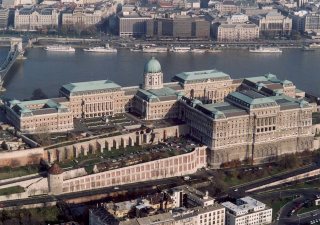
Hungarian National Museum
The national museum of Hungarian history, in a neoclassical building where the 1848 revolution began.

Dohány Street Synagogue
Europe's largest synagogue, a Moorish Revival building with twin domes, beside a Holocaust memorial garden and a Jewish museum in the old quarter.

Jewish Quarter (Erzsébetváros)
Kazinczy and Király streets, Gozsdu Courtyard and the famous ruin bars, plus the Great Synagogue; lively by day and busiest in the evening.
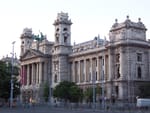
Ethnographic Museum
Hungary's national museum of folk life and world cultures, now in a new building at the edge of City Park.
Aquincum
The ruins of the Roman town that stood here as a provincial capital, with streets, baths and an amphitheatre in Óbuda.
Budapest in 7 days
Day 1
Hungarian National Gallery
Hungarian art from medieval altarpieces to the 20th century, displayed in the Buda Castle palace.
Buda Castle
The former royal palace on Castle Hill, now home to the National Gallery and the Budapest History Museum.
Hungarian Parliament Building
The huge Gothic Revival parliament on the Danube, home to the Holy Crown; visits are by guided tour.
Shoes on the Danube Bank
A memorial of sixty pairs of iron shoes on the river bank, recalling the Jews shot into the Danube by the Arrow Cross in 1944-45.
Margaret Island
A car-free island park in the Danube with a rose garden, musical fountain, Japanese garden, running track and medieval ruins.
Day 2
Matthias Church
The Gothic church on Castle Hill with a colourful tiled roof, where Hungarian kings were crowned.
House of Terror
A museum about the fascist and communist regimes in the building that served as their secret police headquarters.
Magyar Theatre
A theatre company and stage in central Pest, founded in 1837 as one of the first Hungarian-language theatres.
Andrássy út
A grand 19th-century boulevard lined with mansions, linking the centre with Heroes' Square and City Park; a UNESCO World Heritage Site.
Hősök tere
Heroes' Square, with the Millennium Monument to the leaders of the Hungarian tribes, at the entrance to City Park.
Timewheel
A giant hourglass monument made to mark Hungary's entry into the European Union, near Heroes' Square.
Day 3
Danube Promenade
The riverside walk on the Pest bank, with views of Buda Castle and the Chain Bridge.
Váci Street
Budapest's main pedestrian shopping street, running through the centre of Pest with cafés, souvenir shops and restaurants.
Vörösmarty tér
A square at the end of Váci utca, home to the Gerbeaud café and the city's main Christmas market.
Széchenyi Chain Bridge
The city's first permanent bridge across the Danube, opened in 1849, with stone lions at each end.
Liberty Square
A large square in the Lipótváros district, lined with grand banks and the US embassy, with a Soviet war memorial.
St. Stephen's Basilica
Budapest's largest church, with the relic of St. Stephen's hand and a dome you can climb for city views.
Hungarian State Opera House
A neo-Renaissance opera house on Andrássy út, with a richly decorated interior shown on guided tours.
Day 4
Liberty Statue
The bronze woman holding a palm leaf on top of Gellért Hill, visible from much of the city.
Citadella
A 19th-century Habsburg fortress on top of Gellért Hill, with wide views over the river and both halves of the city.
Naphegy
Sun Hill, a quiet residential hill in Buda between Gellért Hill and Castle Hill.
Fisherman's Bastion
A neo-Romanesque terrace of white turrets on Castle Hill, with one of the best views of the Parliament and the Danube.
Kossuth Lajos tér
The square in front of the Parliament, with statues and memorials to the 1848 and 1956 revolutions.
Day 5
Museum of Fine Arts
Budapest's main museum of European art, from Old Masters to Egyptian and classical antiquities, on Heroes' Square.
Budapest Zoo and Botanical Garden
One of the world's oldest zoos, in City Park, known for its Art Nouveau animal houses.
Vajdahunyad Castle
A fairytale complex in City Park built for the 1896 millennium exhibition, mixing Romanesque, Gothic and Baroque styles, with an agricultural museum inside.
Széchenyi thermal bath
One of Europe's largest thermal baths, with yellow neo-Baroque buildings and warm outdoor pools in City Park.
Day 6
Hungarian National Museum
The national museum of Hungarian history, in a neoclassical building where the 1848 revolution began.
Dohány Street Synagogue
Europe's largest synagogue, a Moorish Revival building with twin domes, beside a Holocaust memorial garden and a Jewish museum in the old quarter.
Jewish Quarter (Erzsébetváros)
Kazinczy and Király streets, Gozsdu Courtyard and the famous ruin bars, plus the Great Synagogue; lively by day and busiest in the evening.
Ethnographic Museum
Hungary's national museum of folk life and world cultures, now in a new building at the edge of City Park.
Aquincum
The ruins of the Roman town that stood here as a provincial capital, with streets, baths and an amphitheatre in Óbuda.
Day 7
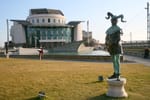
National Theatre
Hungary's national theatre, a modern building on the Pest riverbank in the south of the city.
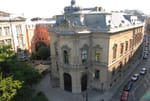
Metropolitan Ervin Szabó Library
Budapest's main public library, whose central branch includes the ornate rooms of the Wenckheim Palace.
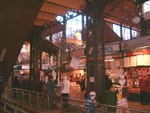
Great Market Hall
Budapest's largest and oldest covered market, with paprika, salami and food stalls under a 19th-century iron roof.
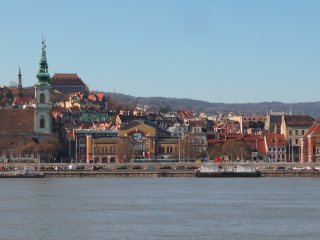
Batthyány Square
A square on the Buda bank with one of the classic views of the Parliament across the Danube.
Watch: Budapest in 3 days
A one-minute look at the plan: every stop, day by day, with the map.
Tours in Budapest
When to go to Budapest
April to June and September to October are the best months, with warm days and fewer crowds. July and August are hot and busy, with the Sziget music festival in August. Winter is cold, but the thermal baths are at their best and the Christmas markets on Vörösmarty Square and at St Stephen's Basilica run from mid-November to the end of the year.
Flight prices to Budapest by month, from where you are:
Plan the rest of your trip
- Where to stay: hotels in Budapest on Booking.com or Trip.com
- Skip-the-line tickets: museums and sights in Budapest on Tiqets
- Tours and day trips: things to do in Budapest on GetYourGuide or on Viator
- From the airport: a private transfer in Budapest with Kiwitaxi
- Data on arrival: an eSIM for Hungary from Airalo
- Last day: leave your bags in Budapest with Radical Storage and keep sightseeing
Some of these are affiliate links: we may earn a small commission at no extra cost to you.
Tips for Budapest
- The Parliament can only be seen on a guided tour; book a time slot ahead, as tours in English fill up.
- Many museums, including the National Gallery and the House of Terror, close on Mondays.
- Bring swimwear and flip-flops for the Széchenyi baths; weekday mornings are the calmest time to go.
- The old M1 metro line runs under Andrássy út to Heroes' Square, and tram 2 follows the Danube on the Pest side.
- Fisherman's Bastion and Matthias Church are quietest early in the morning, before the tour groups arrive on Castle Hill.
Make it your own
Open the guide in Andiamo Places to see every stop on a map with walking directions, move places between days, check opening hours for your dates, and add your own finds. After the trip, your photos become a journal and, if you like, a printed photo book.



Guides are made with the help of AI and public sources such as Wikipedia, and may contain errors. Opening hours and prices change, so check before you go. Spotted a wrong photo, a pin in the wrong place, a missing stop or a better one? Write to andiamotravelapp@gmail.com: the e-mail opens with this guide filled in.
Photo credits
- Andrássy út: Civertan, CC BY-SA 3.0
- Aquincum: KKriszti, CC BY-SA 3.0
- Batthyány Square: VinceB, CC BY-SA 3.0
- Buda Castle: Varius, CC BY-SA 3.0
- Budapest Zoo and Botanical Garden: August Dominus, CC BY-SA 4.0
- Citadella: Civertan Grafikai Stúdió, CC BY-SA 2.5
- Danube Promenade: unknown author, CC BY-SA 2.5
- Dohány Street Synagogue: The original uploader was OsvátA at Hungarian Wikipedia., CC BY-SA 3.0
- Ethnographic Museum: unknown author, CC BY-SA 3.0
- Fisherman's Bastion: Brian Adamson, CC BY 2.0
- Great Market Hall: No machine-readable author provided. Gubbubu assumed (based on copyright claims)., Public domain
- House of Terror: Tbachner, CC BY 3.0
- Hungarian National Gallery: Civertan ( talk · contribs ), CC BY-SA 2.5
- Hungarian National Museum: Civertan ( talk · contribs ), CC BY-SA 2.5
- Hungarian Parliament Building: Gabinho, CC BY-SA 4.0
- Hungarian State Opera House: PDXdj at English Wikipedia, CC BY 2.5
- Hősök tere: Godot13, Attribution
- Jewish Quarter (Erzsébetváros): Erzsébetváros Önkormányzata, Public domain
- Kossuth Lajos tér: Andrzej Otrębski, CC BY-SA 4.0
- Liberty Square: unknown (scanned by Derzsi Elekes Andor), Public domain
- Liberty Statue: Karelj, Public domain
- Magyar Theatre: Alex Barrow, CC BY-SA 2.0
- Margaret Island: Darkone (talk · contribs), CC BY-SA 2.0
- Matthias Church: Stefan Schäfer, Lich, CC BY-SA 4.0
- Metropolitan Ervin Szabó Library: desperado, CC BY 2.5 hu
- Museum of Fine Arts: Marc Ryckaert ( MJJR ), CC BY 3.0
- Naphegy: w:en:User:Tamas Szabo, Public domain
- National Theatre: Peter Siroki, CC BY 2.0
- Shoes on the Danube Bank: Nikodem Nijaki, CC BY-SA 3.0
- St. Stephen's Basilica: Godot13, Attribution
- Széchenyi Chain Bridge: Alireza Javaheri, CC BY 3.0
- Széchenyi thermal bath: Marc Ryckaert ( MJJR ), CC BY 3.0
- Timewheel: Armin Kübelbeck, CC BY-SA 3.0
- Vajdahunyad Castle: Felix König, CC BY 3.0
- Váci Street: Ertly, CC BY-SA 4.0
- Vörösmarty tér: Andreas Poeschek , fotografikus.hu, CC BY-SA 2.0 de
Opening hours change; check before you go. Map data © OpenStreetMap contributors.
