
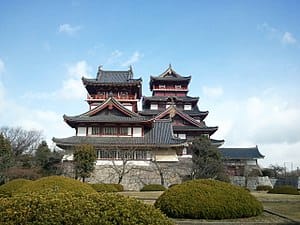
Kyoto itinerary: 1 to 6 days
Plans for one to six days in Kyoto, day by day: Fushimi Inari's thousands of gates, Kiyomizu-dera, the Golden Pavilion and Zen gardens, Nijō Castle, Arashiyama and the Philosopher's Walk, and the imperial villas as you add days. Every stop has a typical visit length.
How long do you have?
Map: 3 days
Kyoto in 1 day
Day 1
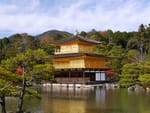
Kinkaku-ji
The Golden Pavilion, a gold-leaf temple reflected in its pond.
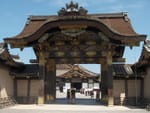
Nijo Castle
The shoguns' palace with 'nightingale floors' that squeak to warn of intruders.
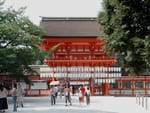
Shimogamo Shrine
One of Kyoto's oldest shrines, set in the ancient Tadasu no Mori forest.
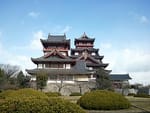
Fushimi Castle
A reconstructed castle on Momoyama hill, on the site of Toyotomi Hideyoshi's castle.
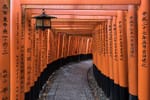
Fushimi Inari-taisha
The shrine of thousands of red torii gates winding up Mount Inari.
Kyoto in 2 days
Day 1
Fushimi Inari-taisha
The shrine of thousands of red torii gates winding up Mount Inari.
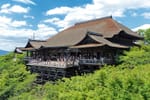
Kiyomizu-dera
A hillside temple with a wooden stage over the valley and views of the city.
Shimogamo Shrine
One of Kyoto's oldest shrines, set in the ancient Tadasu no Mori forest.
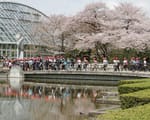
Kyoto Botanical Garden
Japan's oldest public botanical garden, beside the Kamo River.
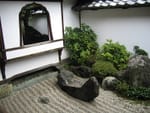
Daisen-in
A sub-temple of Daitoku-ji with one of Japan's most famous dry landscape gardens.
Kinkaku-ji
The Golden Pavilion, a gold-leaf temple reflected in its pond.
Day 2

Nishiki Market
A narrow covered market street of food stalls known as 'Kyoto's kitchen'.

Kyoto Tower
The tower opposite Kyoto Station, with an observation deck over the city.
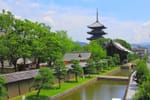
To-ji
A temple with Japan's tallest wooden pagoda and a big monthly flea market.
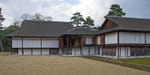
Katsura Imperial Villa
A 17th-century imperial villa and garden, a peak of Japanese design (reservation needed).
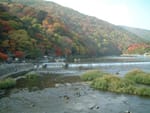
Arashiyama
A district in the western hills with the famous bamboo grove, Tenryū-ji and the river.
Kyoto in 3 days
Day 1
Fushimi Inari-taisha
The shrine of thousands of red torii gates winding up Mount Inari.
Kiyomizu-dera
A hillside temple with a wooden stage over the valley and views of the city.
Shimogamo Shrine
One of Kyoto's oldest shrines, set in the ancient Tadasu no Mori forest.
Kyoto Botanical Garden
Japan's oldest public botanical garden, beside the Kamo River.
Daisen-in
A sub-temple of Daitoku-ji with one of Japan's most famous dry landscape gardens.
Kinkaku-ji
The Golden Pavilion, a gold-leaf temple reflected in its pond.
Day 2
Nishiki Market
A narrow covered market street of food stalls known as 'Kyoto's kitchen'.
Kyoto Tower
The tower opposite Kyoto Station, with an observation deck over the city.
To-ji
A temple with Japan's tallest wooden pagoda and a big monthly flea market.
Katsura Imperial Villa
A 17th-century imperial villa and garden, a peak of Japanese design (reservation needed).
Arashiyama
A district in the western hills with the famous bamboo grove, Tenryū-ji and the river.
Day 3
Nijo Castle
The shoguns' palace with 'nightingale floors' that squeak to warn of intruders.
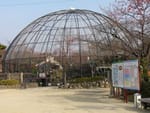
Kyoto City Zoo
A small zoo in the Okazaki park area near Heian Shrine.
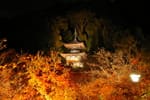
Eikan-do Zenrin-ji
A hillside temple famous for its autumn leaves and the 'Buddha looking back'.
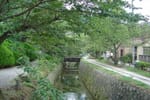
Philosopher's Walk
A canal-side path between Ginkaku-ji and Nanzen-ji, lined with cherry trees.
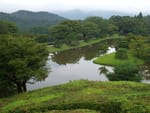
Shugakuin Imperial Villa
Terraced imperial gardens and tea houses at the foot of Mount Hiei (reservation needed).
Kyoto in 4 days
Day 1
Fushimi Inari-taisha
The shrine of thousands of red torii gates winding up Mount Inari.
Kiyomizu-dera
A hillside temple with a wooden stage over the valley and views of the city.
Shimogamo Shrine
One of Kyoto's oldest shrines, set in the ancient Tadasu no Mori forest.
Kyoto Botanical Garden
Japan's oldest public botanical garden, beside the Kamo River.
Daisen-in
A sub-temple of Daitoku-ji with one of Japan's most famous dry landscape gardens.
Kinkaku-ji
The Golden Pavilion, a gold-leaf temple reflected in its pond.
Day 2
Nishiki Market
A narrow covered market street of food stalls known as 'Kyoto's kitchen'.
Kyoto Tower
The tower opposite Kyoto Station, with an observation deck over the city.
To-ji
A temple with Japan's tallest wooden pagoda and a big monthly flea market.
Katsura Imperial Villa
A 17th-century imperial villa and garden, a peak of Japanese design (reservation needed).
Arashiyama
A district in the western hills with the famous bamboo grove, Tenryū-ji and the river.
Day 3
Nijo Castle
The shoguns' palace with 'nightingale floors' that squeak to warn of intruders.
Kyoto City Zoo
A small zoo in the Okazaki park area near Heian Shrine.
Eikan-do Zenrin-ji
A hillside temple famous for its autumn leaves and the 'Buddha looking back'.
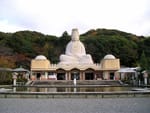
Ryozen Kannon
A huge concrete statue of the goddess of mercy, a war memorial near Kōdai-ji.

Maruyama Park
Kyoto's favourite park for cherry blossoms, beside Yasaka Shrine.
Day 4
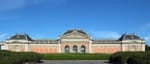
Kyoto National Museum
Japanese and Asian art, from Buddhist sculpture to ceramics, opposite Sanjūsangen-dō.
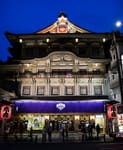
Minami-za
Japan's oldest kabuki theatre, by the Kamo River in Gion.
Philosopher's Walk
A canal-side path between Ginkaku-ji and Nanzen-ji, lined with cherry trees.
Shugakuin Imperial Villa
Terraced imperial gardens and tea houses at the foot of Mount Hiei (reservation needed).
Kyoto in 5 days
Day 1
Kiyomizu-dera
A hillside temple with a wooden stage over the valley and views of the city.

Sannenzaka
A stone-paved lane of wooden shopfronts and tea houses on the slope up to Kiyomizu-dera, best early or after the crowds.
Daisen-in
A sub-temple of Daitoku-ji with one of Japan's most famous dry landscape gardens.
Kinkaku-ji
The Golden Pavilion, a gold-leaf temple reflected in its pond.

Ryōan-ji
A Zen temple famous for its dry rock garden of fifteen stones on raked gravel, designed to be contemplated from the veranda.
Day 2
Fushimi Inari-taisha
The shrine of thousands of red torii gates winding up Mount Inari.
To-ji
A temple with Japan's tallest wooden pagoda and a big monthly flea market.
Nijo Castle
The shoguns' palace with 'nightingale floors' that squeak to warn of intruders.
Shimogamo Shrine
One of Kyoto's oldest shrines, set in the ancient Tadasu no Mori forest.

Ponto-chō
A narrow lantern-lit lane between the Kamo river and Kiyamachi, lined with restaurants and teahouses in the old geisha district.
Day 3
Kyoto Tower
The tower opposite Kyoto Station, with an observation deck over the city.
Katsura Imperial Villa
A 17th-century imperial villa and garden, a peak of Japanese design (reservation needed).

Tenryū-ji
A major Zen temple in Arashiyama with a 14th-century landscape garden and pond that borrows the hills behind as scenery.
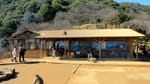
Iwatayama Monkey Park
A hillside park in Arashiyama where wild macaques roam, with city views.
Arashiyama
A district in the western hills with the famous bamboo grove, Tenryū-ji and the river.
Day 4

Yasaka Shrine
A Shinto shrine at the end of Shijō Street, marking the edge of Gion and hung with lanterns that glow after dark.
Maruyama Park
Kyoto's favourite park for cherry blossoms, beside Yasaka Shrine.

Nanzen-ji
A large Zen temple complex at the foot of the eastern hills, with a monumental gate, a brick aqueduct and a garden of raked gravel and rocks.
Eikan-do Zenrin-ji
A hillside temple famous for its autumn leaves and the 'Buddha looking back'.
Philosopher's Walk
A canal-side path between Ginkaku-ji and Nanzen-ji, lined with cherry trees.

Ginkaku-ji
The Silver Pavilion, a Zen temple at the end of the Philosopher's Walk, known for its raked sand garden and moss-covered grounds.

Gion
Kyoto's historic geisha district, with wooden teahouses, lantern-lit lanes around Hanamikoji and a chance of seeing maiko at dusk.
Day 5

Sanjūsangen-dō
A long wooden hall holding one thousand and one gilded statues of the goddess Kannon, rows of them standing in ranks around a large seated figure.
Ryozen Kannon
A huge concrete statue of the goddess of mercy, a war memorial near Kōdai-ji.

Kōdai-ji
A Zen temple in Higashiyama founded in memory of Toyotomi Hideyoshi, known for its raked gardens, tea houses and evening illuminations.

Kennin-ji
Kyoto's oldest Zen temple, near Gion, with a twin-dragon ceiling painting, a dry garden and quiet halls away from the crowds.
Nishiki Market
A narrow covered market street of food stalls known as 'Kyoto's kitchen'.
Kyoto in 6 days
Day 1
Kiyomizu-dera
A hillside temple with a wooden stage over the valley and views of the city.
Sannenzaka
A stone-paved lane of wooden shopfronts and tea houses on the slope up to Kiyomizu-dera, best early or after the crowds.
Daisen-in
A sub-temple of Daitoku-ji with one of Japan's most famous dry landscape gardens.
Kinkaku-ji
The Golden Pavilion, a gold-leaf temple reflected in its pond.
Ryōan-ji
A Zen temple famous for its dry rock garden of fifteen stones on raked gravel, designed to be contemplated from the veranda.
Day 2
Fushimi Inari-taisha
The shrine of thousands of red torii gates winding up Mount Inari.
To-ji
A temple with Japan's tallest wooden pagoda and a big monthly flea market.
Nijo Castle
The shoguns' palace with 'nightingale floors' that squeak to warn of intruders.
Shimogamo Shrine
One of Kyoto's oldest shrines, set in the ancient Tadasu no Mori forest.
Ponto-chō
A narrow lantern-lit lane between the Kamo river and Kiyamachi, lined with restaurants and teahouses in the old geisha district.
Day 3
Kyoto Tower
The tower opposite Kyoto Station, with an observation deck over the city.
Katsura Imperial Villa
A 17th-century imperial villa and garden, a peak of Japanese design (reservation needed).
Tenryū-ji
A major Zen temple in Arashiyama with a 14th-century landscape garden and pond that borrows the hills behind as scenery.
Iwatayama Monkey Park
A hillside park in Arashiyama where wild macaques roam, with city views.
Arashiyama
A district in the western hills with the famous bamboo grove, Tenryū-ji and the river.
Day 4
Yasaka Shrine
A Shinto shrine at the end of Shijō Street, marking the edge of Gion and hung with lanterns that glow after dark.
Maruyama Park
Kyoto's favourite park for cherry blossoms, beside Yasaka Shrine.
Nanzen-ji
A large Zen temple complex at the foot of the eastern hills, with a monumental gate, a brick aqueduct and a garden of raked gravel and rocks.
Eikan-do Zenrin-ji
A hillside temple famous for its autumn leaves and the 'Buddha looking back'.
Philosopher's Walk
A canal-side path between Ginkaku-ji and Nanzen-ji, lined with cherry trees.
Ginkaku-ji
The Silver Pavilion, a Zen temple at the end of the Philosopher's Walk, known for its raked sand garden and moss-covered grounds.
Gion
Kyoto's historic geisha district, with wooden teahouses, lantern-lit lanes around Hanamikoji and a chance of seeing maiko at dusk.
Day 5
Sanjūsangen-dō
A long wooden hall holding one thousand and one gilded statues of the goddess Kannon, rows of them standing in ranks around a large seated figure.
Kyoto National Museum
Japanese and Asian art, from Buddhist sculpture to ceramics, opposite Sanjūsangen-dō.
Ryozen Kannon
A huge concrete statue of the goddess of mercy, a war memorial near Kōdai-ji.
Kōdai-ji
A Zen temple in Higashiyama founded in memory of Toyotomi Hideyoshi, known for its raked gardens, tea houses and evening illuminations.
Kennin-ji
Kyoto's oldest Zen temple, near Gion, with a twin-dragon ceiling painting, a dry garden and quiet halls away from the crowds.
Nishiki Market
A narrow covered market street of food stalls known as 'Kyoto's kitchen'.
Day 6
Shugakuin Imperial Villa
Terraced imperial gardens and tea houses at the foot of Mount Hiei (reservation needed).
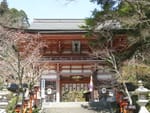
Kuramadera
A mountain temple north of Kyoto, reached by train and a hike through cedar forest.

Kifune Shrine
A mountain shrine in the forested hills north of Kyoto, reached by a lantern-lined stairway; known for its water fortune slips and summer riverside dining.
Watch: Kyoto in 3 days
A one-minute look at the plan: every stop, day by day, with the map.
When to go to Kyoto
Late March to early April, when cherry blossoms bloom, and mid to late November, when maple leaves turn red, are the most beautiful and also the busiest times. June to early July is the rainy season, July and August are hot and humid, and the Gion Matsuri festival fills July. Winter is cold but quiet.
Flight prices to Osaka by month, from where you are:
Plan the rest of your trip
- Where to stay: hotels in Kyoto on Booking.com or Trip.com
- Skip-the-line tickets: museums and sights in Kyoto on Tiqets
- Tours and day trips: things to do in Kyoto on GetYourGuide or on Viator
- From the airport: a private transfer in Kyoto with Kiwitaxi
- Data on arrival: an eSIM for Japan from Airalo
- Last day: leave your bags in Kyoto with Radical Storage and keep sightseeing
Some of these are affiliate links: we may earn a small commission at no extra cost to you.
Tips for Kyoto
- Visit Fushimi Inari early in the morning or late in the day; the higher you climb, the quieter it gets.
- Katsura and Shugakuin imperial villas need a reservation with the Imperial Household Agency.
- City buses get very crowded; trains and the subway are often faster between sights.
- Many temples close around 4:30–5 p.m.; plan the big ones for the morning.
- A Japanese IC card (ICOCA, Suica) works on buses, trains and in convenience stores.
Make it your own
Open the guide in Andiamo Places to see every stop on a map with walking directions, move places between days, check opening hours for your dates, and add your own finds. After the trip, your photos become a journal and, if you like, a printed photo book.



Guides are made with the help of AI and public sources such as Wikipedia, and may contain errors. Opening hours and prices change, so check before you go. Spotted a wrong photo, a pin in the wrong place, a missing stop or a better one? Write to andiamotravelapp@gmail.com: the e-mail opens with this guide filled in.
Photo credits
- Arashiyama: Chris Spackman / TakuyaMurata at en.wikipedia, CC BY-SA 3.0
- Daisen-in: No machine-readable author provided. Ivanoff~commonswiki assumed (based on copyright claims)., CC BY-SA 3.0
- Eikan-do Zenrin-ji: Tomomarusan, CC BY 2.5
- Fushimi Castle: Maechan0360, CC BY-SA 4.0
- Fushimi Inari-taisha: Basile Morin, CC BY-SA 4.0
- Ginkaku-ji: Oilstreet, CC BY 2.5
- Gion: 663highland, CC BY 2.5
- Iwatayama Monkey Park: Minseong Kim, CC BY-SA 4.0
- Katsura Imperial Villa: KimonBerlin, CC BY-SA 2.0
- Kennin-ji: 663highland, CC BY-SA 4.0
- Kifune Shrine: KENPEI, CC BY-SA 3.0
- Kinkaku-ji: Jaycangel, CC BY-SA 3.0
- Kiyomizu-dera: Jordy Meow, CC BY-SA 3.0
- Kuramadera: KENPEI, CC BY-SA 3.0
- Kyoto Botanical Garden: KimonBerlin, CC BY-SA 2.0
- Kyoto City Zoo: Zz2, CC BY-SA 3.0
- Kyoto National Museum: Wiiii, CC BY-SA 3.0
- Kyoto Tower: Rwendland, CC BY-SA 4.0
- Kōdai-ji: 663highland, CC BY-SA 4.0
- Maruyama Park: 663highland, CC BY-SA 4.0
- Minami-za: MichaelMaggs, CC BY-SA 2.5
- Nanzen-ji: 663highland, CC BY-SA 4.0
- Nijo Castle: unknown author, Public domain
- Nishiki Market: ellievanhoutte from Nishiki-ichiba, Kyoto, CC BY 2.0
- Philosopher's Walk: David Monniaux, CC BY-SA 3.0
- Ponto-chō: Wolfiewolf from Pontocho street in Nakagyo, Kyoto, CC BY 2.0
- Ryozen Kannon: AstroMark ( talk ), CC BY-SA 3.0
- Ryōan-ji: DXR, CC BY-SA 4.0
- Sanjūsangen-dō: Akonnchiroll, CC BY-SA 4.0
- Sannenzaka: Andrea Schaffer from Sydney, Australia, CC BY 2.0
- Shimogamo Shrine: Mochi at Japanese Wikipedia, CC BY-SA 3.0
- Shugakuin Imperial Villa: Daderot, CC BY-SA 3.0
- Tenryū-ji: osakaosaka, CC BY-SA 3.0
- To-ji: Kakidai, CC BY-SA 4.0
- Yasaka Shrine: unknown author, CC BY-SA 3.0
Opening hours change; check before you go. Map data © OpenStreetMap contributors.
